
Function and Operational Role of Casualty Collection Points
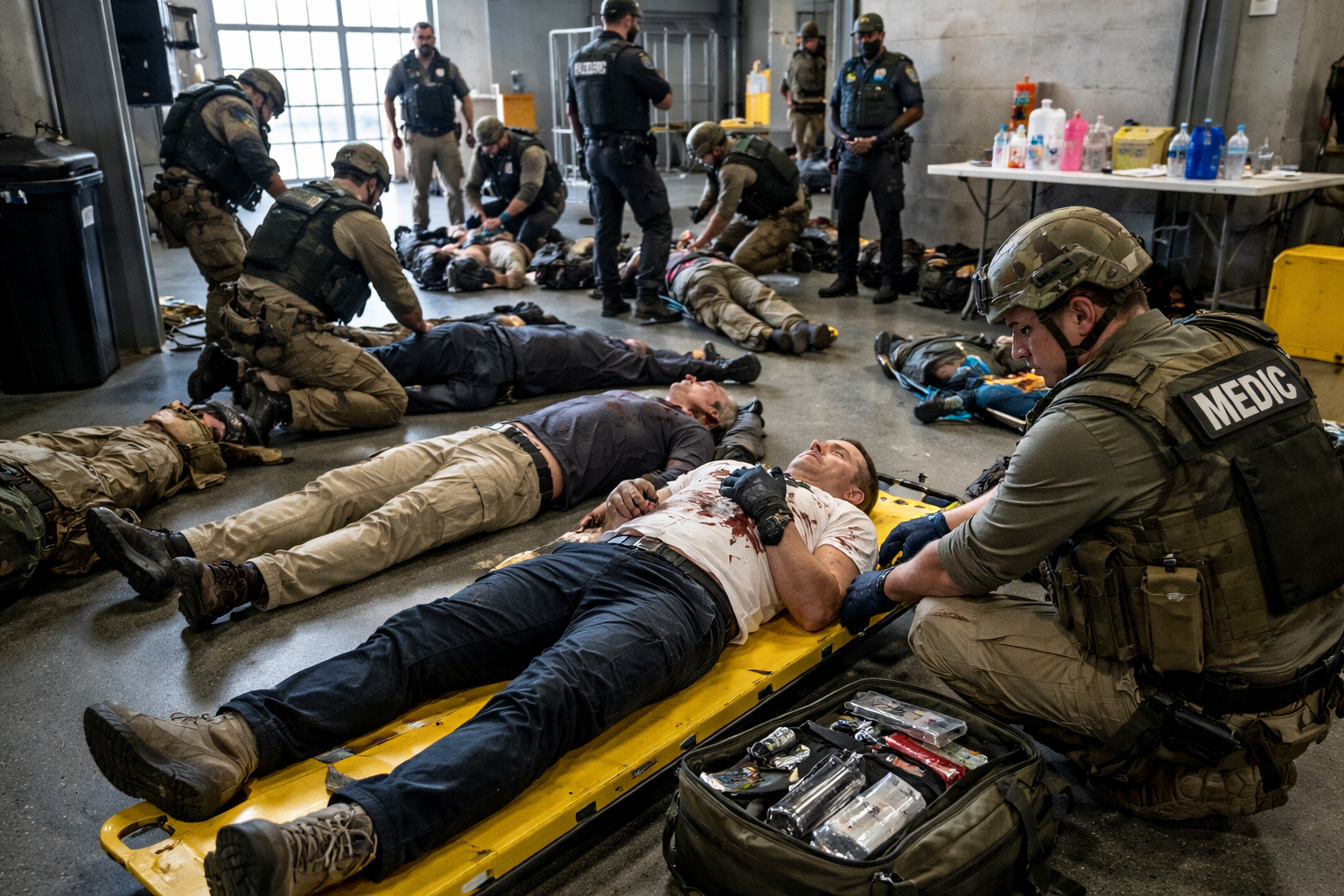
Function and Operational Role of Casualty Collection Points: Structuring Care When Time and Space Are Contested
In mass-casualty incidents and high-threat environments, the decisive factor in survival is not the sophistication of downstream care, but the speed and organization of early intervention. Casualty Collection Points (CCPs) exist precisely to solve this problem. When properly designed and employed, CCPs transform chaos into coordinated action—enabling rapid triage, focused treatment, and timely evacuation when resources are strained and information is incomplete. When misunderstood or misused, however, CCPs become bottlenecks that delay care and amplify mortality.
The central premise of this analysis is clear: CCPs are not destinations of convenience; they are operational tools designed to compress time-to-intervention and stabilize physiology until advanced care is available. By applying the science of listener attention—front-loaded relevance, cognitive chunking, progressive emphasis, repetition with variation, and continuous relevance anchoring—this article clarifies the functional role of CCPs, their proper placement and resourcing, and their impact on survivability in mass-casualty environments.
Why CCPs Matter When Systems Are Overwhelmed
Mass-casualty incidents overwhelm normal care pathways. Casualties exceed immediate transport capacity. Scenes are contested or unstable. Communications are degraded. In these conditions, unstructured care fails. CCPs provide structure.
At their core, CCPs serve three indispensable functions:
They organize triage so the most salvageable patients receive priority.
They enable immediate, life-saving treatment when definitive care is delayed.
They prepare patients for tactical evacuation, ensuring movement occurs safely and efficiently.
Front-loading this relevance is essential: CCPs exist because patients cannot wait. They are a response to scarcity—of time, transport, and certainty.
CCPs as Workflow Engines, Not Holding Areas
A common misconception is that CCPs are places where patients are “held” until transport arrives. In reality, a CCP is a workflow engine. Its value lies in motion—patients move through triage, intervention, and preparation, not into indefinite storage.
Effective CCP operations establish a clear sequence:
Rapid triage to identify immediate threats to life
Focused interventions to address preventable causes of death
Packaging and prioritization for evacuation
This structured flow reduces cognitive load on providers and prevents the paralysis that occurs when multiple casualties compete for attention. The CCP imposes order where none exists.
Repetition with variation reinforces this point: regardless of environment—urban, rural, Hot Zone, or Warm Zone—the CCP’s function remains consistent. Only its tempo and protection change.
Triage at the CCP: Speed, Not Perfection
Triage within a CCP is deliberately simple and decisive. The goal is not diagnostic precision; it is rapid categorization that directs scarce resources to where they will have the greatest impact.
In mass-casualty environments, triage errors most often occur due to delay, not misclassification. CCP-based triage mitigates this risk by centralizing decision-making and standardizing assessment. Providers focus on airway, breathing, circulation, and mental status—variables that predict immediate survivability.
By anchoring triage at the CCP, the system avoids the inefficiency of repeated reassessment across multiple locations. Decisions are made once, communicated clearly, and acted upon quickly.
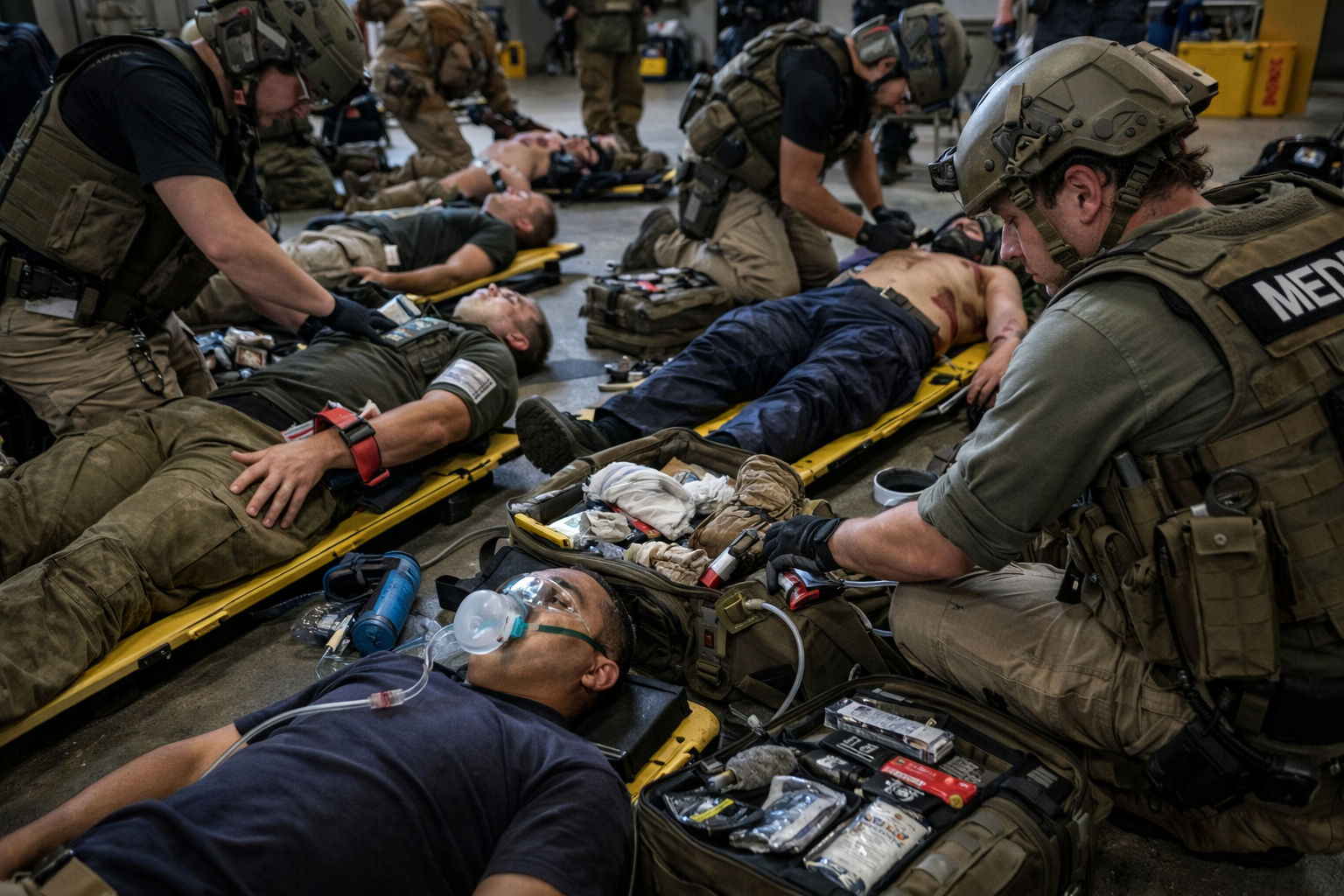
Treatment at the CCP: Interrupting Preventable Death
The treatment function of a CCP is narrowly defined and intentionally limited. CCP care is not definitive; it is life-preserving. Interventions focus on the preventable causes of death that dominate early mortality:
Massive hemorrhage
Airway compromise
Tension pneumothorax
This focus drives equipment selection and training priorities. CCP kits typically include tourniquets, pressure dressings, hemostatic gauze, occlusive chest seals, and decompression needles—tools chosen not for versatility, but for speed and impact.
Resource availability at the CCP is critical. Without adequate supplies, even well-organized triage fails. Early stabilization buys time—time for evacuation, time for system recovery, and time for survival.
Hot Zone CCP Operations: Speed With Constraint
Hot Zone CCPs offer the greatest potential benefit—and the greatest need for discipline. When placed within protected Hot Zone boundaries, CCPs dramatically reduce time-to-intervention, but they must be managed with strict attention to tempo.
The purpose of a Hot Zone CCP is rapid interruption of death, not prolonged treatment. Patients should move through quickly, receiving only what is necessary to survive transport. Lingering at a Hot Zone CCP increases exposure and undermines its purpose.
This balance—rapid care paired with timely evacuation—is essential. Hot Zone CCPs succeed when they compress time, not when they accumulate patients.
Resource Deployment: Matching Capability to Demand
CCPs function only when resources match casualty demand. This includes not just medical supplies, but personnel, protection, and space. Under-resourced CCPs become choke points; over-resourced CCPs waste critical assets.
Efficient CCP operations depend on:
Adequate hemorrhage control supplies for multiple patients
Redundant airway and chest intervention tools
Personnel trained to work under stress and scarcity
Clear protection and access corridors
Resource deployment must be dynamic. As casualty flow changes, CCPs may need to expand, relocate, or close. The Incident Command Post plays a critical role in monitoring demand and adjusting support accordingly.
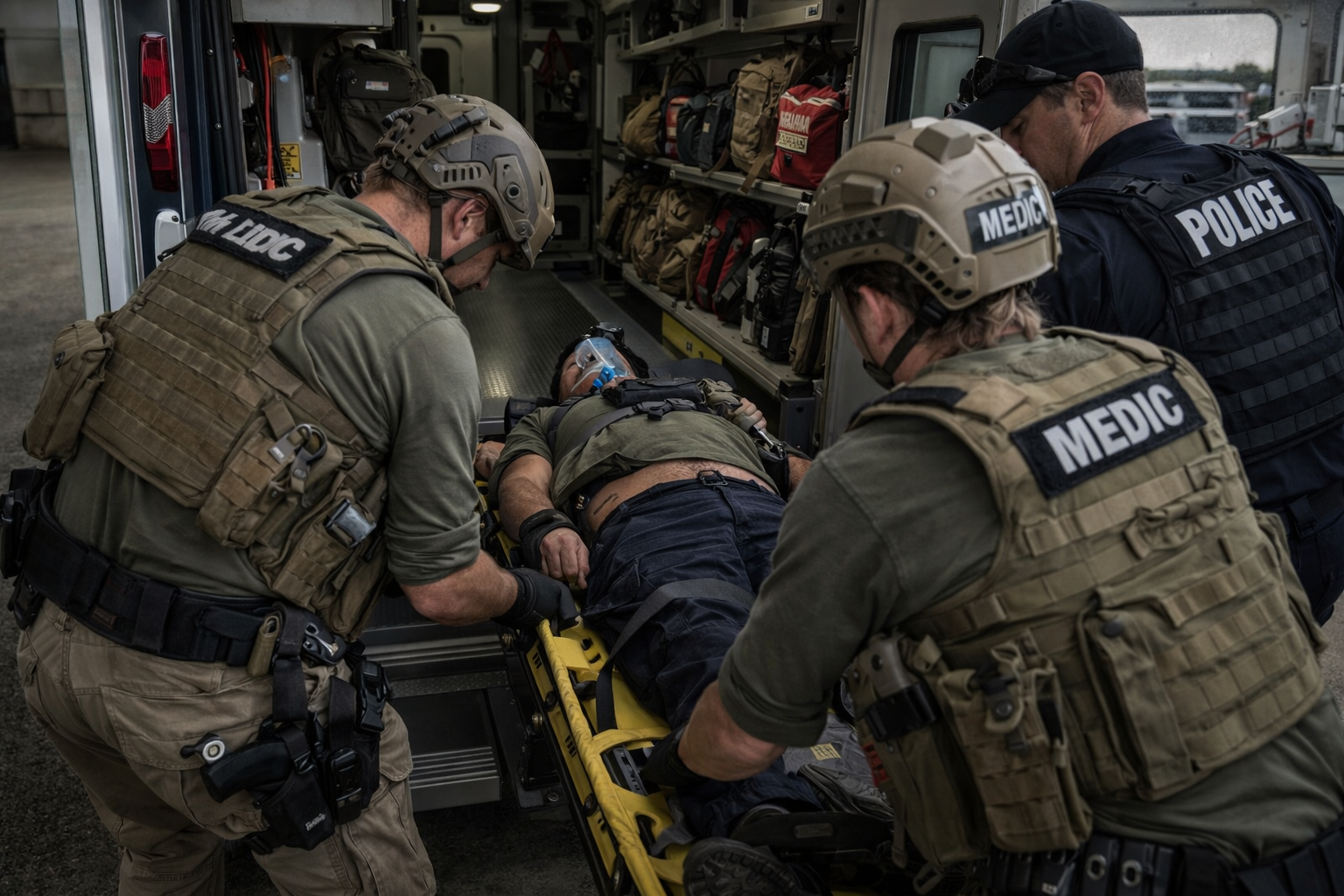
CCPs and Tactical Evacuation: Preparing for Movement
A defining function of the CCP is preparation for evacuation. Patients leaving a CCP should be stabilized enough to survive movement, properly packaged, and clearly prioritized. This preparation reduces secondary deterioration and prevents transport assets from becoming overwhelmed by unstable patients.
By standardizing packaging and documentation at the CCP, downstream care improves. Receiving units know what has been done and what remains critical. The CCP thus serves as the bridge between point-of-injury care and advanced treatment.
Repeated emphasis on this role anchors understanding: CCPs exist to make evacuation safer and faster—not to replace it.
Cognitive Benefits of CCP Structure
From a human performance perspective, CCPs reduce cognitive overload. In chaotic environments, providers struggle when forced to make complex decisions repeatedly and independently. CCPs centralize decision-making, simplify choices, and create predictable routines.
This structure improves performance under stress. Responders know where to bring patients, what interventions are expected, and how to prioritize movement. Ambiguity decreases; action increases.
Listener attention science supports this approach. When systems are designed to guide attention toward a few critical tasks, outcomes improve.
CCPs in Mass-Casualty Environments: Scaling Effectively
In true mass-casualty incidents, CCPs enable scalability. Multiple CCPs may be established, each serving a defined area or casualty stream. This decentralization prevents overload and maintains tempo.
Efficient CCP operations significantly improve survival outcomes by preventing the system from collapsing under volume. Each CCP absorbs a portion of demand, allowing triage, treatment, and evacuation to proceed in parallel rather than sequentially.
This scalability is one of the CCP’s greatest strengths—and one of its most underappreciated benefits.
Command and Coordination: Making CCPs Work
CCPs do not function in isolation. Their effectiveness depends on command integration and interagency coordination. The Incident Command Post must designate CCP locations, ensure protection, and synchronize evacuation routes.
Unified Command ensures that CCP operations align with tactical priorities and resource availability. When CCPs are coordinated rather than improvised, confusion decreases and confidence rises.
Clear command intent—what the CCP is for, how long it will operate, and when it will transition—is essential to maintaining efficiency.
Progressive Emphasis: CCPs as Time-Buying Mechanisms
Across every layer of analysis, one principle recurs: CCPs buy time. They do so by organizing care, focusing interventions, and preparing patients for movement. Time bought is life preserved.
Early triage prevents misallocation.
Early treatment prevents deterioration.
Early preparation accelerates evacuation.
This progression reinforces why CCPs are indispensable in mass-casualty environments.
Training Implications: Practicing CCP Function, Not Just Placement
Effective CCP use requires deliberate training. Exercises must emphasize workflow, resource management, and evacuation preparation—not just identifying a location. Providers should practice operating with limited supplies, high casualty volumes, and incomplete information.
Repetition with variation builds adaptability. Different threat levels, patient loads, and resource constraints teach responders to apply CCP principles flexibly while preserving function.
Training that treats CCPs as static locations misses their operational purpose. Training that treats them as dynamic systems produces competence.
Conclusion
Casualty Collection Points are foundational to effective mass-casualty management. When properly employed, they enable structured triage, focused treatment, and efficient preparation for evacuation—stabilizing patients until advanced care becomes available.
Hot Zone CCP operations offer rapid life-saving care, but only when balanced with timely transport. Adequate resources, disciplined workflows, and integrated command are essential to success. In mass-casualty environments, efficient CCP operations are directly correlated with improved survival outcomes.
CCPs are not places where care waits. They are places where care works—quickly, deliberately, and with purpose.