
Reinterpreting Fundamental Ideas in Civilian Active Shooter Response
Introduction: Why Reinterpretation Matters Immediately
Civilian active shooter incidents demand decisions that unfold under extreme time compression, sensory overload, and moral urgency. In these environments, the first actions taken by responding law enforcement officers shape not only the trajectory of threat mitigation but also the survivability of victims and the restoration of public trust. At the core of this challenge lies a fundamental tension: while many tactical concepts used in active shooter response originate from military doctrine, civilian operations operate under markedly different legal, resource, and ethical constraints. Reinterpreting—not merely adopting—these ideas is therefore essential. This reinterpretation ensures that tactics remain aligned with the primary civilian mission: preservation of life and rapid restoration of community safety.
From a cognitive standpoint, early framing is decisive. Research on attention and decision-making consistently demonstrates that information introduced first carries disproportionate influence over subsequent interpretation and action (Murdock, 1962; Baddeley, 2012). Accordingly, civilian active shooter doctrine must front-load clarity: neutralizing the immediate threat is necessary but insufficient unless followed by deliberate casualty identification, victim protection, and coordinated stabilization. The argument advanced here is simple yet consequential: effective civilian response requires reinterpreting fundamental tactical ideas through a multi-objective lens that accounts for cognitive load, legal authority, and operational volatility.
Threat Neutralization as the Initial—but Not Exclusive—Objective
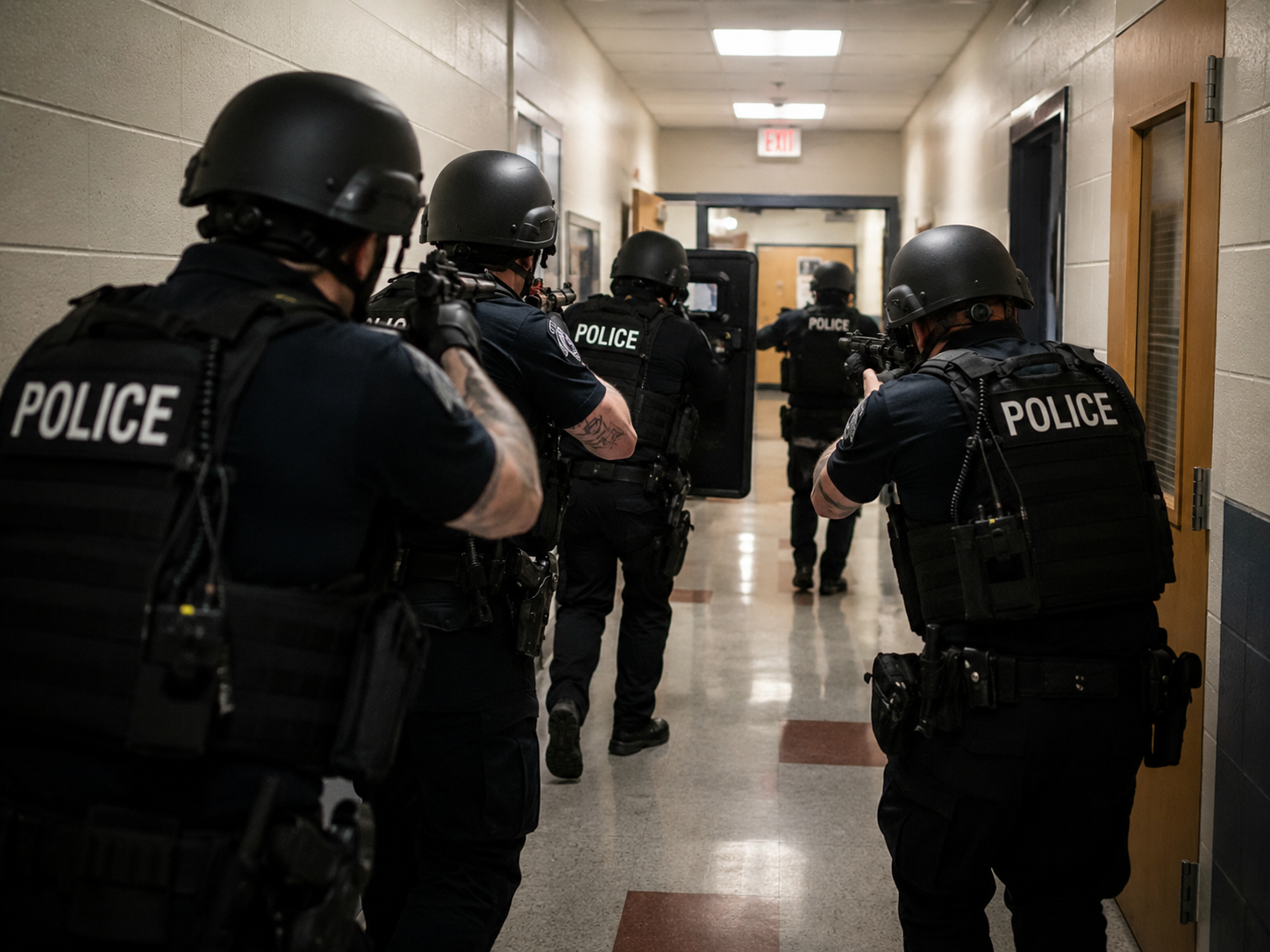
The first responsibility of responding law enforcement in an active shooter incident is the rapid neutralization of the immediate threat. This priority is non-negotiable. Ongoing violence must be stopped to prevent additional casualties and to create the physical and psychological space required for subsequent lifesaving actions. However, attention science cautions against treating this objective as a terminal endpoint. When threat neutralization is cognitively framed as the “completion” of the mission, responders may unintentionally delay or deprioritize secondary yet equally critical tasks.
In civilian contexts, threat containment is best understood as a gateway function. It enables, rather than replaces, casualty identification and victim protection. Progressive emphasis is key: while early response emphasizes speed and decisiveness, subsequent phases require deliberate scanning, assessment, and control. Repetition with variation—reiterating that “the threat is stopped, but the mission continues”—helps anchor responder attention on the evolving operational picture without diminishing the primacy of safety.
Transitioning Attention: From Threat Focus to Victim Protection
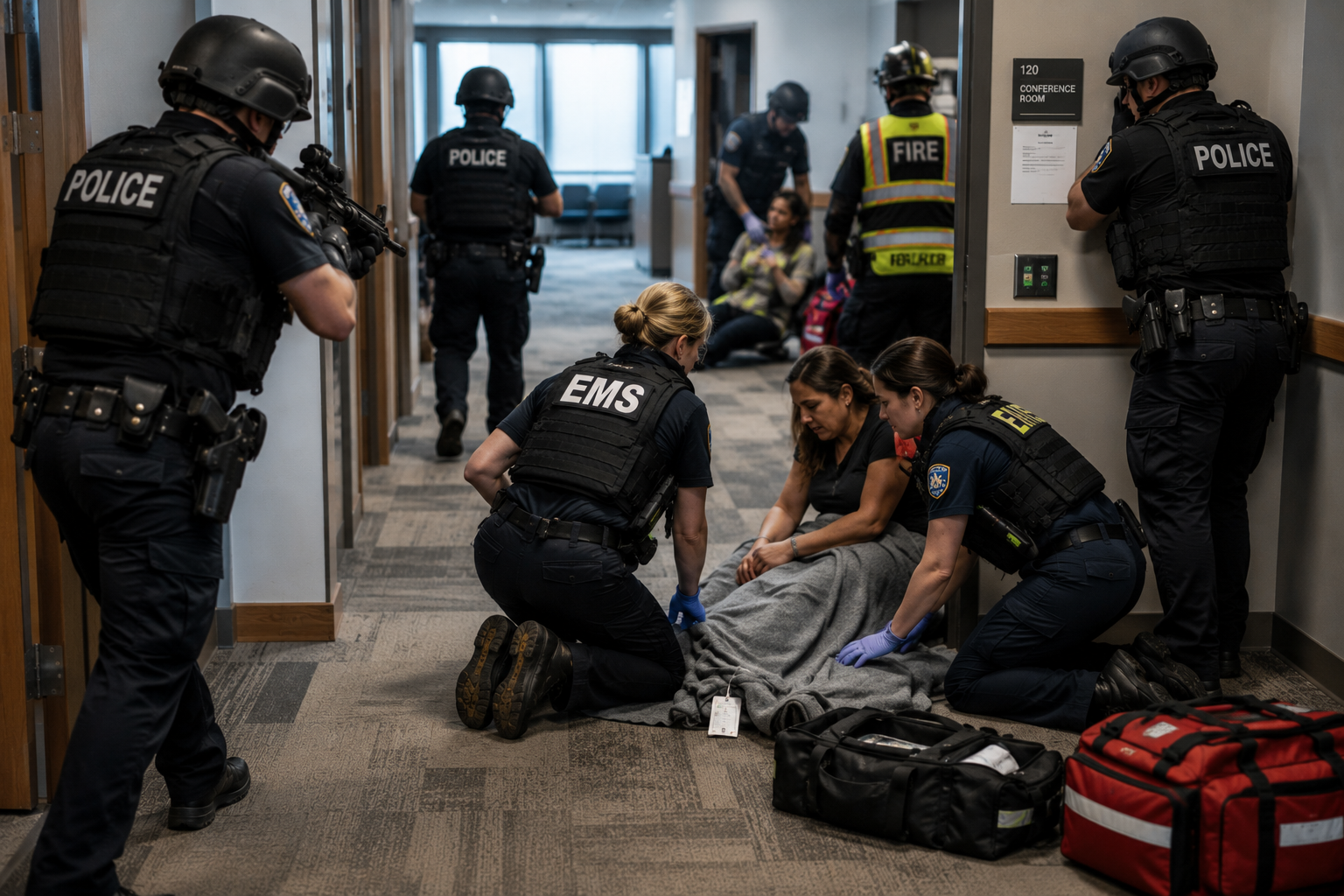
Once the immediate threat is neutralized or contained, the operational focus must expand. This transition is cognitively demanding. Responders who have been operating under high arousal and narrow attentional bandwidth must rapidly broaden their situational awareness to identify casualties, protect victims from secondary harm, and prevent further destabilization. Attention research shows that such transitions are prone to delay unless explicitly trained and reinforced (Endsley, 1995).
Civilian response doctrine must therefore formalize this shift. Deliberate casualty identification is not a secondary task performed “when time allows”; it is an integral mission objective that begins as soon as conditions permit. Victim protection—shielding injured individuals from additional threats, exposure, or neglect—requires both physical presence and command-level prioritization. When framed clearly, this expanded responsibility reinforces the ethical foundation of civilian policing and sustains public legitimacy during crisis response.
Cognitive Chunking and the Reality of Multi-Objective Operations
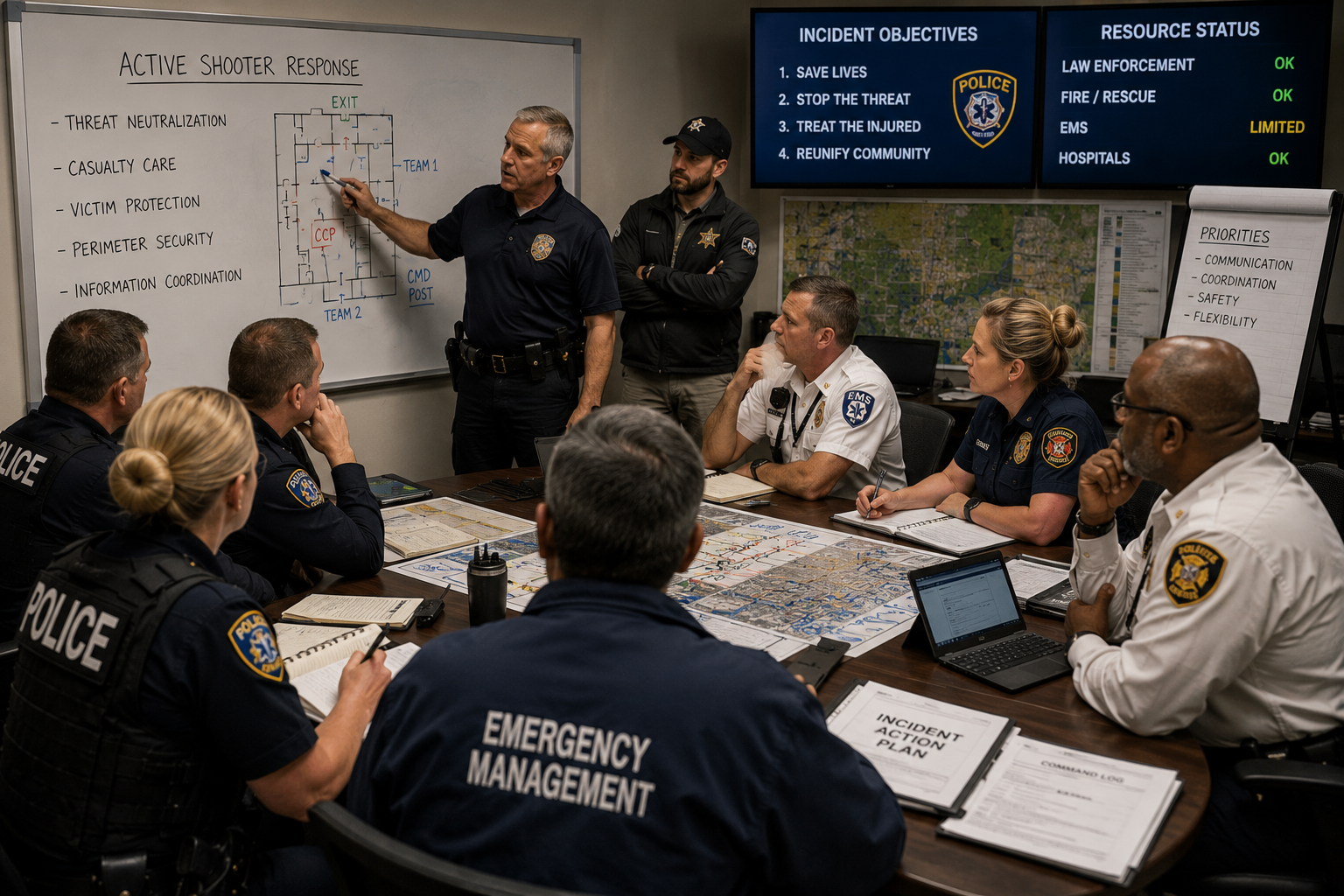
High-threat incidents rarely unfold as linear sequences. Instead, they demand simultaneous execution of multiple objectives under constrained staffing and time. Cognitive chunking—the organization of complex tasks into manageable units—provides a practical framework for understanding this reality (Miller, 1956). In civilian active shooter response, these chunks typically include threat control, casualty management, perimeter security, and information coordination.
Adequate personnel are essential to execute these tasks concurrently. When staffing is limited, agencies must consciously prioritize which objectives can be performed in parallel and which must be staged. This is where reinterpretation of military-derived tactics becomes critical. Military doctrine often assumes larger force elements, permissive rules of engagement, and dedicated medical assets. Civilian agencies, by contrast, operate with smaller teams, stricter legal thresholds, and limited immediate medical support. Applying military tactics without adaptation risks overloading responders and degrading overall performance.
Evaluating Military-Derived Tactics in Civilian Contexts
The widespread influence of military tactics in civilian active shooter response reflects a desire for proven, decisive action models. However, attention science and operational analysis both suggest that direct transfer without contextual evaluation can be counterproductive. Civilian responders must ask whether a given tactic supports or hinders their ability to manage multiple objectives simultaneously.
Legal constraints significantly shape this evaluation. Use-of-force standards, duty-to-care obligations, and constitutional protections impose boundaries that differ sharply from military operations. Resource limitations further complicate implementation. A tactic that requires sustained manpower or specialized equipment may draw attention away from casualty protection or scene stabilization. High-threat volatility—such as uncertain suspect status or secondary device concerns—adds another layer of complexity that civilian doctrine must explicitly address.
Progressive Emphasis and Tactical Flexibility
Effective reinterpretation relies on progressive emphasis: reinforcing core principles while adjusting their application as conditions evolve. Tactical flexibility is not improvisation; it is structured adaptability informed by training and doctrine. For example, maintaining forward movement to address threats must be balanced against the need to pause, reassess, and secure victims once violence has ceased. Repeating this balance across training and policy documents—using varied scenarios and language—helps embed it into responder cognition.
This approach aligns with findings from human factors research, which indicate that flexibility improves performance when responders are trained to recognize transition points rather than follow rigid scripts (Klein, 1998). In civilian active shooter response, these transition points often coincide with shifts in threat status, casualty discovery, or command integration.
Continuous Relevance Anchoring: Keeping Life Preservation Central
Throughout all phases of response, continuous relevance anchoring is essential. This technique repeatedly connects tactical actions back to their ultimate purpose: saving lives and restoring safety. By explicitly linking threat neutralization, casualty protection, and multi-objective coordination to this overarching goal, agencies help responders maintain moral and operational clarity under stress.
This anchoring also supports interagency coordination. When law enforcement, fire, EMS, and emergency management share a common life-preservation framework, coordination improves even in the absence of perfect communication. The reinterpretation of tactics thus extends beyond individual actions to encompass system-level alignment.
Implications for Doctrine, Training, and Policy
Reinterpreting fundamental ideas in civilian active shooter response has concrete implications. Doctrine should articulate threat neutralization as an enabling function rather than a terminal objective. Training must emphasize cognitive transitions and multi-objective task management under stress. Policies should encourage contextual evaluation of tactics, explicitly addressing legal authority, resource availability, and operational volatility.
Importantly, this reinterpretation does not diminish the value of decisive action. Instead, it refines it. By aligning tactics with civilian realities and cognitive principles, agencies enhance their capacity to act swiftly without sacrificing adaptability or ethical grounding.
Conclusion: Reinterpretation as Operational Maturity
Civilian active shooter response has evolved significantly over the past decades, yet continued refinement is necessary. Reinterpreting fundamental tactical ideas through the lens of attention science and operational context represents a maturation of doctrine rather than a rejection of existing practices. Threat neutralization remains critical, but it must be embedded within a broader, multi-objective framework that prioritizes casualty protection and community restoration.
Ultimately, tactics that are reinterpreted—rather than imported wholesale—allow civilian responders to meet the complex demands of high-threat incidents. By front-loading relevance, structuring cognitive load, emphasizing flexibility, and anchoring actions to life preservation, agencies can ensure that their response remains both operationally effective and ethically sound.