
Civilian Casualty Survivability and Public Expectations
Civilian Casualty Survivability and Public Expectations
Civilian survivability in high-threat incidents hinges on a narrow window where seconds determine outcomes. In those first moments, two variables dominate: how quickly life-threatening hemorrhage is controlled and how rapidly casualties are moved to a place where care can continue. These are not abstract clinical ideals; they are operational facts repeatedly confirmed by trauma science and after-action analysis. At the same time, public expectations of emergency response have evolved. Communities increasingly expect immediate intervention, visible action, and rapid medical care—expectations shaped by media coverage, public education campaigns, and a growing awareness that bleeding is survivable when addressed early.
This essay examines the intersection between survivability and expectation. It argues that outcomes improve when response systems align physiology, operations, and public messaging. Where systems delay care, survivability declines and public trust erodes. Where systems invest in early hemorrhage control, rapid extraction, accessible medical gear, and transparent communication, lives are saved and confidence is strengthened. The conclusion is direct: survivability is a public health issue as much as an operational one, and managing expectations is inseparable from improving outcomes.
The Physiology That Sets the Clock
Trauma physiology establishes a hard constraint: uncontrolled external hemorrhage can be fatal within minutes. Unlike complex internal injuries, severe bleeding is both rapidly lethal and rapidly correctable when addressed promptly. Tourniquets, wound packing, and pressure dressings interrupt the cascade toward shock and cardiac arrest. Airway positioning and rapid movement further stabilize patients long enough to reach definitive care.
Extraction time compounds this reality. Even perfect hemorrhage control cannot substitute for evacuation to advanced medical capability when injuries are severe. Survivability improves when control and movement occur early and together. Delay either variable and mortality rises. This is why survivability curves steepen sharply with each minute lost—not hours, not shifts, but minutes.
These facts frame everything that follows. Any response model that postpones care until full scene security, or that treats extraction as an afterthought, conflicts with human physiology.
What the Public Now Expects—and Why
Public expectations have shifted in parallel with knowledge. Campaigns emphasizing bleeding control, public access to tourniquets, and bystander intervention have taught communities a simple truth: people do not have to die from bleeding. As a result, when an incident occurs, communities expect responders to move toward casualties quickly and decisively.
Media coverage reinforces this expectation by highlighting stories of rapid intervention and survival. Social media amplifies both successes and failures, often in real time. Communities see video, hear audio, and form judgments long before investigations conclude. In this environment, perceived inaction—even when driven by outdated doctrine—damages confidence.
Expectations are not demands for recklessness. They are demands for competence aligned with modern knowledge. When responders appear constrained by procedures that delay care, the public interprets the delay as preventable.
The Evidence of Delay—and Its Consequences
Data across multiple incident types converge on a consistent finding: delays produce preventable deaths. After-action reviews repeatedly identify extended time-to-care as a primary contributor to mortality, even when threats are neutralized successfully. Patients who might have survived with early intervention deteriorate while waiting for access.
These delays stem from structural choices: staging far from casualties, rigid interpretations of “scene safety,” insufficient on-person medical capability, and limited integration between tactical and medical functions. Each choice adds minutes. Together, they close the survivability window.
The public rarely parses these internal decisions. Outcomes are what matter. When deaths appear avoidable, trust is lost—even if responders acted with courage and intent.
Survivability as a Public Health Imperative
Framing survivability solely as a tactical problem misses the larger picture. Survivability is a population-level outcome influenced by policy, training, equipment access, and education. Communities that invest in early intervention across the entire chain—bystanders, responders, facilities—consistently perform better.
This public health lens emphasizes prevention of death rather than post-hoc explanation. It prioritizes time-to-intervention metrics, access to hemorrhage control, and system readiness. It also recognizes that responders operate within environments shaped by community design: where tourniquets are placed, how buildings are laid out, and how people are educated.
When survivability improves, the benefits extend beyond individuals. Families, workplaces, and communities recover faster. Confidence in public institutions strengthens.
Access to Medical Gear in Public Spaces
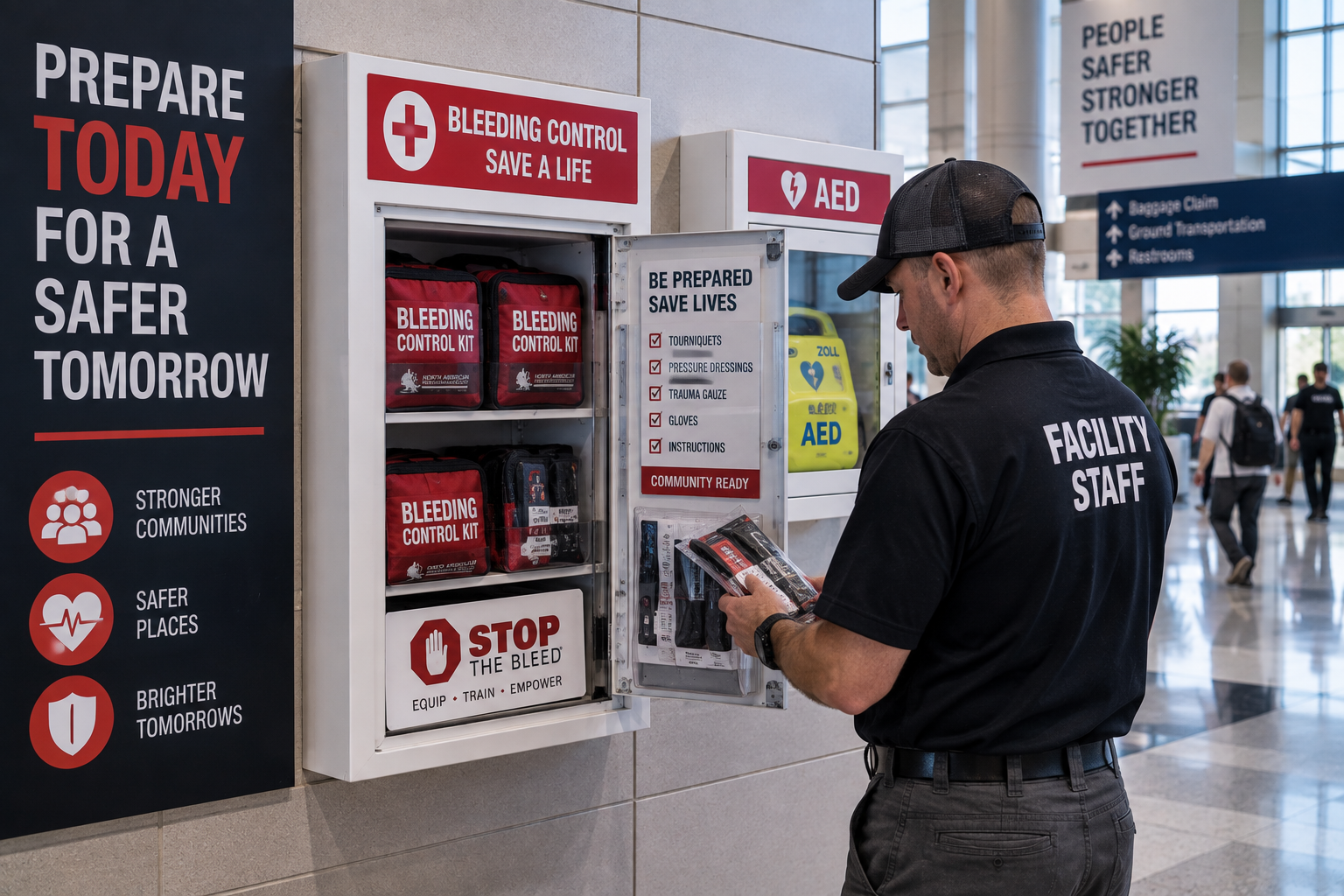
One of the most actionable levers for improving survivability is access to bleeding control equipment in public spaces. Automated external defibrillators changed cardiac arrest outcomes by placing lifesaving tools within reach. Bleeding control follows the same logic.
Publicly accessible tourniquets, pressure dressings, and gloves reduce reliance on responder arrival times. They empower immediate action and compress the interval between injury and intervention. Importantly, access must be paired with quality control—reliable equipment, appropriate sizing (including pediatric considerations), and routine maintenance.
Placement matters. Kits positioned near entrances, high-traffic areas, and known gathering points are more likely to be used. Visibility matters too; equipment that is hidden is functionally absent. Communities that normalize the presence of medical gear reinforce a culture of preparedness.
The Role of Responders in Meeting Expectations
Responders occupy a visible role in shaping public confidence. Actions during the first minutes signal competence, urgency, and care. Early hemorrhage control, purposeful movement, and coordinated extraction demonstrate alignment with modern practice.
Meeting expectations does not require perfection; it requires alignment. When responders apply evidence-based interventions early and communicate clearly, communities recognize effort and intent—even amid uncertainty. Conversely, when responders appear constrained by outdated models, frustration grows.
Training is decisive here. Responders must be comfortable operating in dynamic environments, prioritizing life-saving interventions, and adapting movement to evolving risk. This comfort is built through repetition and realistic preparation, not policy statements.
Transparent Messaging Before, During, and After Incidents
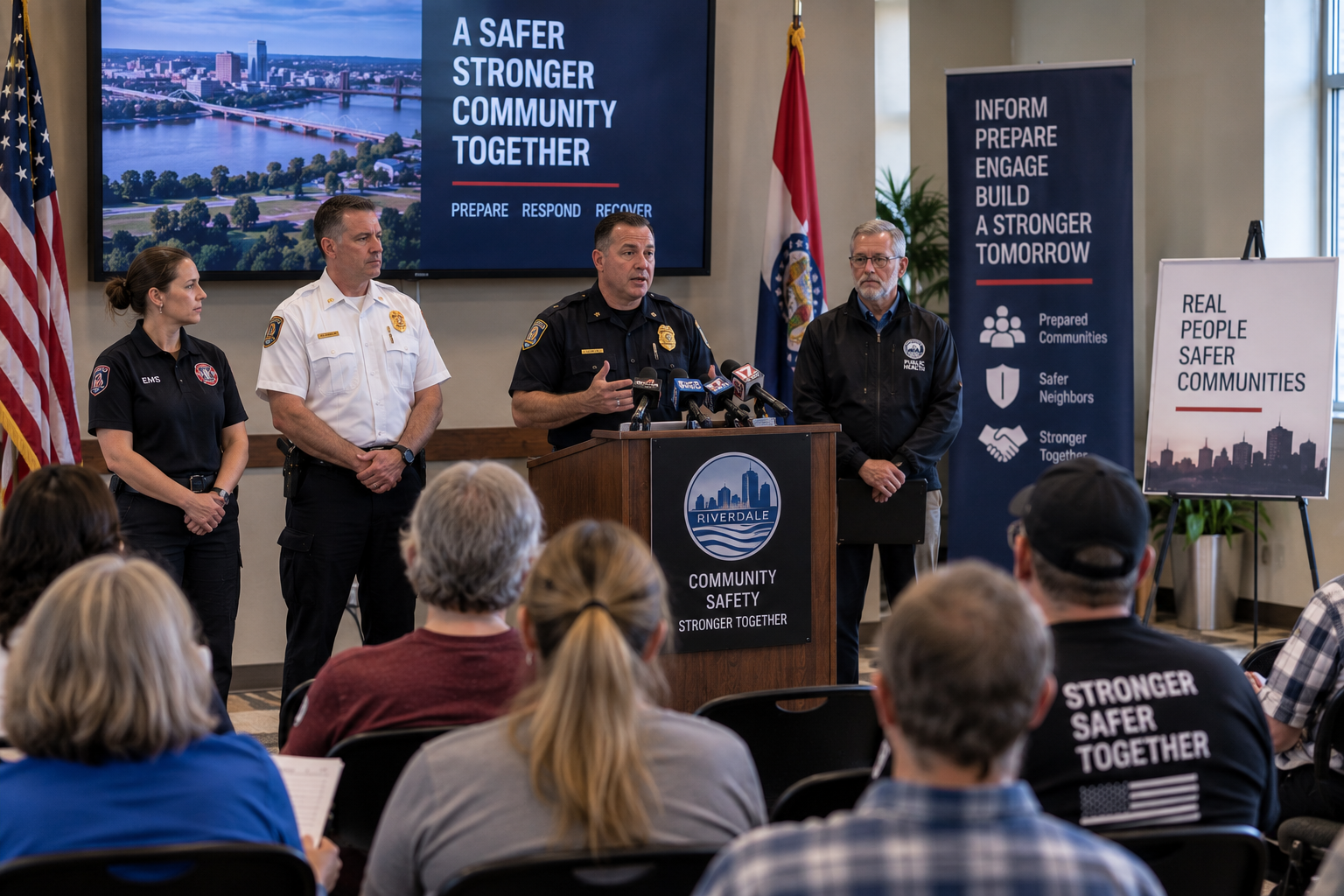
Public confidence is sustained by transparent messaging that sets realistic expectations. Before incidents occur, agencies should communicate what communities can expect: early bleeding control, rapid access when feasible, and honest acknowledgment of limitations imposed by threat conditions.
During incidents, clear and timely updates reduce speculation and misinformation. Explaining what is known, what is being done, and why certain actions take time helps the public understand complexity without feeling dismissed.
After incidents, transparency about lessons learned—what worked, what did not, and what will change—demonstrates accountability. Communities are more forgiving of imperfection when they see commitment to improvement.
Aligning Metrics With What the Public Values
Traditional response metrics often emphasize arrival times, clearance rates, and procedural compliance. While important, these metrics do not always reflect what the public values most: lives saved and suffering reduced.
Incorporating survivability-focused metrics—time to hemorrhage control, time to first medical contact, time to extraction—aligns evaluation with outcomes. Reporting these measures publicly reinforces transparency and signals seriousness about improvement.
Metrics shape behavior. When agencies measure what matters, systems adapt accordingly.
The Ethical Dimension of Expectation Management
There is an ethical component to public expectation. Communities deserve honesty about risk and capability. Overpromising erodes trust when reality intervenes; under-communicating breeds fear and rumor.
Ethical messaging balances reassurance with realism. It affirms commitment to rapid care while acknowledging that threats introduce constraints. It explains that safety is managed, not guaranteed, and that decisions aim to save the most lives possible.
This ethical posture respects the public as partners rather than spectators.
Continuous Improvement as a Trust Builder
Trust is not static; it is earned repeatedly. Continuous improvement—refining training, updating equipment, revising protocols—signals respect for both responders and the public. Sharing progress reinforces confidence.
Importantly, improvement should be visible. Community training events, public equipment installations, and published after-action summaries make progress tangible. When communities see change, expectations become collaborative rather than adversarial.
Integrating Bystanders Into the Survivability Chain
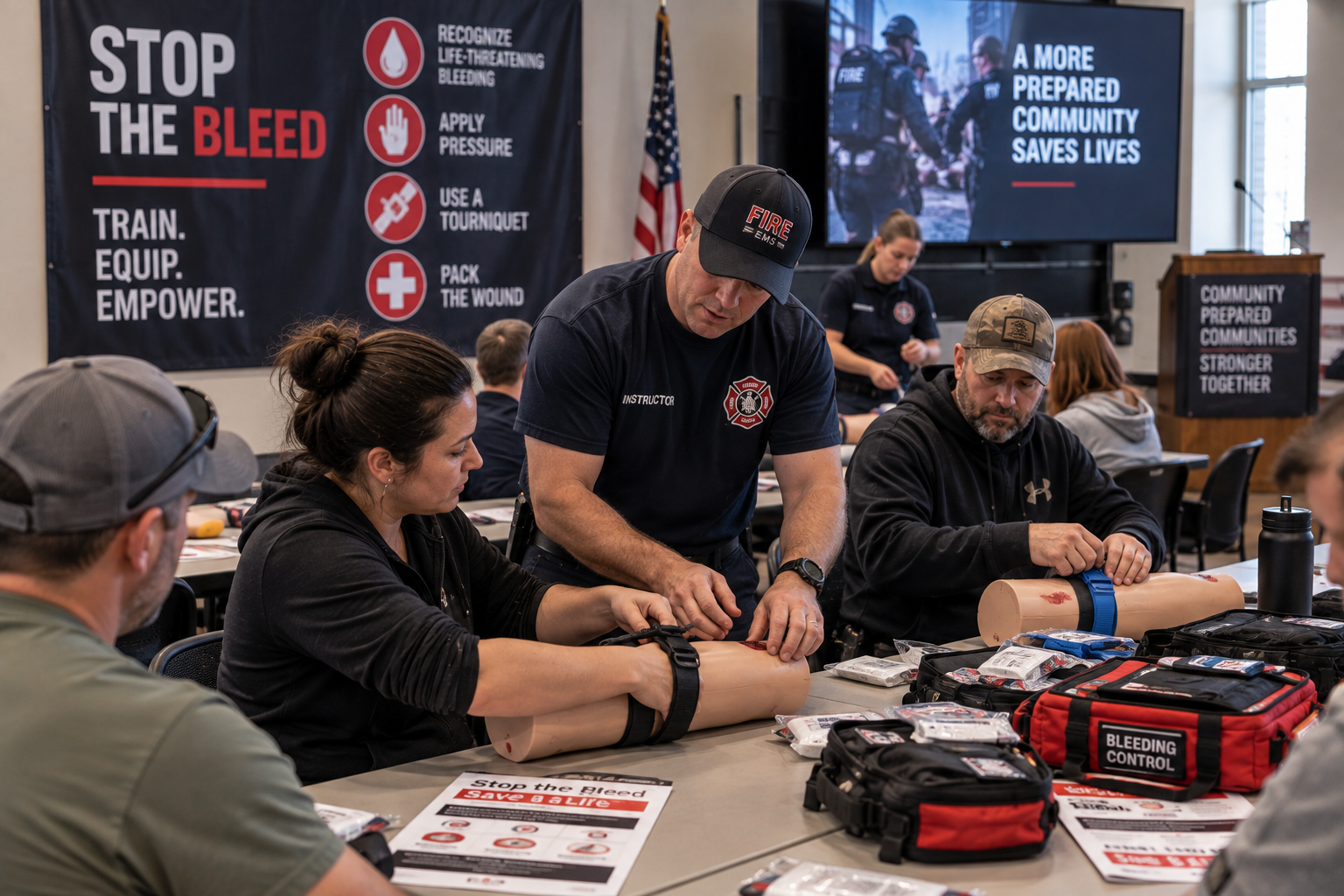
Bystanders are often the first caregivers. Empowering them with training and equipment extends the survivability chain backward in time. This integration acknowledges reality: responders cannot be everywhere instantly.
Public education that emphasizes simple, effective actions—apply pressure, use a tourniquet, move to safety—aligns with responder practice. When bystanders act early, responders can build upon those actions rather than starting from zero.
This shared responsibility strengthens outcomes and trust simultaneously.
Relevance Across Incident Types
The principles discussed apply beyond active shooter events. Any scenario involving traumatic injury—transportation incidents, industrial accidents, natural disasters—benefits from early hemorrhage control, rapid extraction, accessible equipment, and clear communication. Survivability improvements are transferable across contexts.
This universality reinforces the public health framing: investing in survivability yields dividends regardless of cause.
Conclusion
Civilian casualty survivability is shaped by minutes, not intentions. Early hemorrhage control and rapid extraction remain the decisive variables, and public expectations increasingly reflect this knowledge. When response systems delay care, preventable deaths occur and confidence suffers. When systems align practice with physiology—by enabling early intervention, improving access to medical gear, and communicating transparently—lives are saved and trust grows.
Survivability is not solely a tactical concern; it is a community outcome. Meeting public expectations requires evidence-based action and honest messaging about capabilities and limits. By treating survivability as a public health priority and aligning operations accordingly, agencies honor both their mission and the communities they serve.