
Ensuring Comprehensive Safety and Site Preparedness
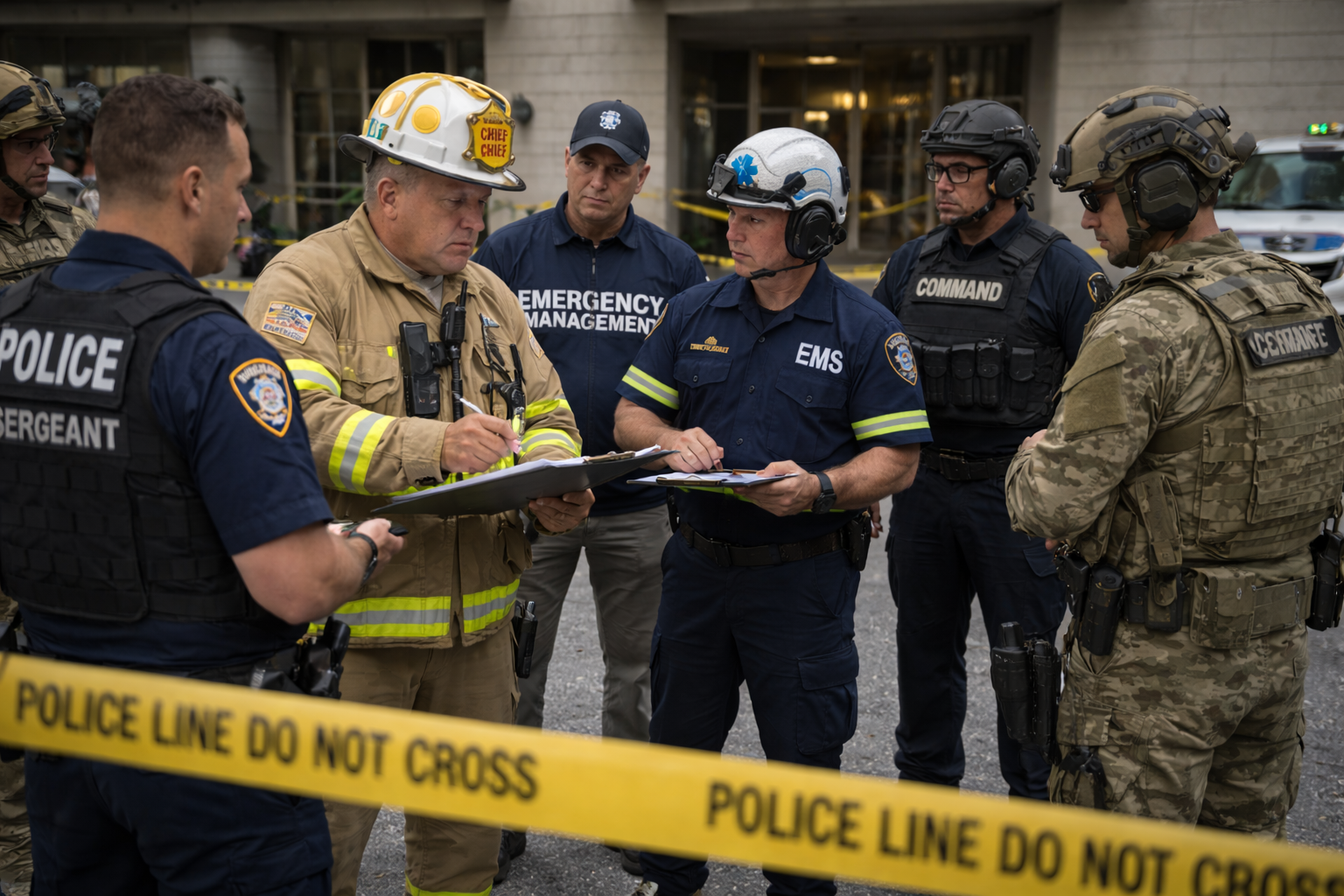
Ensuring Comprehensive Safety and Site Preparedness: Laying the Groundwork for Recovery and Community Rebuilding
In the aftermath of a high-threat incident, safety is no longer defined by the absence of gunfire or the removal of an immediate hazard. It is defined by confidence—confidence that the site can be entered without undue risk, that all individuals are accounted for, that structures are stable, and that the environment will not generate secondary harm. The transition from response to recovery hinges on this moment. If site preparedness is incomplete or rushed, investigative integrity is compromised, responders are placed at renewed risk, and communities experience prolonged uncertainty and trauma.
The central argument of this analysis is clear: ensuring comprehensive safety and site preparedness is a deliberate operational phase that enables investigation, restoration, and long-term recovery. It is not a clerical task assigned after the “real work” is done; it is the work that allows everything else to proceed. Applying the science of listener attention—front-loaded relevance, structured cognitive chunking, progressive emphasis, repetition with variation, and continuous relevance anchoring—this article demonstrates why coordinated site preparedness is essential to closing the incident responsibly and restoring public trust.
Why Site Preparedness Determines Recovery Success
The first truth that must be stated plainly is this: recovery cannot begin on an unsafe site. Investigators cannot work effectively in unstable structures. Restoration crews cannot enter environments with unresolved hazards. Communities cannot heal when uncertainty persists about what remains unseen or unresolved.
Front-loading this relevance is intentional. In many incidents, the urgency that drove earlier phases gives way to pressure to “move on.” That pressure is dangerous. Site preparedness is the barrier between controlled recovery and cascading failure. It protects people, preserves evidence, and establishes legitimacy.
Preparedness is therefore not about speed—it is about readiness.
Preparing the Site for Investigative and Recovery Operations
One of the earliest responsibilities in the recovery phase is preparing the site for investigative teams, structural assessors, and recovery personnel. Each of these groups has different needs, but all share a common requirement: safe, predictable access.
Law enforcement must be able to conduct forensic examinations without contamination or interruption. Structural engineers must assess integrity without exposure to secondary hazards. Recovery and restoration crews must work without fear of collapse, contamination, or undiscovered threats.
This preparation requires deliberate sequencing. Hazards are identified and mitigated before access is granted. Pathways are defined. Zones are established. Each action reduces ambiguity and risk.
Repetition with variation reinforces the lesson: whether the incident occurred in a school, a workplace, or a public venue, the principle remains constant—no access without preparation.
Multi-Agency Coordination as the Enabling Mechanism
Site preparedness is inherently multi-agency. No single discipline possesses the expertise or authority to certify safety across all domains. Law enforcement, fire services, EMS, emergency management, and specialized technical teams must coordinate their efforts.
This coordination is not informal cooperation; it is structured synchronization. Agencies align timelines, share findings, and sequence tasks so that one assessment does not invalidate another. Structural evaluation informs investigative access. Hazard mitigation informs restoration timelines. Accountability data informs public communication.
Without this coordination, gaps emerge. One agency declares readiness while another remains unaware of unresolved risk. The result is confusion, delay, or exposure.
Anchoring attention here is critical: coordination is the safety mechanism.
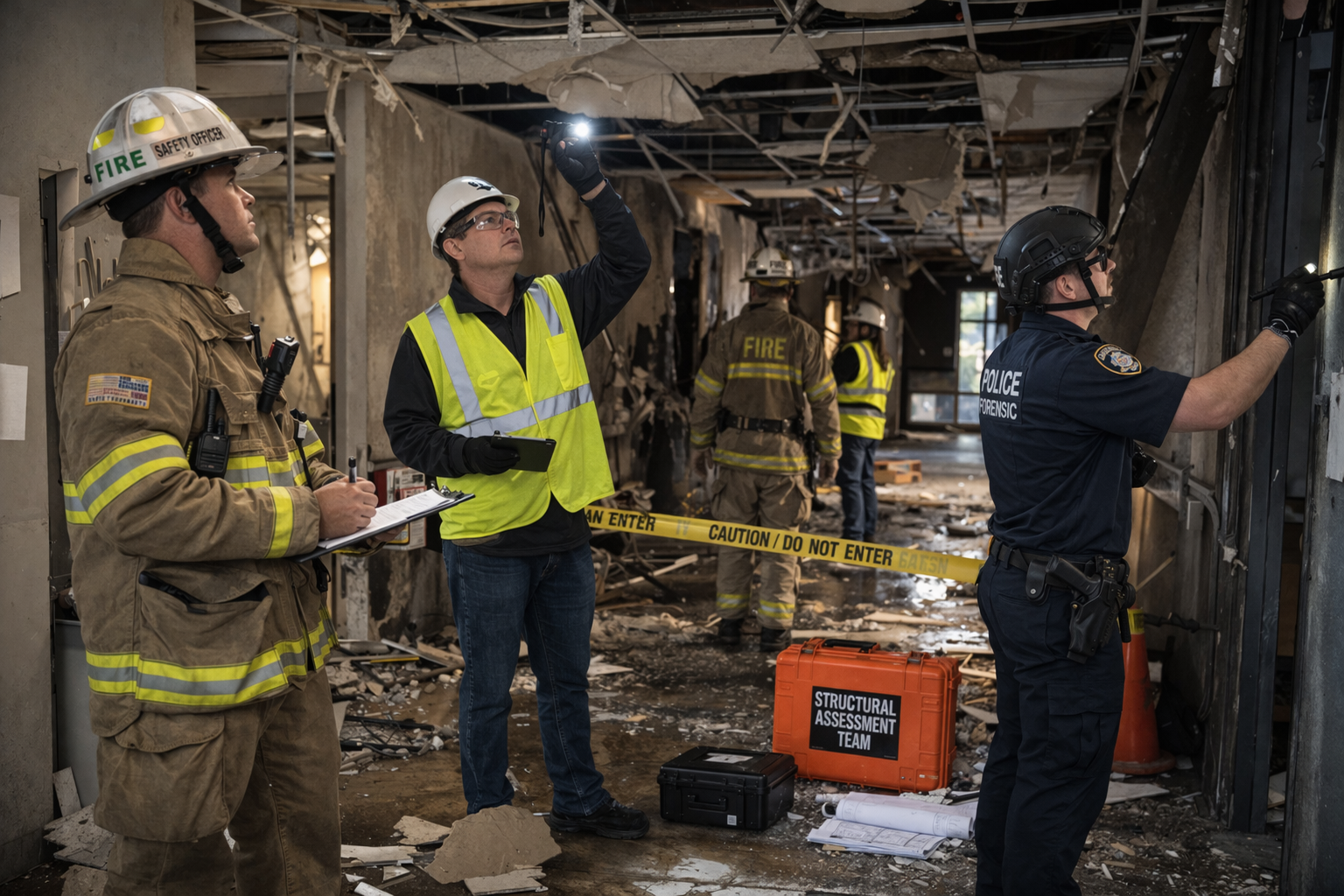
Structural Assessment: Beyond Visible Damage
Structural assessment is a cornerstone of site preparedness. Visible damage tells only part of the story. Fire, ballistic impact, explosions, and water exposure can compromise load-bearing elements in ways that are not immediately apparent.
Engineers and fire services evaluate stability, identify unsafe zones, and recommend controls such as shoring, exclusion areas, or controlled demolition. These assessments protect not only investigators and crews, but also responders who may be emotionally fatigued and less sensitive to subtle warning signs.
The importance of this step bears repetition: structural failure during recovery is preventable harm. Preparedness exists to prevent it.
Safety Verification as a Continuous Process
Safety verification is not a single declaration; it is an ongoing process. As recovery operations progress, new hazards may be revealed—hidden debris, secondary contamination, or delayed structural shifts. Preparedness therefore requires continuous monitoring and reassessment.
This dynamic approach mirrors earlier phases of response. Just as triage and risk assessment were continuous during chaos and stabilization, safety verification remains adaptive during recovery. The environment is treated as living, not static.
Listener attention science supports this framing. By repeatedly reinforcing that safety verification continues, not concludes, organizations avoid the cognitive trap of premature certainty.
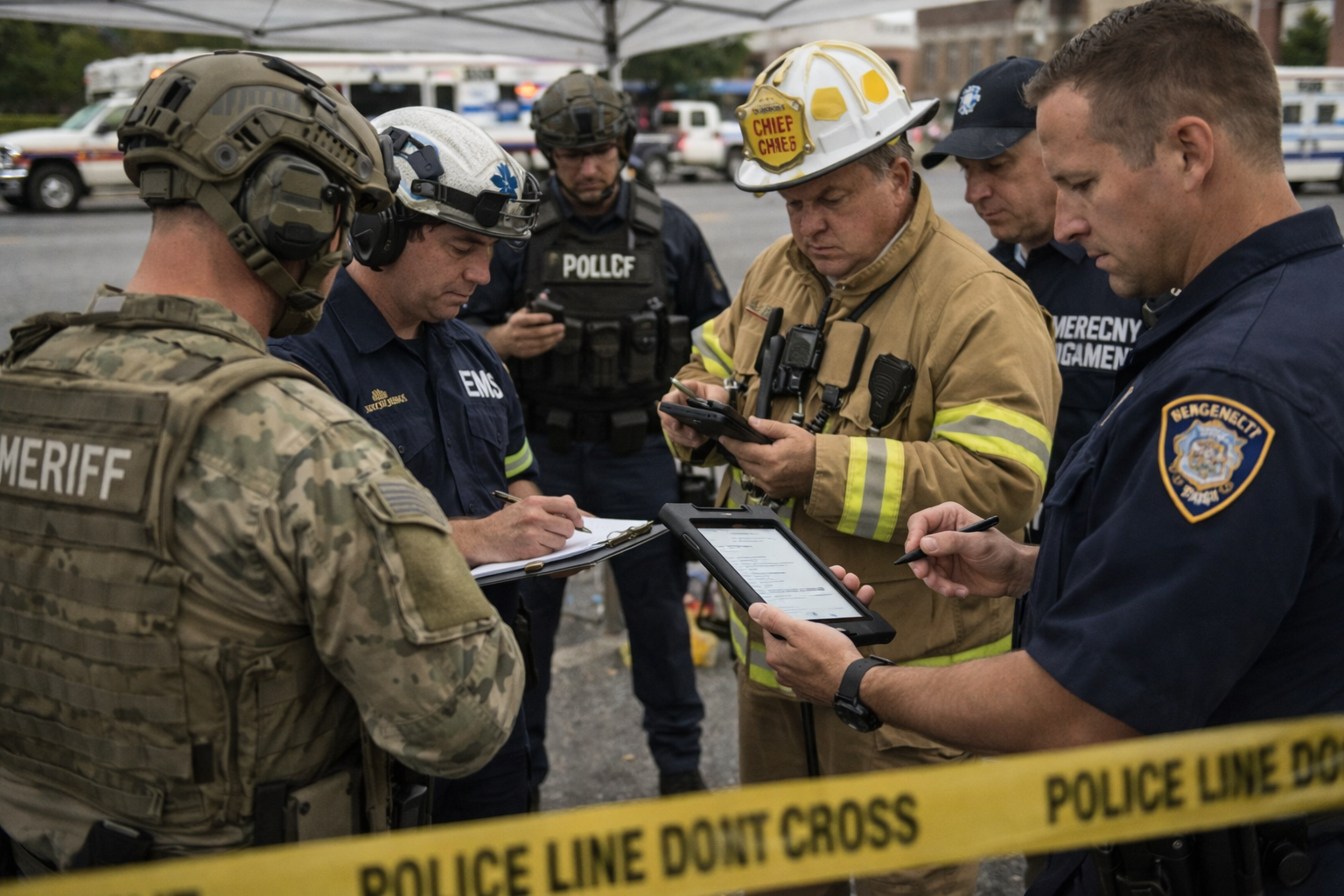
Accounting for Victims, Witnesses, and Responders
Accurate accounting of all individuals involved is a critical element of site preparedness. This includes not only confirmed victims, but also witnesses, uninjured occupants, and responders who entered the scene during earlier phases.
Comprehensive accountability serves multiple functions:
It confirms that no one remains unaccounted for or at risk.
It supports investigative clarity and timeline reconstruction.
It reduces anxiety among families and the broader community.
Accounting is not simply administrative. It is protective. Missing individuals represent unresolved danger, incomplete rescue, or investigative failure.
Repetition with variation underscores the point: accountability protects people and institutions alike.
Protecting Responders From Residual Harm
Ensuring comprehensive safety includes protecting responders from residual hazards and cumulative trauma. Physical dangers are obvious, but psychological risks are often underestimated. Recovery operations expose responders to graphic scenes, prolonged uncertainty, and moral stress.
Preparedness includes implementing responder safety measures: controlled exposure, rotation of personnel, access to behavioral health support, and clear communication about risks. These measures are not ancillary; they preserve the workforce and prevent long-term harm.
Anchoring attention here reinforces a critical value: responder safety extends beyond the threat itself.
Preparing for Restoration and Reoccupation
As investigations conclude and hazards are mitigated, attention turns to restoration. Utilities must be restored. Facilities must be repaired. Public spaces must be made functional again. These efforts depend entirely on the quality of site preparedness.
Restoration crews require safe access, clear boundaries, and confidence that the environment willis free of unresolved threats. Premature restoration creates risk; delayed restoration prolongs disruption and trauma.
Preparedness ensures that restoration is orderly, efficient, and credible.
The Role of Clear Communication
Preparedness is also communicative. Agencies must convey what has been done, what remains, and what comes next. Transparent communication reduces rumors, manages expectations, and reinforces trust.
This communication is grounded in preparedness work. When agencies can accurately describe site conditions and safety measures, messages carry authority. When preparedness is incomplete, communication becomes evasive or contradictory.
Trust follows competence. Competence follows preparation.
Seamless Transition to Community Rebuilding
The ultimate purpose of site preparedness is to enable a seamless transition to community rebuilding. Rebuilding is not only physical; it is social and psychological. Communities need assurance that the site is safe, that lessons have been learned, and that recovery is progressing with care.
Preparedness provides that assurance. It marks the boundary between crisis and continuity. When done well, it allows communities to reclaim space without fear.
Progressive emphasis brings the argument full circle: preparedness is how recovery earns legitimacy.
Cognitive Anchoring: Why This Phase Is Often Undervalued
Despite its importance, site preparedness is often undervalued because it lacks the visible urgency of earlier phases. There are no sirens, no rapid entries, no dramatic rescues. The work is deliberate and methodical.
Listener attention science explains why this phase is vulnerable to neglect. Humans attend to novelty and urgency. Preparedness requires sustained attention without adrenaline. Without deliberate emphasis, it is rushed or truncated.
Doctrine and training must therefore elevate preparedness as a distinct operational phase with defined objectives and authority.
Training and Doctrine Implications
Ensuring comprehensive safety and site preparedness must be trained, not assumed. Exercises should include post-incident operations: structural assessment coordination, accountability verification, perimeter transitions, and preparation for investigation and restoration.
Doctrine should clearly define roles, triggers, and handoffs. When preparedness is codified, it is respected. When it is implied, it is bypassed.
Repetition with variation—across incident types and environments—builds adaptability while reinforcing core principles.
Progressive Emphasis: Preparedness Enables Everything That Follows
Across every function—investigation, restoration, accountability, and rebuilding—the same truth recurs: preparedness enables progress. Without it, recovery stalls or fractures. With it, recovery proceeds with confidence and legitimacy.
This emphasis is not rhetorical. It is operational.
Conclusion
Ensuring comprehensive safety and site preparedness is one of the most consequential responsibilities in post-incident operations. By preparing the site for investigation and restoration, coordinating across agencies, verifying safety continuously, and accounting for all individuals involved, response systems protect both people and process.
Preparedness is the bridge between response and recovery. It safeguards responders, preserves evidence, reassures communities, and enables rebuilding. In high-threat incidents, how thoroughly a site is prepared determines how fully a community can recover.
Preparedness is not the end of the response. It is how the response becomes recovery.