
The Cost of Waiting: When Safety Becomes Lethal
The Cost of Waiting: When Safety Becomes Lethal
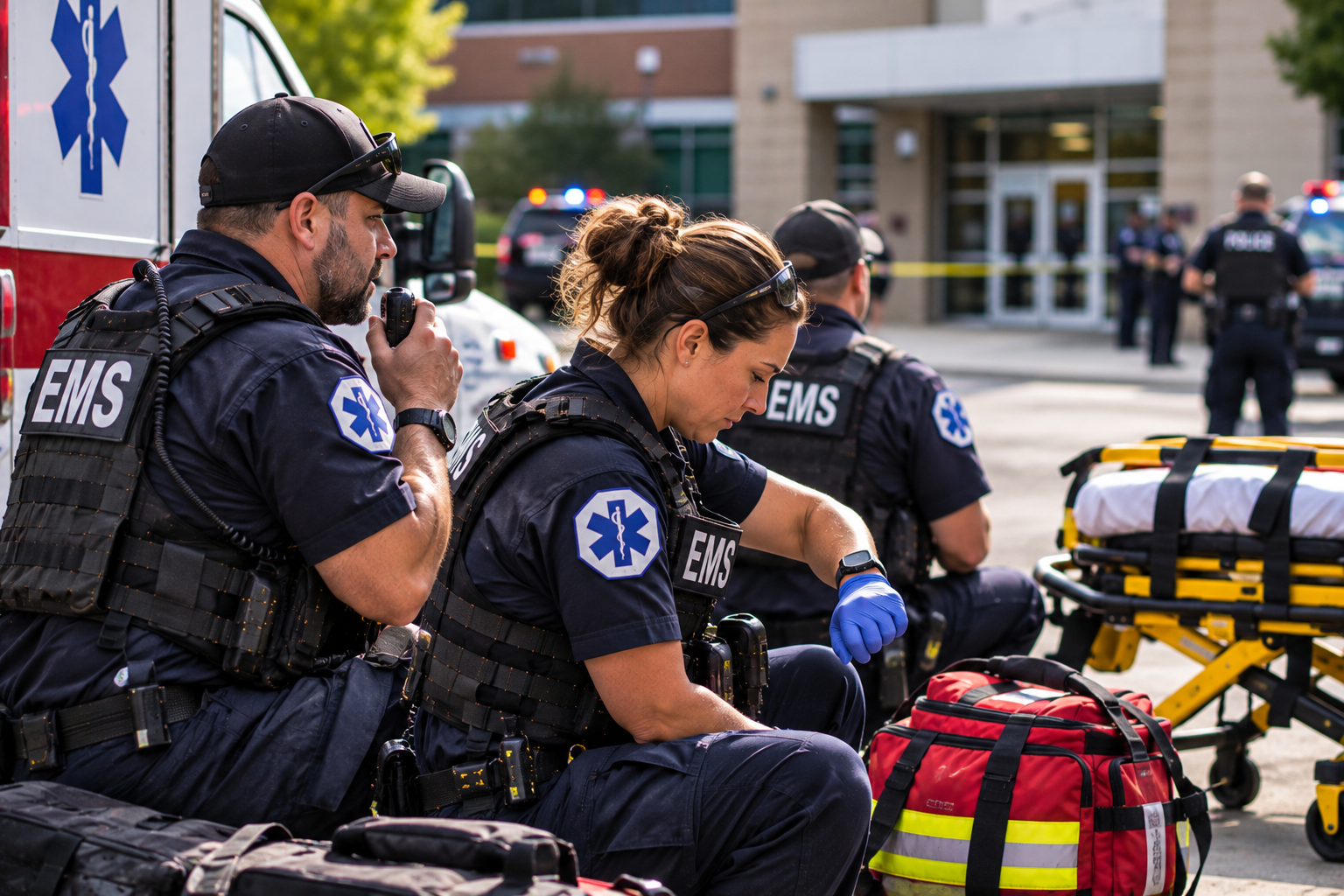
In high-threat incidents, few decisions carry greater consequence than the decision to wait. Waiting for confirmation. Waiting for clearance. Waiting for certainty. While caution has long been embedded in emergency response doctrine as a safeguard against responder harm, contemporary evidence increasingly demonstrates that excessive delay—particularly in medical intervention—has become a leading contributor to preventable death. In modern active shooter and mass violence incidents, the cost of waiting is measured not in administrative efficiency or procedural compliance, but in blood loss, hypoxia, and lost survivability windows. When safety is treated as an absolute prerequisite rather than a condition to be actively managed, it ceases to be protective and becomes lethal.
This tension sits at the center of modern Tactical EMS decision-making. The question is no longer whether risk exists—it always does—but whether the response system is structured to manage that risk in a way that preserves life. Evidence from trauma medicine, after-action reporting, and high-threat incident analysis converges on a consistent conclusion: delayed care worsens survivability. In environments where minutes determine outcomes, waiting for certainty often ensures that intervention arrives too late to matter.
Delayed Care and the Collapse of Survivability
Trauma physiology is unforgiving. Massive hemorrhage can lead to irreversible shock within minutes. Airway compromise and tension pneumothorax progress rapidly toward hypoxia and cardiac arrest. These processes do not pause while responders await a declaration of safety. Every minute without intervention compounds injury severity and erodes the likelihood of survival.
Despite this reality, traditional response models frequently delay medical access until law enforcement has fully secured the scene. In practice, this can result in 20–45-minute gaps between injury and definitive care—intervals that contradict the most basic principles of emergency medicine. Numerous analyses of mass casualty incidents reveal the same pattern: victims with initially survivable injuries deteriorated while responders staged, waited, or were procedurally constrained from entering.
This is not a failure of intent. Responders want to help. Rather, it is a failure of doctrine—one that prioritizes procedural certainty over physiological urgency. When systems normalize delay as a safety measure, they unintentionally institutionalize preventable death.
Hemorrhage Timelines Outpace Threat Clearance
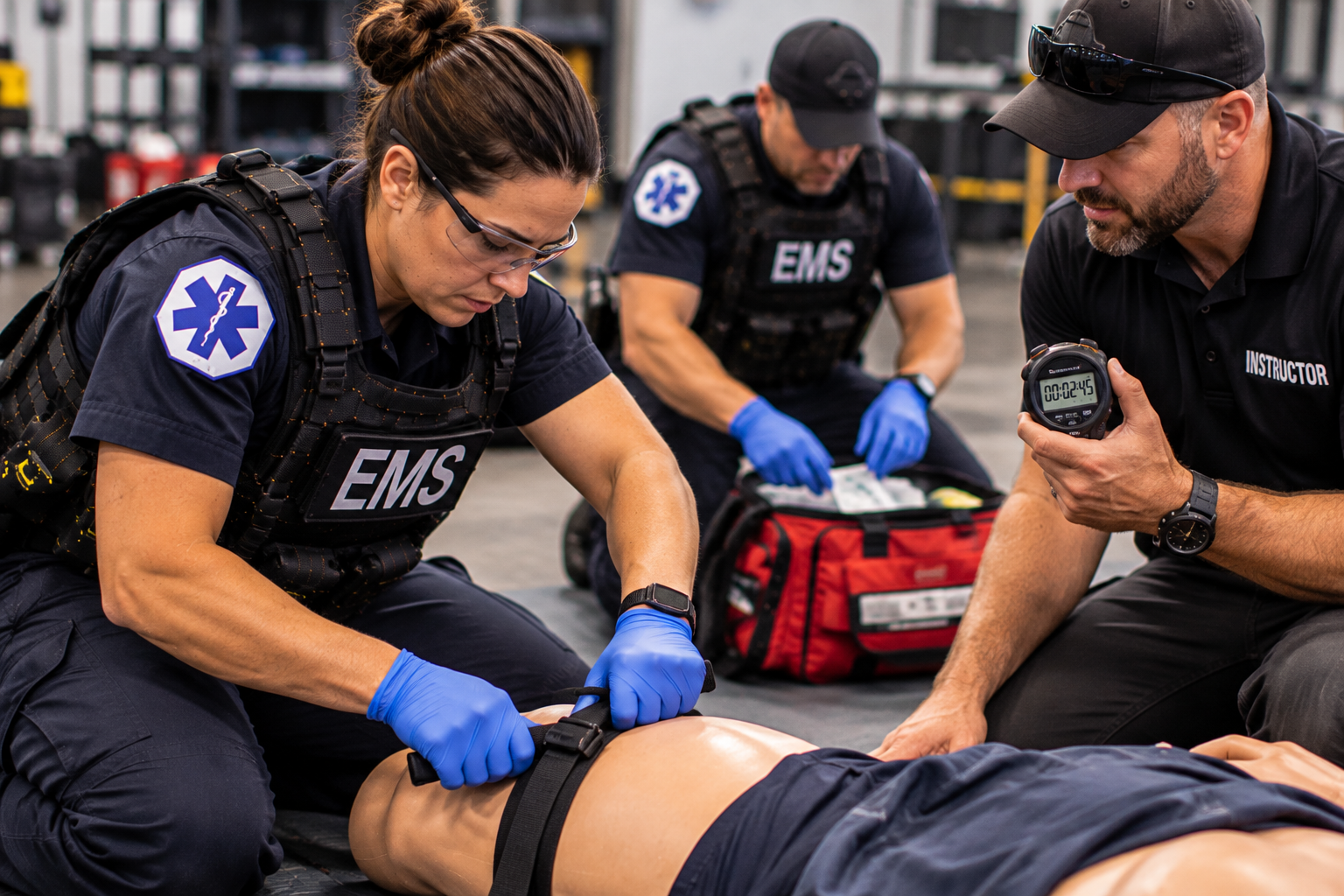
Hemorrhage is the leading cause of preventable death in trauma. Uncontrolled bleeding can prove fatal in as little as three to five minutes, particularly in ballistic and blast injuries common to active shooter events. In contrast, full threat clearance—defined as confirmation that no additional threats exist—often takes significantly longer, especially in large or complex environments.
This mismatch exposes a critical flaw in sequential response models. Threat clearance timelines routinely outpace hemorrhage survivability timelines. By the time a scene is declared “safe,” the window for effective intervention may have already closed. In these cases, waiting does not reduce harm; it guarantees it.
Modern tactical medical frameworks recognize this disparity and seek to address it through early, threat-mitigated care. Rather than waiting for absolute clearance, these models emphasize hemorrhage control and lifesaving interventions as soon as sufficient protection and situational awareness exist. The goal is not to eliminate risk, but to balance it against the certainty of death that accompanies inaction.
Psychological Fear and Decision Paralysis
Beyond policy and procedure, psychological factors play a powerful role in delayed care. High-threat environments induce fear—not only of physical harm, but of making the wrong decision. Responders operate under intense cognitive load, with limited information and high stakes. In these conditions, fear often manifests as hesitation.
This hesitation is frequently reinforced by training that emphasizes avoidance over assessment. When responders are taught that safety must be guaranteed before action, uncertainty becomes paralyzing. Without a clear “all clear,” the default response is to wait, even when conditions might allow for protected movement or limited intervention.
Importantly, this fear is not irrational. Responders have been injured and killed in high-threat incidents. However, fear becomes maladaptive when it prevents proportionate, informed action. The absence of dynamic risk assessment tools and training leaves responders with only two perceived options: wait or rush blindly. Neither serves survivability.
Effective doctrine replaces fear-based hesitation with structured decision-making. It equips responders to evaluate risk continuously, identify manageable hazards, and act decisively within defined parameters. In doing so, it transforms fear from a barrier into a signal—one that informs action rather than prevents it.
Legal Misunderstandings and the Reinforcement of Delay
Legal concerns further entrench waiting behavior. Many responders believe that entering an unsecured scene exposes them to unacceptable liability, even when lifesaving care is possible. This belief is often rooted in incomplete or misunderstood legal guidance rather than case law or statute.
In reality, the legal landscape surrounding emergency response is more nuanced. Courts have consistently recognized the necessity of discretionary decision-making in emergency contexts. Good-faith actions taken to preserve life, particularly when aligned with training and policy, are generally afforded significant deference. Conversely, failure to act when action is reasonably possible may also carry legal and ethical implications.
When agencies fail to provide clear legal frameworks supporting managed-risk intervention, responders default to the most conservative interpretation: do nothing until safety is assured. This institutional silence reinforces delay and shifts risk from responders to victims—often without explicit acknowledgment.
Clarifying legal expectations is therefore essential. Policies must explicitly authorize early, protected medical access under defined conditions. Training must reinforce that dynamic risk management is not only operationally sound, but legally defensible. Without this clarity, fear of liability will continue to outweigh the imperative to save lives.
Managed Risk as a Life-Saving Strategy
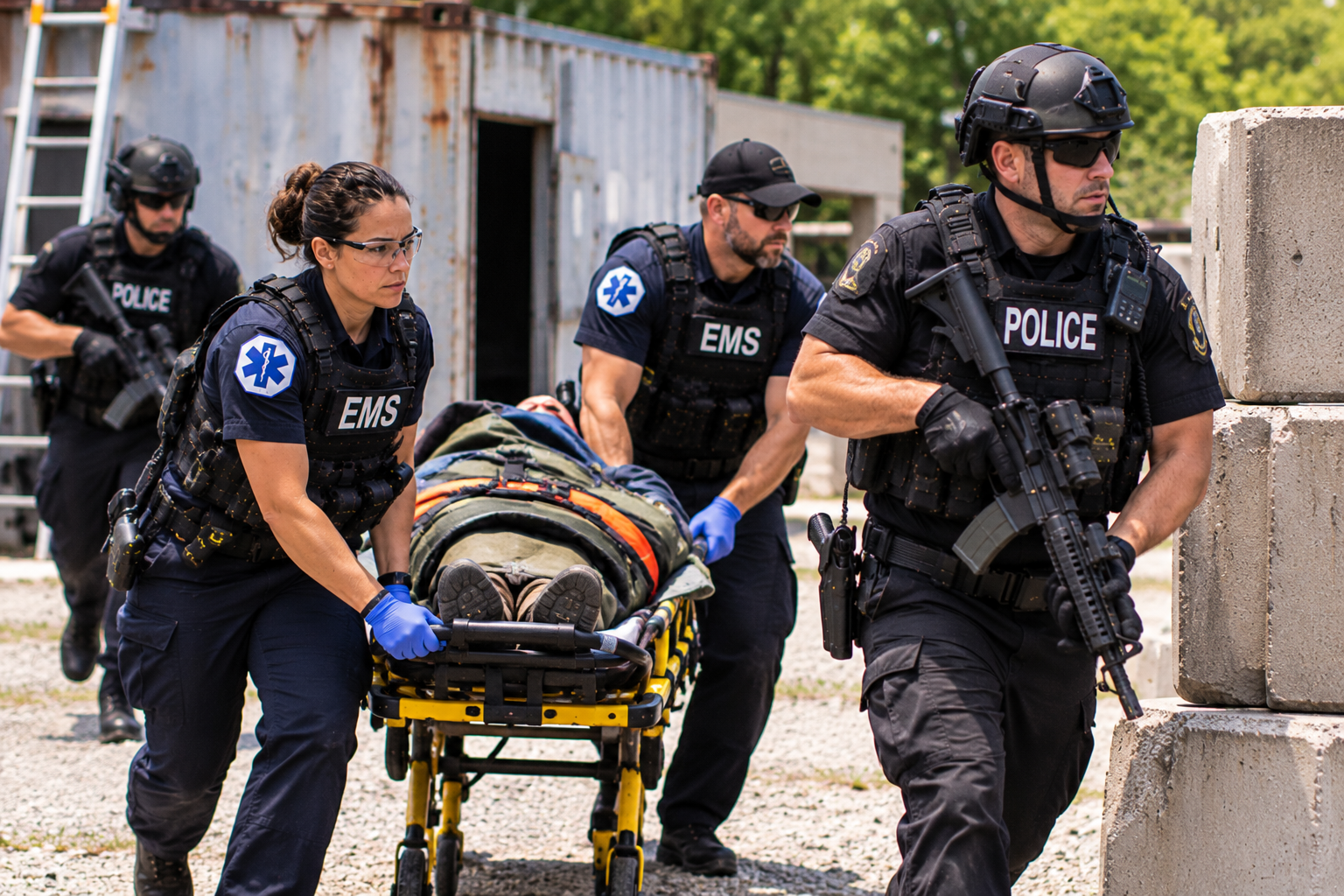
The alternative to waiting is not recklessness; it is managed risk. Managed risk acknowledges that danger exists but asserts that it can be mitigated through coordination, protection, and informed judgment. This approach is already embedded in other response disciplines. Firefighters enter unstable structures. Law enforcement advances toward armed threats. Both do so under frameworks that balance risk against mission necessity.
Medical responders must be afforded the same doctrinal support. Managed risk enables early hemorrhage control, airway positioning, and rapid extraction under law enforcement protection. It emphasizes movement, cover, and situational awareness rather than static staging. Most importantly, it aligns response tempo with injury progression.
Frameworks such as Tactical Emergency Casualty Care operationalize managed risk by defining care priorities based on threat level and available protection. They reject the notion that care must wait for complete safety and instead integrate medical action into ongoing threat management. In doing so, they replace the lethal cost of waiting with a disciplined approach to early intervention.
Reframing Safety Without Abandoning Protection
Critically, abandoning excessive waiting does not mean abandoning responder safety. On the contrary, dynamic models often improve responder survival by emphasizing dispersion, cover, and movement rather than clustering resources outside the incident. Waiting responders are not inherently safer; they may simply be exposed later, with fewer options and less information.
Dynamic safety reframes protection as something responders actively maintain rather than passively receive. It prioritizes intelligence flow, communication, and coordination. It recognizes that safety degrades when action is delayed and improves when threats are actively managed.
This reframing requires cultural change. Leaders must support responders who make informed decisions under uncertainty. Training must simulate ambiguity rather than resolve it prematurely. Language must shift from declarations of safety to descriptions of conditions. Without these changes, waiting will remain the default—even as evidence mounts against it.
Continuous Relevance to Modern High-Threat Response
The relevance of this issue continues to grow as active shooter incidents become shorter, more mobile, and more lethal. Many events conclude within minutes, often before traditional response structures fully activate. In such contexts, waiting for certainty guarantees irrelevance.
Public expectations further heighten the stakes. Communities assume that responders will act quickly to save lives. When victims bleed out while help waits nearby, trust erodes—not only in individual agencies, but in the system as a whole. Transparency about risk and capability is essential, but so is alignment between doctrine and reality.
Conclusion
The cost of waiting is no longer theoretical. It is documented, measurable, and deadly. Delayed care worsens survivability. Hemorrhage timelines outpace threat clearance. Psychological fear and legal misunderstandings reinforce hesitation. Together, these factors transform safety from a protective principle into a lethal barrier.
Managed risk offers a way forward. By embracing continuous risk assessment, early protected medical access, and integrated tactical-medical operations, response systems can reduce preventable death without abandoning responder safety. Waiting for certainty may feel safe, but in high-threat medicine, certainty often arrives too late.
When safety becomes an excuse for inaction, it ceases to save lives. In modern response, the true measure of safety is not how long responders wait—but how effectively they act when every second counts.