
The Cost of Waiting: How Traditional Scene-Safety Doctrine Endangers Patients
Introduction
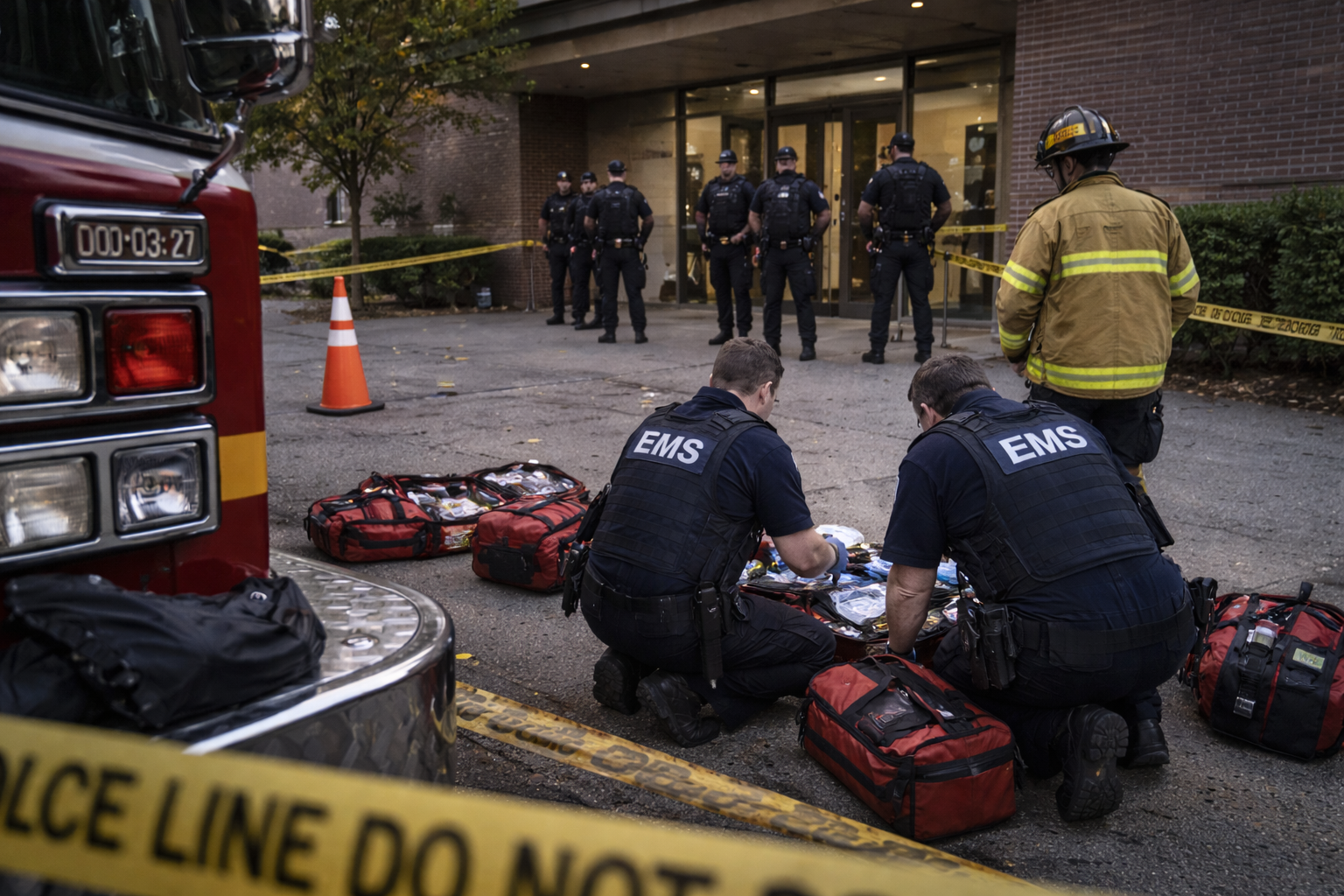
In high-threat, time-compressed emergencies, the most consequential decision is often not what care is provided, but when care begins. For decades, Emergency Medical Services (EMS) education has emphasized a foundational maxim: do not enter until the scene is safe. This principle, rooted in responder protection, has saved lives in predictable environments. Yet in modern incidents defined by intentional violence, rapid threat evolution, and compressed timelines, the traditional interpretation of “scene safety” has become a liability. Waiting for certainty in an uncertain environment delays care beyond the most survivable window—and patients pay the price.
This analysis advances a clear thesis: the historic “wait for scene safety” paradigm, when applied rigidly to high-threat events, endangers patients and responders alike. By front-loading relevance, structuring the argument in cognitive chunks, and progressively emphasizing evidence and operational realities, this article argues for early medical integration using Medical Rescue Teams (MRTs) and threat-mitigated access as a doctrinal necessity rather than an exception.
From Protection to Paralysis: The Evolution of Scene-Safety Doctrine
Scene safety entered EMS curricula as a pragmatic response to real hazards: traffic, unstable structures, environmental exposure, and biohazards. In these contexts, delaying entry until hazards were mitigated reduced responder injury and preserved system capacity. Over time, however, a nuanced concept—acceptable risk—hardened into a binary rule: unsafe equals no entry.
Educational repetition reinforced this framing. Scene safety became a prerequisite checkbox rather than a continuous assessment. Liability concerns and organizational risk aversion further codified delay as professionalism. The result was a cultural shortcut: safety is something declared once, then assumed.
This evolution made sense when threats were static and externally imposed. It falters when threats are intentional, mobile, and evolving. In such environments, safety cannot be guaranteed; it must be managed dynamically. When doctrine fails to adapt, protection becomes paralysis.
Time Is Tissue: Evidence Linking Delay to Worsened Survivability
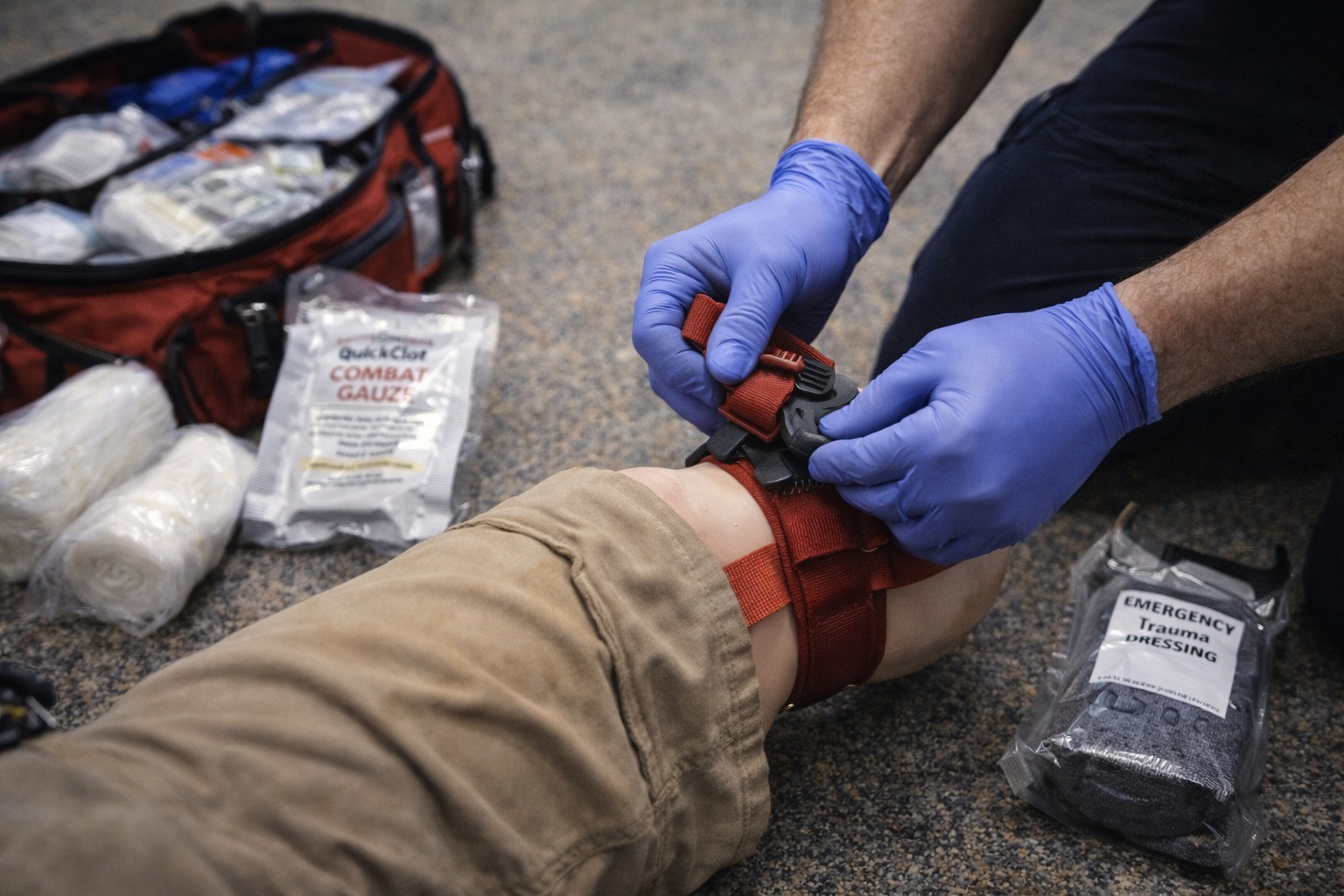
Trauma physiology is unforgiving. The leading causes of preventable death—uncontrolled hemorrhage and airway compromise—progress rapidly and respond best to early, simple interventions. Tourniquets, wound packing, airway positioning, and rapid movement save lives when applied promptly. Delays measured in minutes—not hours—correlate strongly with mortality.
The evidence is consistent across military and civilian literature: early hemorrhage control dramatically improves survival; delayed airway management increases hypoxic injury and death. When medical care is postponed until full scene security is achieved, the most survivable window closes. Waiting does not preserve life; it transfers risk from responders to patients.
Crucially, these delays often occur despite proximity. Medical assets may be staged nearby while patients deteriorate. The barrier is not distance or capability—it is doctrine.
The Human Factors Behind Hesitation: Psychology and Law
Provider hesitation rarely stems from indifference. It is shaped by psychological anchoring and legal anxiety. Under stress, humans default to the first stable interpretation they learned—primacy. If training frames scene safety as binary, ambiguity produces inaction. Cognitive load narrows attention; responders cling to the safest rule they know.
Legal pressures amplify this effect. Fear of discipline or litigation encourages risk avoidance, even when risk acceptance would save lives. Policies that emphasize prohibition over judgment teach providers to wait for permission rather than act with intent. The chilling effect is predictable: no one is penalized for waiting, even when waiting kills.
An effective doctrine must reconcile protection with purpose. It must authorize managed risk in pursuit of survivability—and protect providers who act within that framework.
When Waiting Costs Lives: Case Patterns, Not Isolated Failures
Across after-action reviews of violent incidents, a recurring pattern emerges: casualties remain untreated while responders await clearance that never arrives in a usable form. Law enforcement may be actively managing the threat, yet medical access is delayed by misaligned risk thresholds and unclear triggers.
These are not anomalies. They are systemic outcomes of a doctrine that sequences response rather than synchronizing it. In time-compressed incidents, the event often concludes before traditional medical staging and deployment occur. By the time “scene safe” is declared, physiology has already decided outcomes.
The lesson is consistent: delayed medical action increases casualty burden. Survivable injuries become fatal not because care was unavailable, but because it was structurally late.
Reframing Safety: From Avoidance to Managed Action
Safety in high-threat events is not the absence of danger; it is the presence of coordinated action. Fire services accept managed risk when entering unstable structures. Law enforcement accepts it during dynamic entries. EMS must be empowered to do the same—with protection, intelligence, and intent.
This reframing requires abandoning binary language. Scenes are not simply safe or unsafe; they are threat-managed, partially controlled, or actively evolving. Each state permits different actions under defined protections. Waiting for certainty in a probabilistic environment guarantees delay.
Early Medical Integration: The Role of Medical Rescue Teams (MRTs)
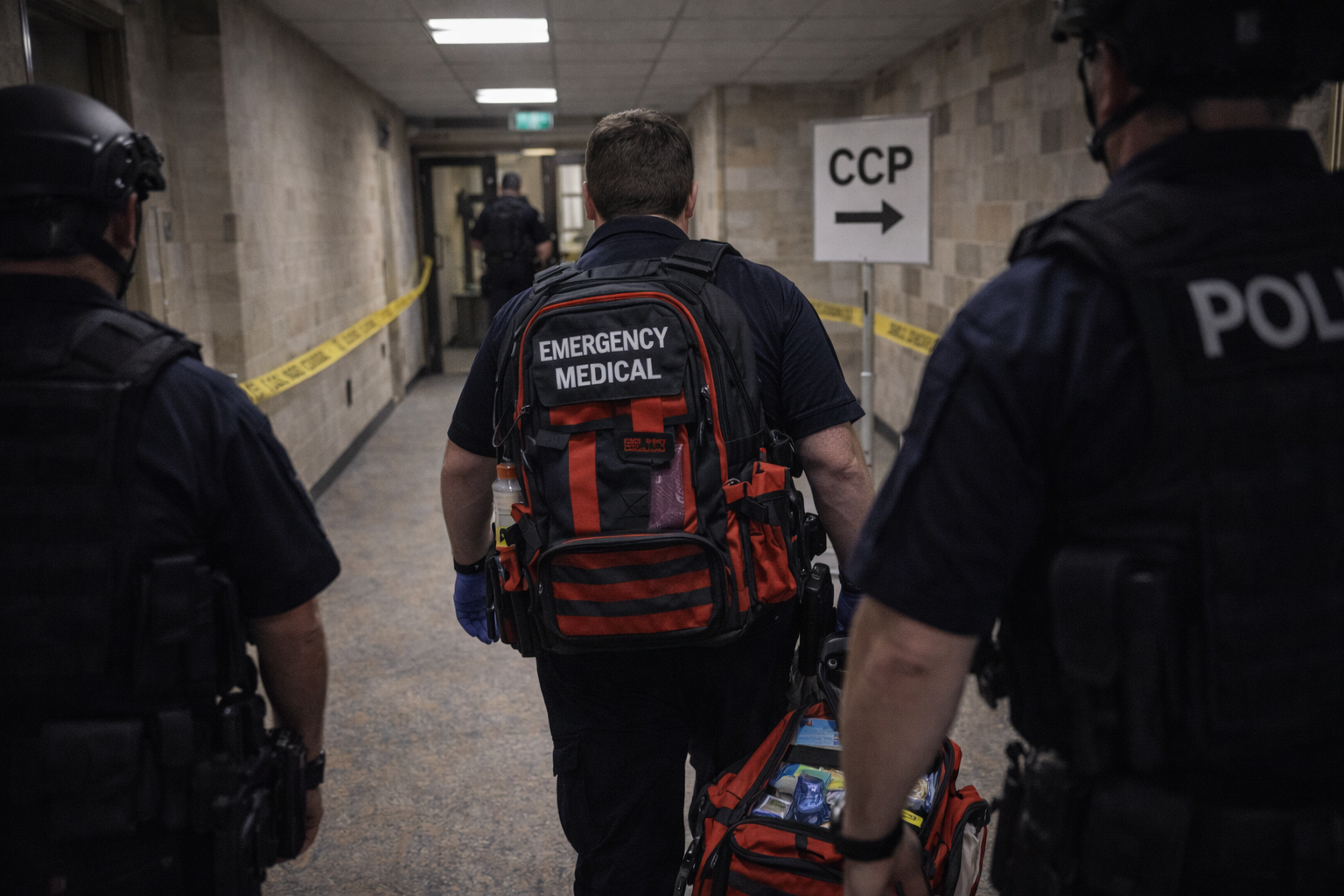
Medical Rescue Teams (MRTs) operationalize early care under protection. By integrating medical providers with armed security, MRTs enable threat-mitigated access to casualties in hot and warm zones. This is not reckless exposure; it is deliberate risk management aligned with physiology.
MRTs collapse the artificial divide between “tactical” and “medical” phases. Care begins during the incident, not after it. Hemorrhage control is applied early. Casualties move sooner. The survivable window is honored.
Successful MRT deployment depends on clarity: triggers for activation, protection standards, communication pathways, and command integration. When these elements are planned and trained jointly, early medical access becomes routine rather than exceptional.
ICS and Tempo: Enabling Speed Without Losing Control
The Incident Command System (ICS) can either enable or inhibit early care. In dynamic threats, ICS must prioritize intent over permission and tempo over sequencing. Centralized approvals that delay medical movement undermine survivability.
Effective use of ICS in high-threat events emphasizes parallel operations: law enforcement manages the threat while MRTs advance care under defined protections. Risk thresholds are articulated in advance; teams act within them without waiting for perfect information.
When ICS is used to synchronize rather than serialize action, control is preserved—and lives are saved.
Training What Reality Demands: Repetition With Variation
Doctrine becomes behavior only through training. To counter anchoring and hesitation, education must front-load relevance: early medical access saves lives. Repetition with variation—low light, noise, ambiguity, evolving threats—builds adaptive competence. Providers learn not just how to treat, but when to move.
Training must integrate EMS, fire, law enforcement, and command. Shared scenarios build shared mental models. Providers experience the consequences of delay and the benefits of early action. Over time, the default shifts from waiting to managed movement.
Policy, Protection, and Provider Confidence
Cultural change requires policy backing. Agencies must explicitly authorize early medical integration using MRTs and threat-mitigated access. Policies should define acceptable risk, activation triggers, and protective measures—and protect providers who act within them.
Provider confidence follows clarity. When expectations are explicit and leadership supports judgment, hesitation diminishes. The system moves faster because it knows how—and is permitted—to move.
Progressive Emphasis: Aligning Doctrine With Physiology
Across this analysis, one theme recurs with variation: time matters. From physiology to psychology to policy, delays cost lives. Progressive emphasis—returning to this truth at each layer—anchors attention and guides decision-making under stress.
Waiting for certainty delays care.
Delayed care worsens survivability.
Early, protected access saves lives.
This progression is not ideological; it is evidentiary.
Conclusion
The traditional “wait for scene safety” doctrine was built to protect responders in predictable environments. Applied rigidly to modern high-threat events, it now endangers patients and undermines mission outcomes. Evidence is unequivocal: early medical integration saves lives; waiting costs them.
Reforming doctrine requires reframing safety as a dynamic variable, empowering MRTs to provide threat-mitigated access, and aligning ICS, training, and policy with incident tempo and human physiology. This is not an argument for recklessness; it is an argument for relevance.
In the moments that matter most, medical care cannot wait for certainty. It must move forward protected, coordinated, and intentional. Only then does safety serve its true purpose: preserving life.