
Victim Movement, Crowd Panic, and Human Factors
Victim Movement, Crowd Panic, and Human Factors
In mass violence and high-threat incidents, casualties are not distributed randomly. They are shaped—often decisively—by human behavior under extreme stress. Panic-driven movement, instinctive flight responses, and crowd dynamics determine where victims fall, where they cluster, and how accessible they are to responders. Yet traditional response models frequently treat casualty location as a static condition rather than the outcome of dynamic human behavior. This mismatch between expectation and reality creates predictable delays, unsafe congestion, and inefficient care delivery.
This analysis examines victim movement, crowd panic, and human factors as operational variables rather than secondary considerations. The central argument is that human behavior during crisis is as influential as tactics, weapons, or terrain. Understanding how people move, freeze, flee, or follow others under threat is essential to optimizing evacuation routes, CCP placement, and responder access. When these dynamics are ignored, even well-equipped response systems struggle to reach patients in time.
Panic-Driven Movement as a Determinant of Casualty Distribution
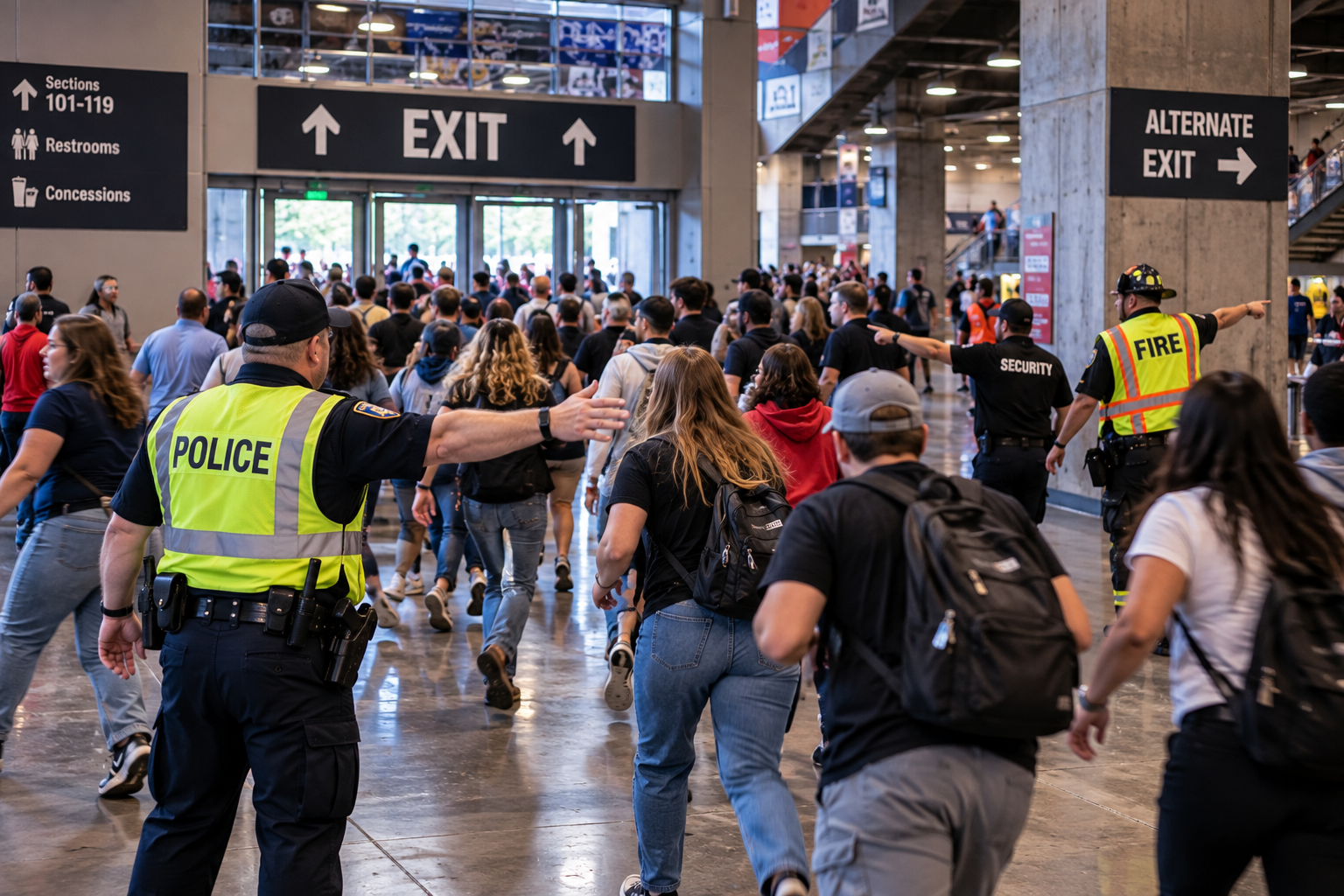
During active shooter and mass violence incidents, individuals respond instinctively to perceived danger. The dominant response is flight—often rapid, uncoordinated, and driven by incomplete information. Victims move away from perceived threats, toward exits they know, and alongside others who appear decisive. This movement occurs before responders arrive and continues during early response phases.
As a result, casualties rarely remain near the point of injury. Individuals with survivable wounds may travel significant distances before collapsing, while others cluster in choke points such as stairwells, doorways, or corridors. These patterns explain why responders frequently encounter victims far from initial threat locations and why casualty counts appear inconsistent across reports.
Recognizing panic-driven movement reframes casualty management. It shifts responder expectations from “find patients where the threat occurred” to “anticipate where people will run, hide, or fall.” This anticipation directly informs access routes and treatment priorities.
Crowd Behavior and the Amplification of Risk
Crowds magnify individual fear. As density increases, rational decision-making declines, and herd behavior dominates. Individuals follow perceived leaders, push toward familiar exits, and ignore alternative routes—even when safer options exist. In enclosed spaces, this behavior produces bottlenecks that increase injury risk independent of the attacker.
Crowd panic can cause secondary harm through trampling, falls, and crush injuries. These injuries add to the casualty burden and complicate triage by introducing blunt trauma and airway compromise unrelated to ballistic injury. Responders arriving at these locations face compressed patient clusters, heightened emotional distress, and limited maneuverability.
From an operational standpoint, crowd behavior transforms evacuation routes into hazards. Hallways become impassable. Stairwells clog. Entry points intended for responder access are overwhelmed by fleeing civilians. These conditions slow medical intervention precisely when speed matters most.
Evacuation Routes: Intended Pathways Versus Actual Use
Emergency planning often assumes that occupants will use designated evacuation routes. In reality, people default to the paths they entered by or those they use daily. Familiarity overrides signage, training, and instruction—especially under stress.
This behavior has two critical implications. First, responders should expect evacuation routes to diverge from plans. Second, CCPs placed based on theoretical evacuation flow may be poorly positioned relative to actual casualty movement.
Understanding real-world flow patterns allows responders to anticipate where injured individuals will self-present or collapse. CCPs positioned along natural movement corridors—rather than formally designated exits—capture patients earlier and reduce secondary movement that worsens outcomes.
Human Factors and Responder Access
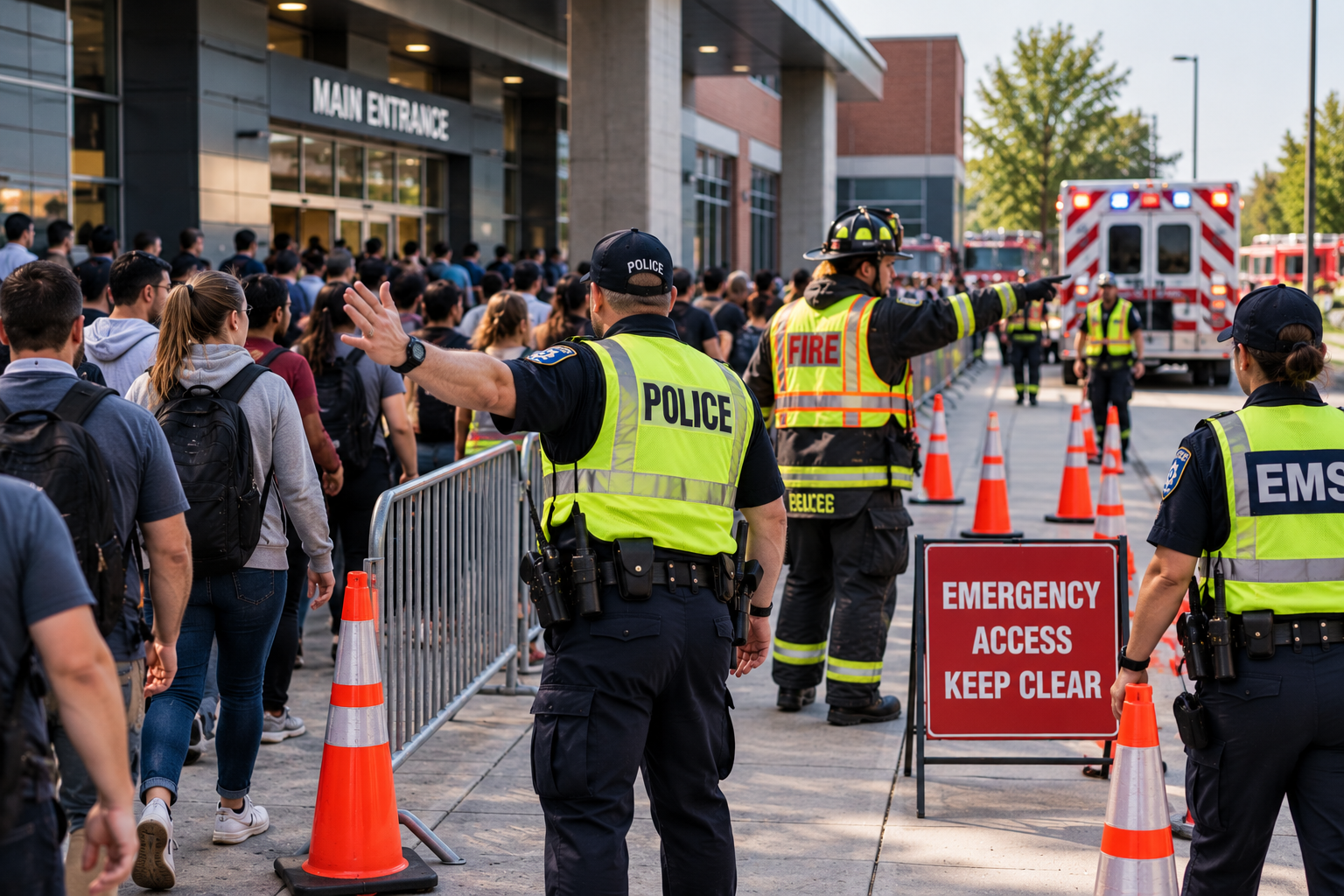
Human behavior does not only affect victims; it directly influences responder access. Panicked crowds may inadvertently block entry points, resist direction, or overwhelm force-protected corridors. Emotional distress can escalate into noncompliance or confusion, even among uninjured individuals.
Responders unfamiliar with crowd dynamics may misinterpret panic responses as intentional obstruction. This misinterpretation increases friction, delays movement, and heightens stress on both sides. Training that incorporates human factors equips responders to manage crowds with clarity, authority, and empathy.
Effective crowd management improves access without escalating tension. Simple interventions—clear commands, visible authority, and directional control—can redirect movement and open critical pathways for medical teams.
The Role of Training in Crowd and Movement Management
Crowd behavior is predictable, but only to those trained to recognize it. Without training, responders default to reactive strategies that address symptoms rather than causes. With training, responders anticipate congestion, redirect flow, and position resources proactively.
Training should emphasize:
Recognition of panic behaviors and herd dynamics
Techniques for verbal control under stress
Movement management using barriers, personnel, and spacing
Integration of crowd control into medical and tactical planning
Scenario-based exercises that include role players simulating panic conditions improve realism and decision-making. These exercises expose responders to emotional intensity and force adaptation in real time.
CCP Placement Through the Lens of Human Movement
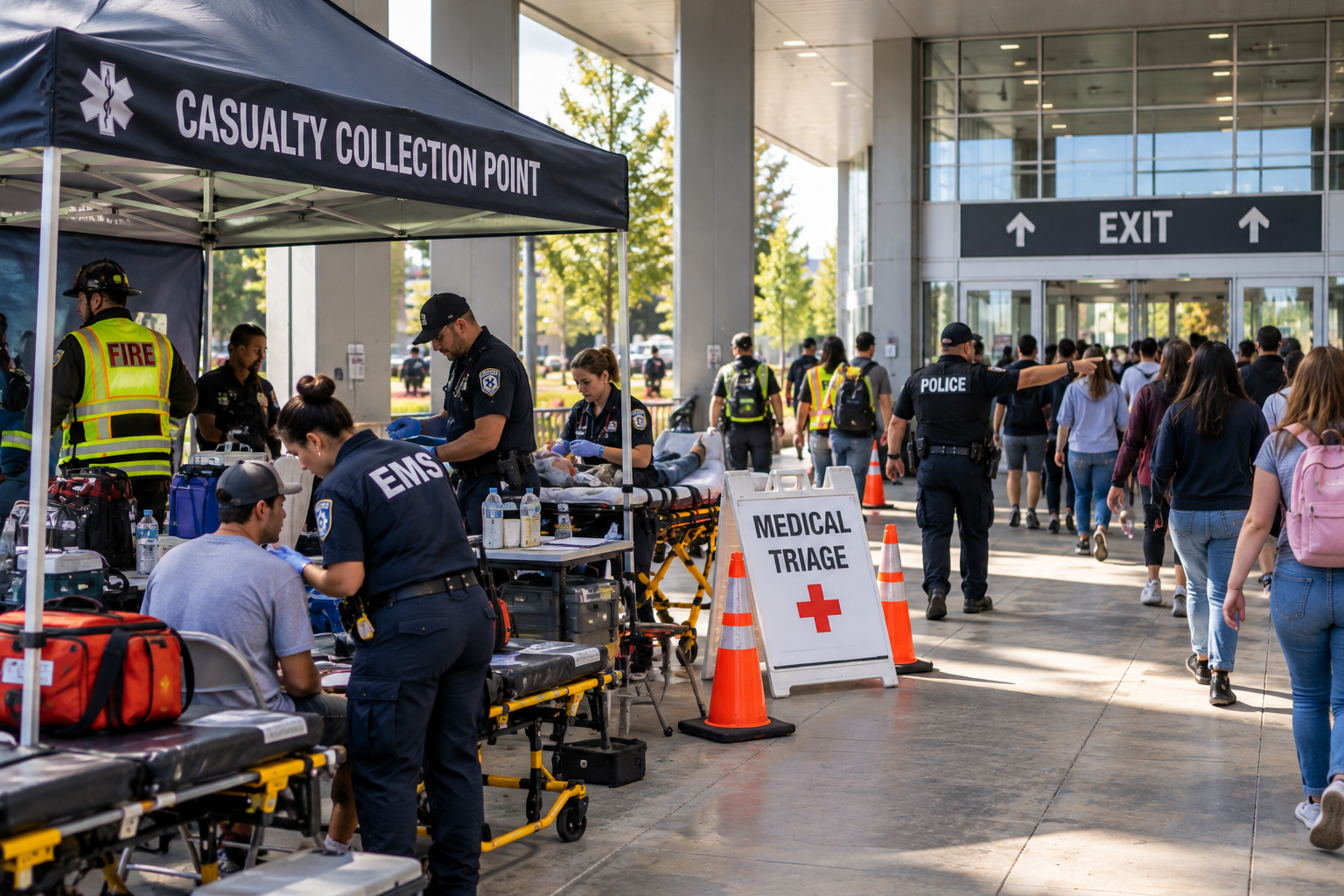
Casualty Collection Points (CCPs) function optimally when aligned with human behavior. CCPs placed solely based on security considerations may be technically safe yet operationally ineffective if casualties cannot reach them—or if responders cannot reach casualties.
Understanding flow patterns allows CCP placement that intercepts casualty movement rather than forcing additional transport. Hasty CCPs established near natural congregation points—lobbies, stairwells, exit corridors—reduce time-to-care and limit further movement that exacerbates injuries.
However, CCP placement must balance accessibility with protection. Crowd-informed placement does not mean uncontrolled exposure; it means informed positioning that reflects real-world behavior.
Panic, Perception, and Information Gaps
Panic is fueled by uncertainty. In mass violence incidents, incomplete or conflicting information accelerates fear-driven movement. Individuals respond to sounds, rumors, and perceived cues rather than verified threats.
This dynamic reinforces the importance of rapid, authoritative communication. Clear instructions from responders—delivered early and consistently—can stabilize movement patterns. Even minimal guidance reduces chaos by providing a focal point for attention.
Dispatch, command staff, and field responders all play a role in shaping perception. When communication lags, panic fills the void.
Pediatric and Vulnerable Populations Within Crowd Dynamics
Children, older adults, and individuals with disabilities experience panic differently. They may move slower, freeze, or depend on others for evacuation. These populations are disproportionately affected by crowd congestion and require additional consideration in movement planning.
Casualty clusters involving pediatric patients often occur near caregivers, restrooms, or classrooms rather than exits. Anticipating these patterns improves search prioritization and resource allocation.
Ignoring vulnerability within crowd dynamics compounds harm and delays care to those least able to self-extract.
Continuous Relevance: Human Factors as an Operational Variable
Every mass violence incident reinforces the same truth: people do not behave according to plans when under threat. They behave according to instinct, familiarity, and emotion. Response systems that fail to account for this reality operate at a structural disadvantage.
By anchoring operational planning to human behavior, agencies move from reactive problem-solving to anticipatory design. Evacuation routes become adaptive. CCP placement becomes intentional. Responder access improves because movement is managed rather than resisted.
Human factors are not soft considerations; they are force multipliers. Ignoring them undermines even the most robust tactical and medical capabilities.
Conclusion
Victim movement, crowd panic, and human factors shape every phase of high-threat incidents. Panic-driven behavior determines casualty distribution, access routes, and treatment timelines long before responders arrive. Crowds amplify risk, distort evacuation plans, and create secondary hazards that complicate response.
Effective operations require more than tactical proficiency—they require behavioral insight. Training responders to anticipate and manage human movement improves CCP placement, reduces congestion, and accelerates life-saving care. When response systems align with how people actually behave under stress, outcomes improve measurably.
In mass violence, the battlefield is not only physical—it is behavioral. Understanding that reality is essential to reducing preventable harm and restoring order amid chaos.