
Role of Dispatch and Emergency Communications Centers
Role of Dispatch and Emergency Communications Centers
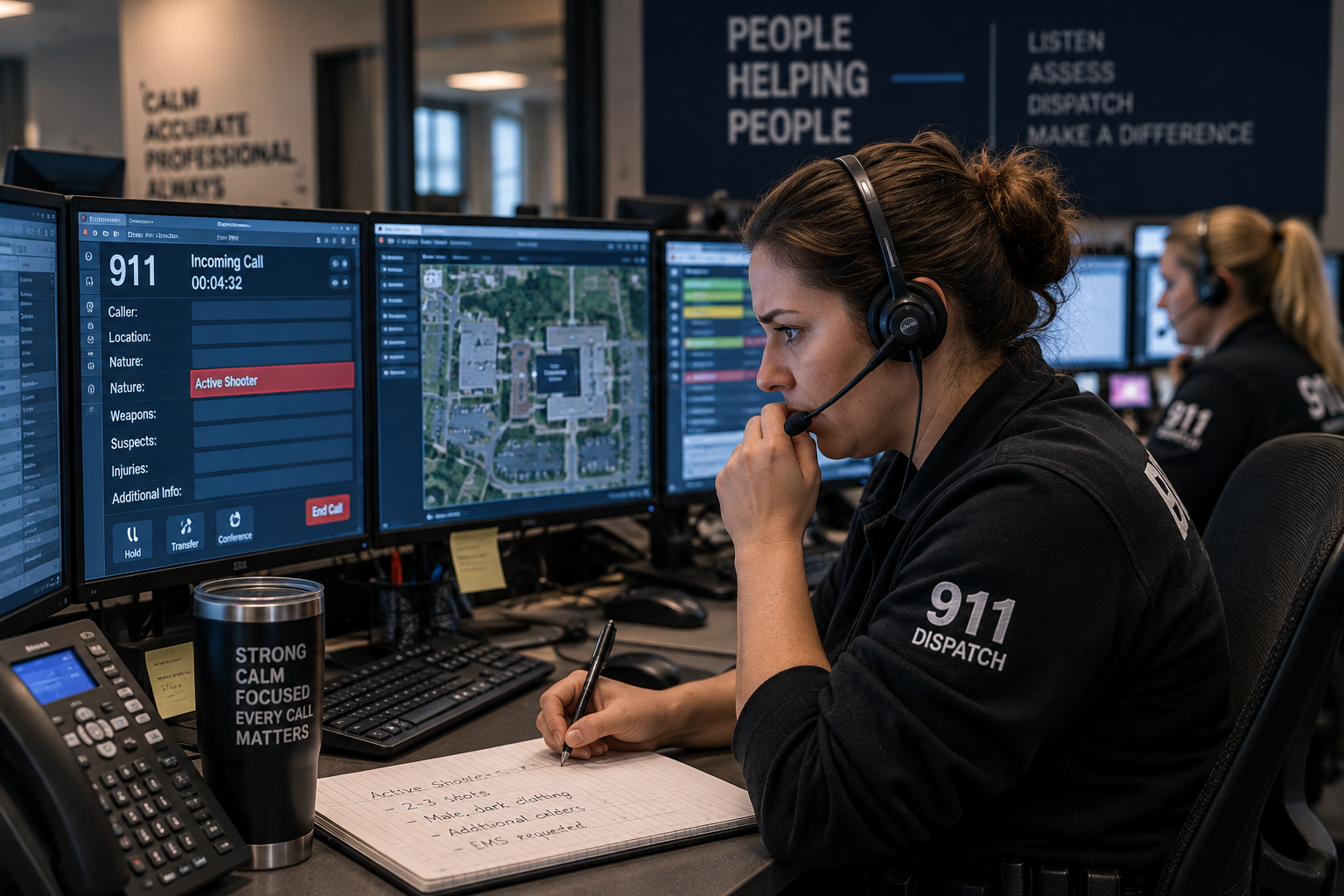
In high-threat incidents, the first operational decisions are made before a single responder arrives on scene. Those decisions are shaped almost entirely by information gathered, filtered, and transmitted by dispatchers and Emergency Communications Centers (ECCs). Long before command posts are established or tactical elements deploy, ECCs function as the initial intelligence node—assembling fragmented, emotional, and often contradictory inputs into a working picture of the event. When this function is performed well, downstream operations gain speed, clarity, and purpose. When it fails, confusion becomes embedded into the response from the outset.
This analysis examines the role of dispatch and ECCs in active shooter and mass-casualty incidents, emphasizing their influence on situational awareness, interagency coordination, and operational tempo. The central argument is that ECC performance is not a background administrative task; it is a decisive operational capability. ECCs shape response outcomes by identifying critical details early, issuing timely notifications, and continuously updating responders as the incident evolves. Training gaps at this level reverberate through every subsequent phase of response.
ECCs as the First Intelligence Collectors
ECCs occupy a unique position within the emergency response system. They are the first point of contact between the public and public safety agencies, receiving information at the moment violence begins. Unlike responders, dispatchers do not observe the incident directly; they reconstruct it through voices, sounds, and incomplete narratives delivered under extreme stress.
This role makes ECCs the earliest intelligence collectors in any high-threat event. Callers provide critical clues—gunshots heard, suspect descriptions, locations, injuries, direction of movement—often without realizing their significance. Dispatchers must extract these details while simultaneously calming callers, managing multiple incoming lines, and maintaining operational composure.
The quality of this early intelligence directly affects responder posture. Early misinterpretation can send units to the wrong location, delay medical access, or underestimate threat scope. Accurate early synthesis, by contrast, accelerates decisive action.
Extracting Signal from Chaos
Emergency calls during active shooter events are rarely coherent. Callers may whisper, scream, disconnect abruptly, or provide conflicting accounts. Multiple callers may describe the same event differently based on vantage point and fear. ECC effectiveness depends on the ability to separate signal from noise without dismissing valuable data.
This skill is not intuitive; it is trained. Dispatchers must recognize patterns—repeated mentions of gunfire, consistent descriptions of clothing or movement, escalating casualty reports—and prioritize information that shapes immediate response. Asking the right questions at the right moment becomes critical: Where are you? What do you hear now? Is the suspect still moving?
Failure to structure these interactions allows chaos to propagate. ECCs that lack threat-specific call-handling protocols risk missing the very details responders need most.
Early Notification as an Operational Accelerator
One of the most consequential ECC functions is early notification. Active shooter response depends on speed, yet speed is impossible without prompt activation of law enforcement, fire, EMS, and supervisory elements. ECCs determine when an incident crosses the threshold from routine call to high-threat event.
Delays in recognition delay everything else. Hesitation to declare an active shooter, uncertainty about terminology, or reluctance to “overreact” can cost minutes that cannot be recovered. Conversely, early notification—even with incomplete information—allows agencies to mobilize, stage, and prepare.
Effective ECCs err on the side of early activation, updating information as clarity improves. This approach aligns response tempo with incident reality rather than waiting for confirmation that may arrive too late.
Shaping Initial Law Enforcement Posture
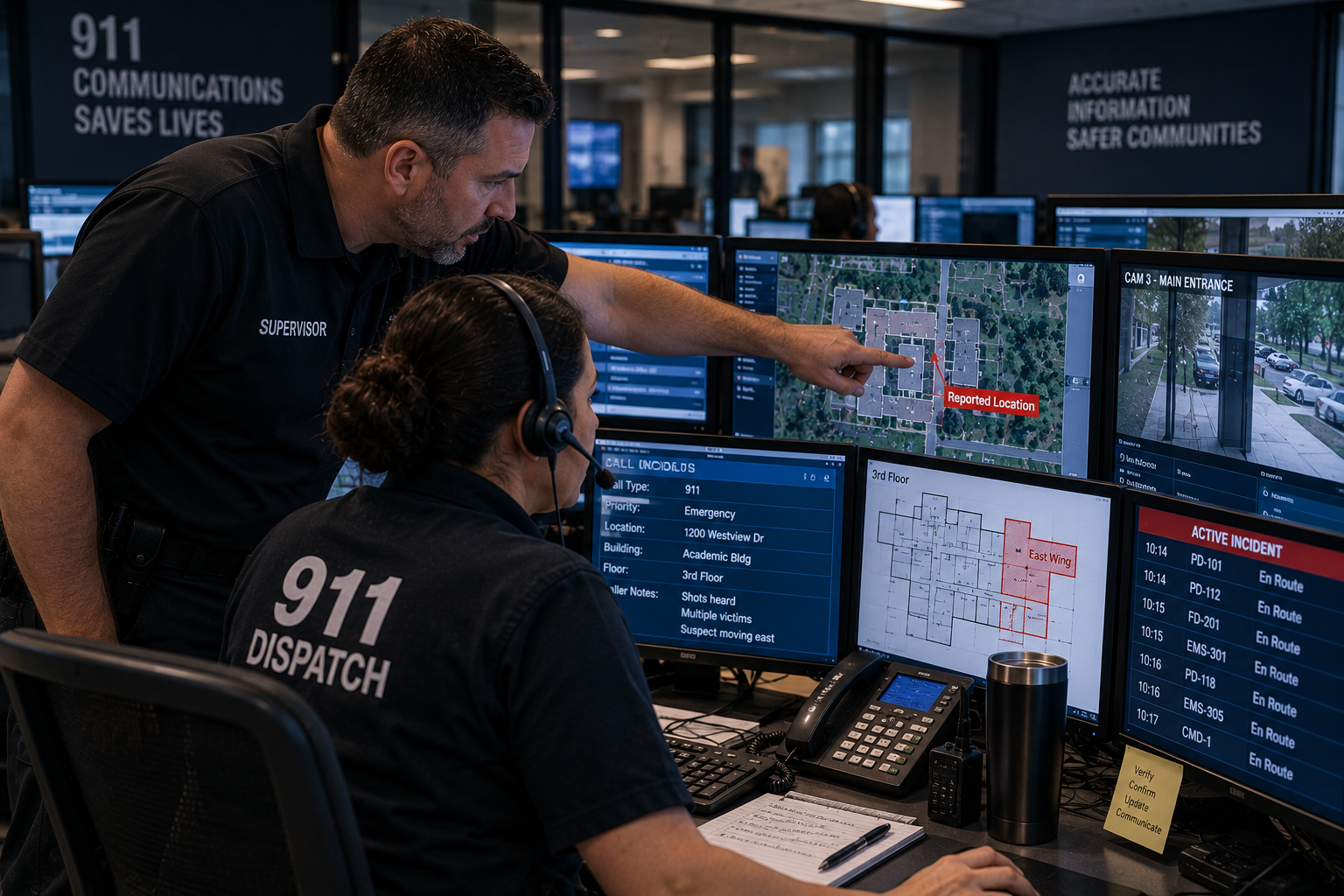
The first responding officers often arrive with only the information provided by ECCs. Dispatch updates influence whether officers approach cautiously or aggressively, whether they anticipate a single suspect or multiple actors, and whether they expect immediate casualties.
Descriptions of suspect appearance, weapon type, last known direction of travel, and reported injuries all shape tactical decision-making. Inaccurate or outdated information can place officers at risk or delay threat engagement. Continuous updates—rather than static initial dispatches—allow officers to adapt as the situation evolves.
ECCs must therefore treat information as dynamic, not fixed. What was true one minute ago may no longer apply. Communicating this uncertainty explicitly helps responders avoid anchoring on outdated assumptions.
Enabling Early Medical Awareness
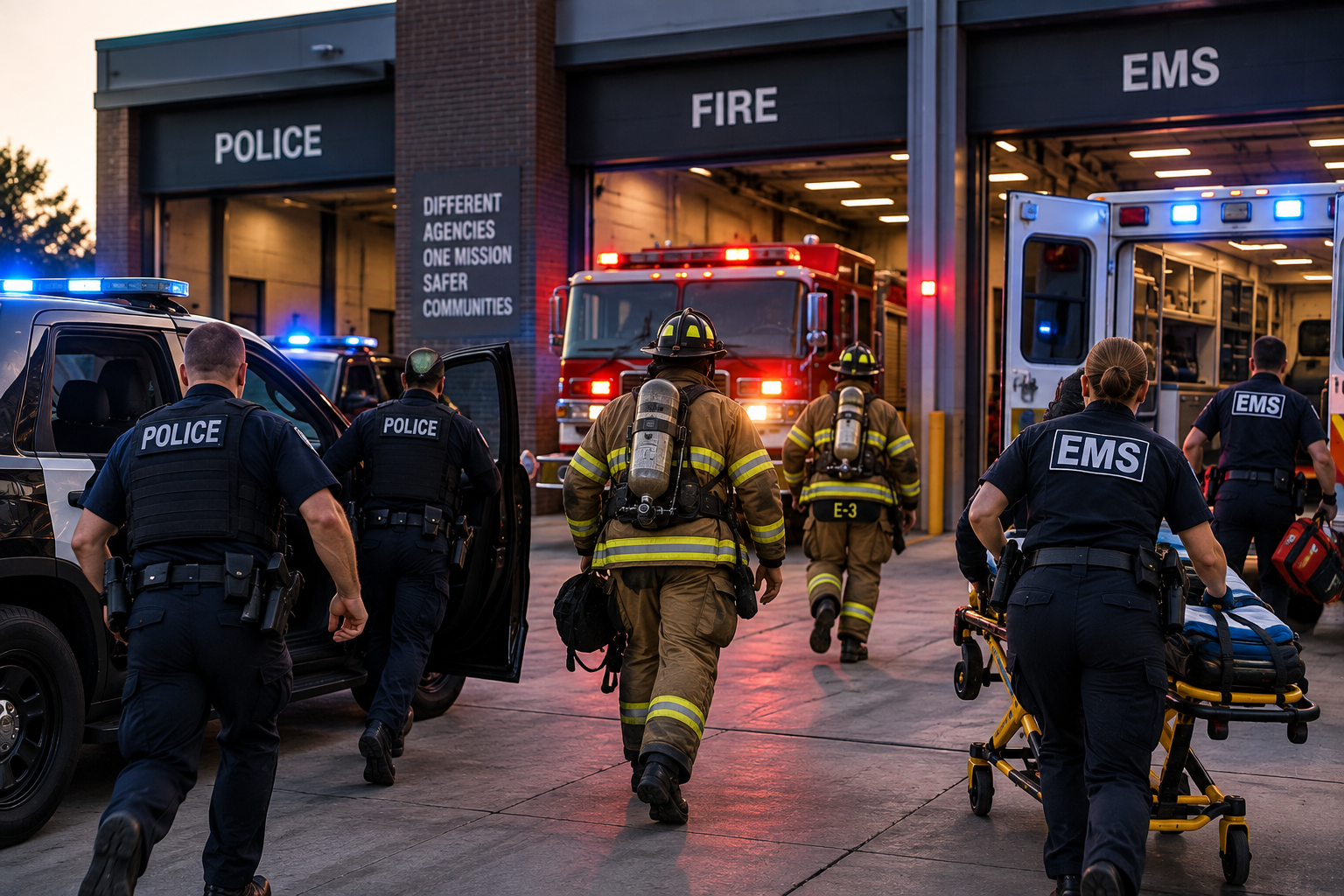
ECCs also influence medical outcomes long before medical units arrive. Early reports of casualties, bleeding, or unconscious victims inform EMS staging decisions, hospital notifications, and resource allocation. In some cases, ECCs may provide life-saving instructions to callers before responders can access the scene.
However, medical awareness often lags behind tactical awareness in dispatch operations. Training frequently prioritizes law enforcement notification without equal emphasis on medical implications. This imbalance contributes to delayed EMS integration and prolonged time-to-care.
ECCs that recognize hemorrhage reports, pediatric involvement, or multiple casualties early can prompt faster medical mobilization and prepare responders for the scale of care required.
Real-Time Updates and Situational Awareness
High-threat incidents evolve rapidly. Suspects move, threats shift, and new hazards emerge. ECCs serve as the clearinghouse for updates from callers, field units, surveillance feeds, and partner agencies. Their ability to disseminate real-time updates maintains shared situational awareness across the response system.
This function requires discipline. Over-broadcasting minor details clutters channels; under-broadcasting critical updates isolates responders. Effective ECCs prioritize information that changes risk, access, or decision-making—such as suspect movement, secondary threats, or confirmed casualty access points.
Real-time updates also support command decision-making. Incident commanders rely on ECCs to maintain a broader view than any single unit can achieve on the ground.
ECC–Field Feedback Loops
Communication is bidirectional. ECCs not only transmit information outward; they receive feedback from field units that refines the intelligence picture. Officers confirm or contradict caller reports. EMS reports casualty numbers and access challenges. Fire units identify hazards.
When ECCs actively integrate this feedback, the operational picture sharpens. When feedback is delayed or ignored, misinformation persists. Establishing clear expectations for field updates—and ensuring ECC capacity to receive them—is essential.
Feedback loops also support accountability and safety. Knowing which units are where, and what they are encountering, reduces duplication and improves coordination.
Training Gaps and Their Downstream Effects
Despite their central role, ECCs are often underrepresented in high-threat training. Dispatchers may receive limited exposure to active shooter-specific protocols, threat indicators, or interagency coordination principles. Many exercises exclude ECC participation entirely.
These gaps manifest predictably during real incidents. Dispatchers default to routine call-handling approaches unsuited to high-threat dynamics. Notification thresholds are unclear. Updates lack structure. Downstream responders inherit these deficiencies.
Training that integrates ECCs into scenario-based exercises reveals these weaknesses early. It allows dispatchers to practice extracting critical details, managing information flow, and coordinating across agencies under realistic conditions.
ECCs and Interagency Coordination
ECCs sit at the intersection of multiple agencies. They often serve law enforcement, fire, EMS, and emergency management simultaneously. This position makes them natural facilitators of interagency coordination—if properly empowered.
Shared terminology, unified call-taking protocols, and standardized notification pathways enable ECCs to synchronize response elements rather than triggering parallel, uncoordinated actions. Without this alignment, agencies may receive different versions of the same event, undermining unified command.
ECCs that understand interagency doctrine—such as unified command structures and integrated medical response models—can reinforce coordination rather than inadvertently fragmenting it.
Technology Supports—but Does Not Replace—Judgment
Modern ECCs have access to advanced tools: CAD systems, text-to-911, video feeds, and analytics. These tools enhance capability but do not replace human judgment. Technology cannot interpret fear in a caller’s voice or reconcile conflicting narratives without human oversight.
Overreliance on technology can create false confidence. Systems may display precise timestamps and locations while masking uncertainty in content. Dispatchers must remain critical consumers of data, contextualizing information rather than transmitting it unfiltered.
Judgment remains the defining skill of effective ECC operations.
Relevance Across the Incident Lifecycle
The role of ECCs extends beyond the initial response. During stabilization, they coordinate resource requests, track unit status, and support logistics. During recovery, they assist with accountability, demobilization, and public information coordination.
Early performance influences later phases. ECCs that establish accurate records and clear timelines support after-action analysis and legal review. Those that do not leave gaps that complicate recovery and learning.
Toward ECCs as Operational Partners
Recognizing ECCs as operational partners—not administrative support—requires cultural and structural change. This includes:
Integrating ECCs into planning and doctrine development.
Including dispatchers in joint training and exercises.
Providing threat-specific education and decision-support tools.
Empowering ECC leadership within unified command frameworks.
When ECCs are treated as integral to response, their performance rises accordingly.
Conclusion
Emergency Communications Centers are the first responders to high-threat incidents, shaping outcomes before the first unit arrives. Their ability to collect early intelligence, extract critical details from chaos, issue timely notifications, and provide real-time updates determines whether response systems accelerate or stumble.
Training gaps at the ECC level propagate downstream, affecting law enforcement posture, medical access, and interagency coordination. Conversely, well-trained, integrated ECCs function as force multipliers—enhancing speed, clarity, and safety across all disciplines.
In active shooter events, information is the first intervention. When ECCs perform their role with precision, the entire response system gains the clarity it needs to act decisively.