Hot & Warm Zone Operations: Why Care Must Move Toward the Threat
Hot & Warm Zone Operations: Why Care Must Move Toward the Threat
In modern high-threat incidents, survival is rarely determined by whether the threat is eventually stopped. It is determined by what happens to the wounded while the threat still exists. This distinction is critical. Casualties do not fall in safe, controlled environments; they are injured where violence is occurring, where movement is restricted, and where time compresses rapidly. Any response doctrine that assumes care can wait until danger is eliminated is misaligned with both injury physiology and operational reality. In contemporary active shooter and mass-violence events, medical care must move toward the threat—not recklessly, but deliberately, protected, and in coordination with security operations.
This analysis advances a central argument: hot and warm zone medical operations are not optional deviations from best practice; they are the only way to align response actions with where casualties occur, how injuries progress, and how incidents actually unfold. Evacuation-first models collapse under physiological constraints, while forward medical access—enabled by force protection and disciplined movement—shortens timelines, preserves life, and stabilizes chaotic environments. Movement saves lives, not because it is fast, but because it is early.
Casualties Occur in Contested Spaces
The first and most overlooked reality of high-threat incidents is spatial. Casualties are injured in contested spaces—hallways, classrooms, vehicles, stairwells, parking structures, and open public venues—long before control is established. These are not neutral zones awaiting clearance; they are dynamic environments where threats may be mobile, information incomplete, and conditions rapidly changing.
Traditional response models often treat these spaces as temporarily inaccessible, assuming that casualties must be moved out before care can begin. This assumption fails to account for how injury occurs. Ballistic trauma, blast injuries, and secondary impacts happen at the point of violence, not at designated medical locations. When care is delayed until evacuation, responders accept—often unknowingly—that patients will deteriorate during movement or while waiting for access.
Operationally, this creates a paradox: the areas with the greatest medical need are the areas where care is most restricted. Resolving this paradox requires changing the direction of response. Rather than pulling casualties toward distant care, care must be pushed forward under protection, into the spaces where injury has occurred.
Evacuation-First Models Fail Physiology
The physiological consequences of delayed care are well established. Uncontrolled hemorrhage, airway compromise, and tension pneumothorax are the leading causes of preventable death in trauma. Each is time-dependent. Each worsens rapidly without intervention. None pause while responders establish perimeters or await declarations of safety.
Evacuation-first models assume that moving a patient equals helping a patient. In reality, movement without intervention often accelerates deterioration. Hemorrhage worsens with motion. Airway compromise becomes more dangerous when patients are repositioned without support. Shock deepens as time passes without control of bleeding or oxygenation. These models mistake displacement for treatment.
Moreover, evacuation itself is rarely immediate. Casualty movement requires routes, manpower, coordination, and security. In contested environments, these elements take time to establish. During that time, injuries progress unchecked. By the time patients reach a casualty collection point or transport unit, they may no longer be salvageable.
Physiology does not reward patience. It rewards early action. Any model that delays care in favor of movement contradicts the basic principles of emergency medicine and trauma management.
Warm Zone Care Shortens Timelines
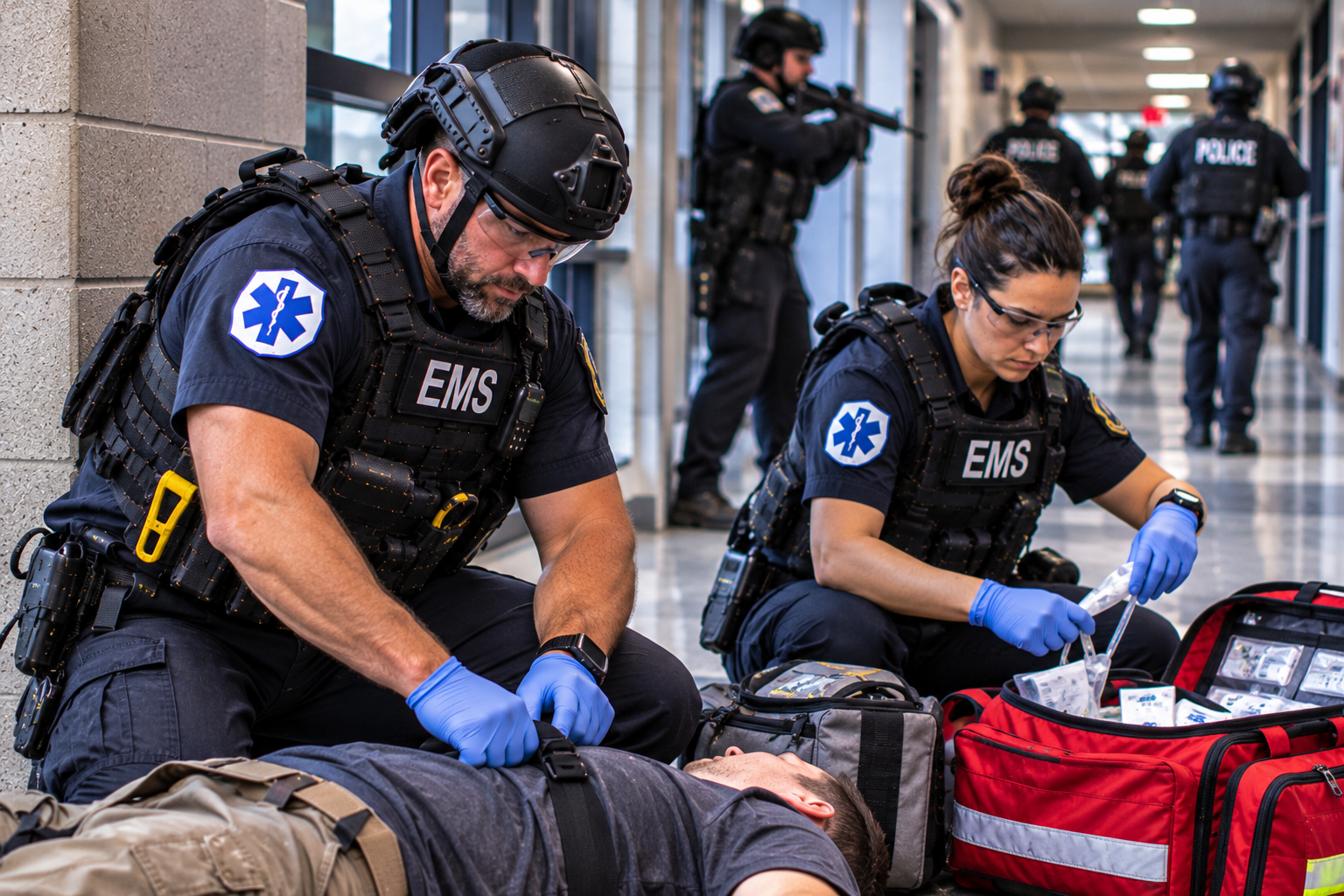
Warm zone medical operations exist precisely to address this mismatch between injury progression and response timing. By establishing areas of managed risk—where the immediate threat has been reduced but not eliminated—responders can begin lifesaving care far earlier than evacuation-first models allow.
Warm zone care shortens timelines in three critical ways. First, it reduces time to intervention. Hemorrhage control, airway positioning, and rapid assessment can begin minutes earlier when medical personnel are permitted forward access under protection. Second, it reduces unnecessary movement. Treating patients closer to where they fell limits re-exposure to threats and decreases physiological stress caused by prolonged transport. Third, it improves casualty flow. Stabilized patients move more efficiently through the system, reducing bottlenecks and secondary delays.
Importantly, warm zone care is not improvised heroics. It is structured, coordinated, and deliberately bounded by security operations. It recognizes that safety is not binary, but conditional—and that conditions can be sufficient for care long before an environment is fully secure.
Force Protection Enables Access
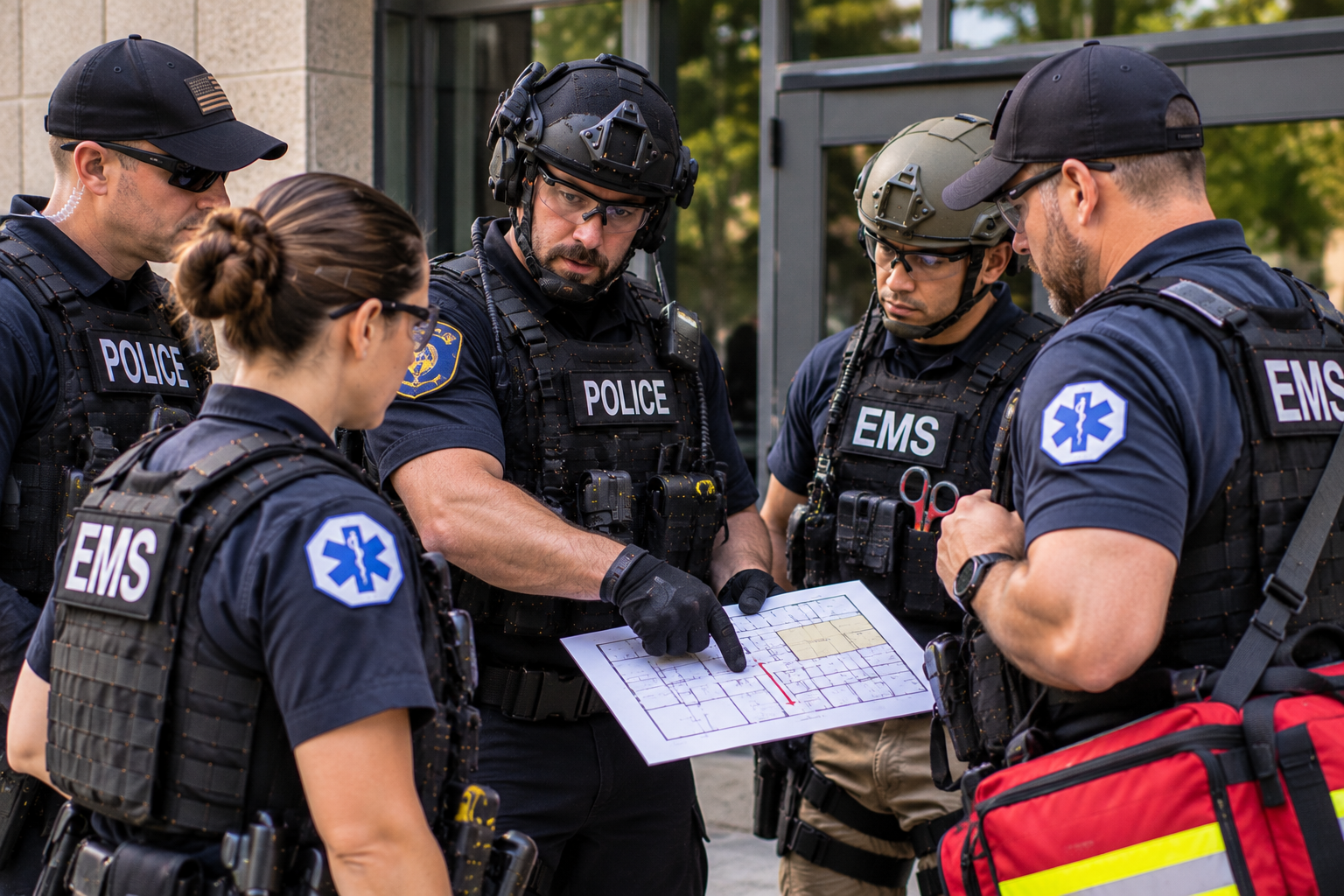
The question is not whether medical responders should enter contested spaces; it is how they do so safely. Force protection is the enabling mechanism that allows medical care to move forward without unacceptable risk. When security and medical functions operate in isolation, both fail. When they integrate, access becomes possible.
Force protection takes multiple forms: armed escort, coordinated movement with clearing teams, use of cover and concealment, disciplined spacing, and continuous communication. These elements transform hazardous environments into manageable ones. They do not eliminate danger, but they reduce it to a level where lifesaving action can occur.
Crucially, force protection is not static. It evolves with the incident. As threats are contained or displaced, access expands. As information improves, movement becomes more deliberate. Medical responders operating under force protection are not independent actors; they are part of a synchronized system where security and care advance together.
This integration challenges longstanding cultural divisions between “tactical” and “medical” roles. However, the alternative—separating protection from care—has proven lethal. Access without protection is reckless; protection without care is incomplete. Only together do they serve survivability.
Movement Saves Lives
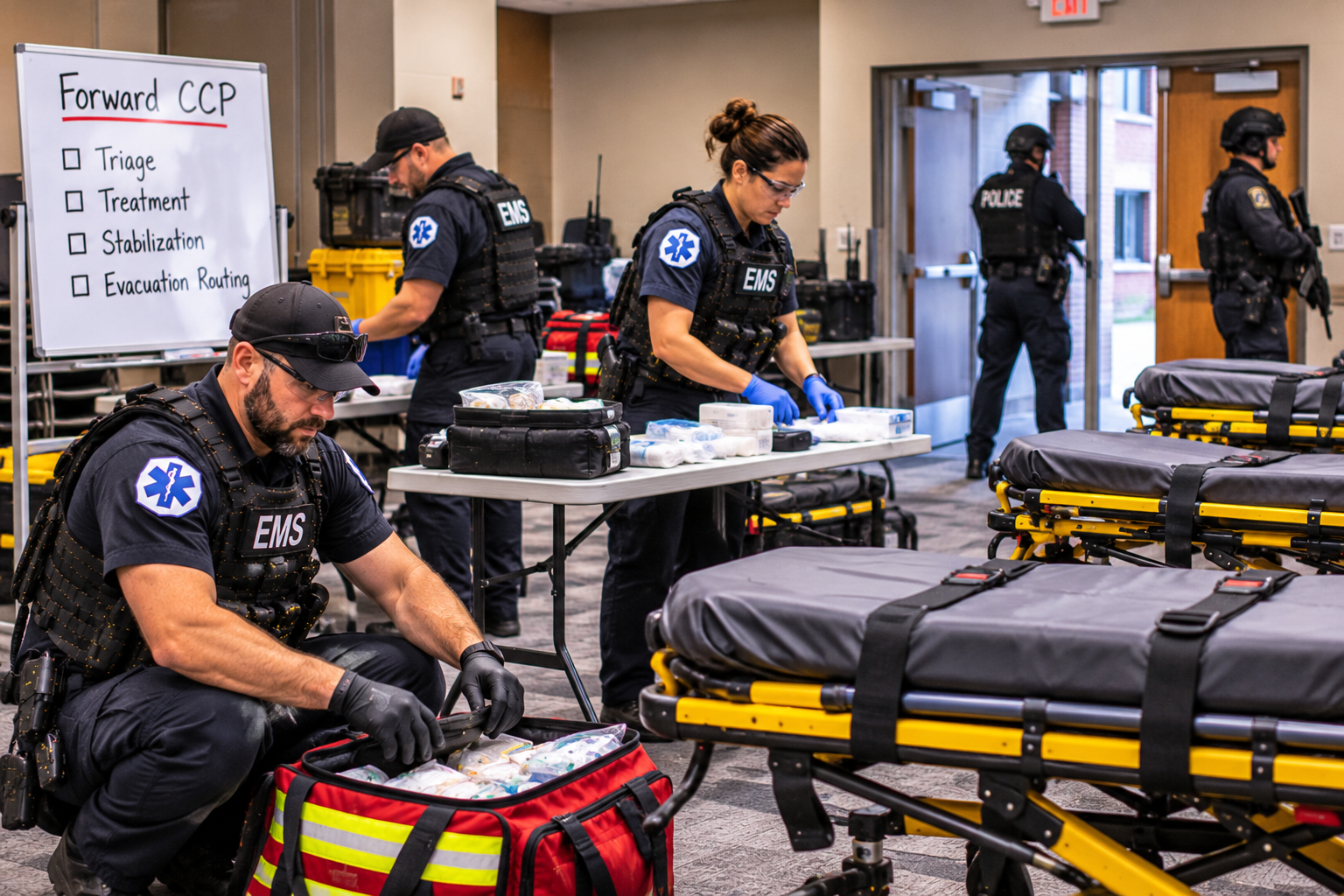
Movement is often framed as a risk. In high-threat medicine, it is a necessity. The critical distinction lies in purposeful movement versus delayed movement. Moving care forward early reduces the distance between injury and intervention. Moving casualties later, without treatment, increases risk without benefit.
Purposeful movement prioritizes time over terrain. It acknowledges that the most dangerous period for a casualty is not transport, but untreated injury. By advancing medical capability toward the threat—step by step, protected and informed—responders reclaim minutes that would otherwise be lost.
Movement also restores operational momentum. When care begins early, responders transition from reaction to control more quickly. Stabilized patients reduce emotional stress, cognitive overload, and operational confusion. Each successful intervention reinforces system confidence and clarity.
From a human factors perspective, early action prevents paralysis. Waiting breeds uncertainty. Movement—guided by doctrine and protection—creates purpose. In this way, movement saves lives both physiologically and operationally.
Risk Is Managed, Not Avoided
A persistent barrier to hot and warm zone care is the belief that safety must be guaranteed before action. In reality, no high-threat environment offers guarantees. Safety is always provisional. The question is not whether risk exists, but how it is managed.
Managed risk requires continuous assessment, not static declarations. It requires responders to evaluate threat proximity, likelihood, and mitigation in real time. It requires leadership support for decisions made under uncertainty. Most importantly, it requires doctrine that explicitly authorizes early medical access when conditions permit.
Avoidance of risk does not eliminate danger; it displaces it onto casualties. When systems delay care in pursuit of certainty, they exchange responder risk for patient death—often without acknowledging the trade-off. Ethical, operational, and medical responsibility demand a more balanced approach.
Implications for Training and Doctrine
Hot and warm zone operations cannot be improvised. They must be trained, rehearsed, and institutionalized. Training that emphasizes waiting without teaching movement under protection conditions responders to hesitate when action is required. Doctrine that treats safety as a declaration rather than a condition reinforces delay.
Effective preparation requires scenario-based training that reflects ambiguity, incomplete information, and evolving threats. Responders must practice moving, communicating, and providing care under stress. Command elements must learn to integrate medical considerations into tactical decision-making from the outset.
Language matters as well. Terms such as “scene safe” must be reframed to reflect dynamic assessment rather than absolute status. Clear expectations reduce hesitation and empower responders to act within defined boundaries.
Continuous Relevance in Modern Threat Environments
High-threat incidents are increasingly fast, mobile, and unpredictable. Many conclude within minutes, often before traditional response structures fully activate. In these environments, waiting ensures irrelevance. Care that arrives after the threat ends often arrives after survivability ends.
Public expectations reflect this reality. Communities assume that responders will act decisively to save lives, not merely to contain danger. When victims bleed to death while help waits nearby, trust erodes. Aligning doctrine with reality is therefore not only a medical imperative, but a social one.
Conclusion
Hot and warm zone operations represent a necessary evolution in tactical medical response. Casualties occur in contested spaces. Evacuation-first models fail physiology. Warm zone care shortens timelines. Force protection enables access. Purposeful movement saves lives.
The choice is not between safety and action. It is between managed risk and guaranteed loss. When care moves toward the threat—deliberately, protected, and integrated—response systems align with how injuries occur, how bodies fail, and how lives are saved.
In modern high-threat incidents, the safest place for care is not where danger is absent, but where intervention is early.