
Optimizing CCP Placement and Overcoming Traditional Limitations
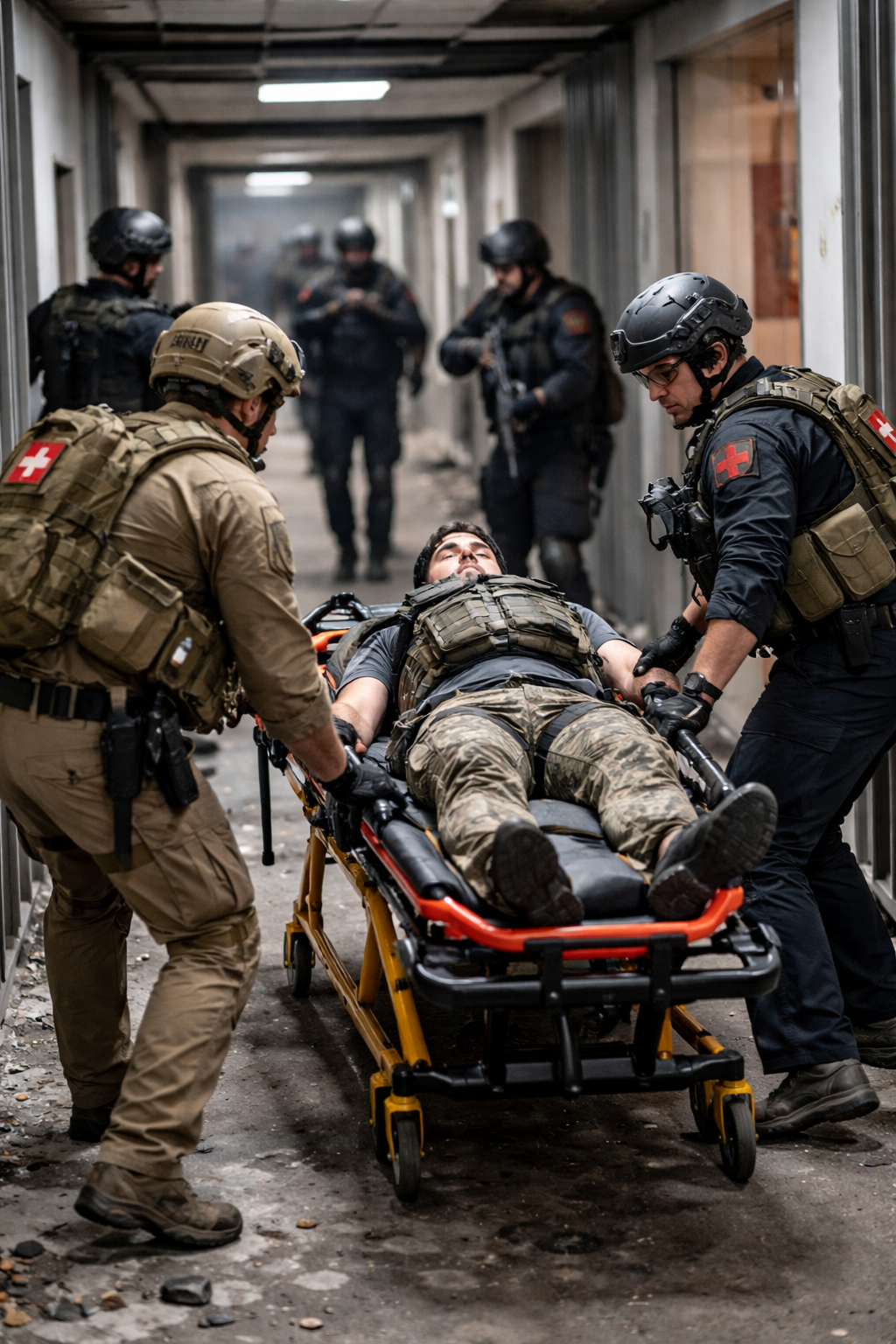
Optimizing CCP Placement and Overcoming Traditional Limitations: Reframing Medical Access for Modern Threat Environments
In high-threat incidents, where a casualty is treated often matters less than when. The interval between injury and intervention—measured in minutes, sometimes seconds—determines survivability far more reliably than transport distance or downstream hospital capability. Yet many emergency response systems continue to rely on traditional Casualty Collection Point (CCP) placement models that prioritize distance from perceived danger over proximity to patients. In contemporary active shooter and complex assault events, this approach is no longer merely inefficient; it is operationally and physiologically unsound.
This analysis advances a clear thesis: optimizing CCP placement inside protected Hot or Warm Zone boundaries is essential to reducing treatment delays, improving survivability, and correcting legacy EMS and fire service response models. Using the Chaos–Stabilization–Recovery (CSR) framework as an organizing lens—and reinforcing arguments through primacy, cognitive chunking, progressive emphasis, and repetition with variation—this article demonstrates why interior CCPs represent not increased risk, but better risk management aligned with modern threat realities.
The Legacy of Exterior CCP Placement
Traditional CCP doctrine emerged from environments where threats were static, predictable, or accidental. Fires burned in defined spaces. Vehicle collisions occurred on known roadways. Violence, when present, was typically isolated and rapidly controlled. In these contexts, establishing CCPs outside the hazard zone protected providers and centralized care.
Over time, this approach hardened into default practice. CCPs were positioned well outside perceived danger, often requiring casualties to be moved significant distances before receiving any meaningful medical intervention. The underlying assumption was simple: movement precedes medicine.
In dynamic, intentional threat environments, this assumption fails. Active attackers move. Threat boundaries shift. Incidents conclude rapidly. The distance between injury and care becomes the dominant determinant of outcome. Exterior CCP placement—once a reasonable precaution—now introduces fatal delay.
Physiological Consequences of Delayed CCP Access
Trauma physiology does not accommodate doctrine. The leading causes of preventable death—uncontrolled hemorrhage, airway compromise, and tension physiology—progress relentlessly. Each minute without intervention compounds injury severity and reduces the likelihood of survival.
Evidence consistently shows that casualties deteriorate rapidly when care is delayed, even when evacuation is swift. Bleeding worsens during movement. Airway obstruction progresses. Shock deepens. Hypothermia accelerates. By the time a patient reaches a distant CCP, the window for meaningful intervention may have closed.
This is the critical mismatch: traditional CCP placement optimizes responder comfort, not patient survivability. When CCPs are too far from the point of injury, the system trades safety illusion for physiological certainty—certainty of deterioration.
Cognitive Anchoring and the Persistence of Outdated Models
The continued reliance on exterior CCPs is not a failure of data, but of cognition. What responders learn first—and repeat most often—becomes their default under stress. EMS and fire training have long reinforced evacuation-first thinking. Under pressure, responders revert to this mental model even when conditions demand adaptation.
Listener attention science explains why this persists. Primacy anchors behavior. Without deliberate reframing, new evidence struggles to displace old habits. Repetition without variation reinforces the error; responders practice moving patients before treating them and expect better outcomes despite contradictory experience.
Correcting this requires explicit challenge and repeated exposure to scenarios where interior CCPs and early care demonstrably save lives. Without that exposure, legacy models endure.
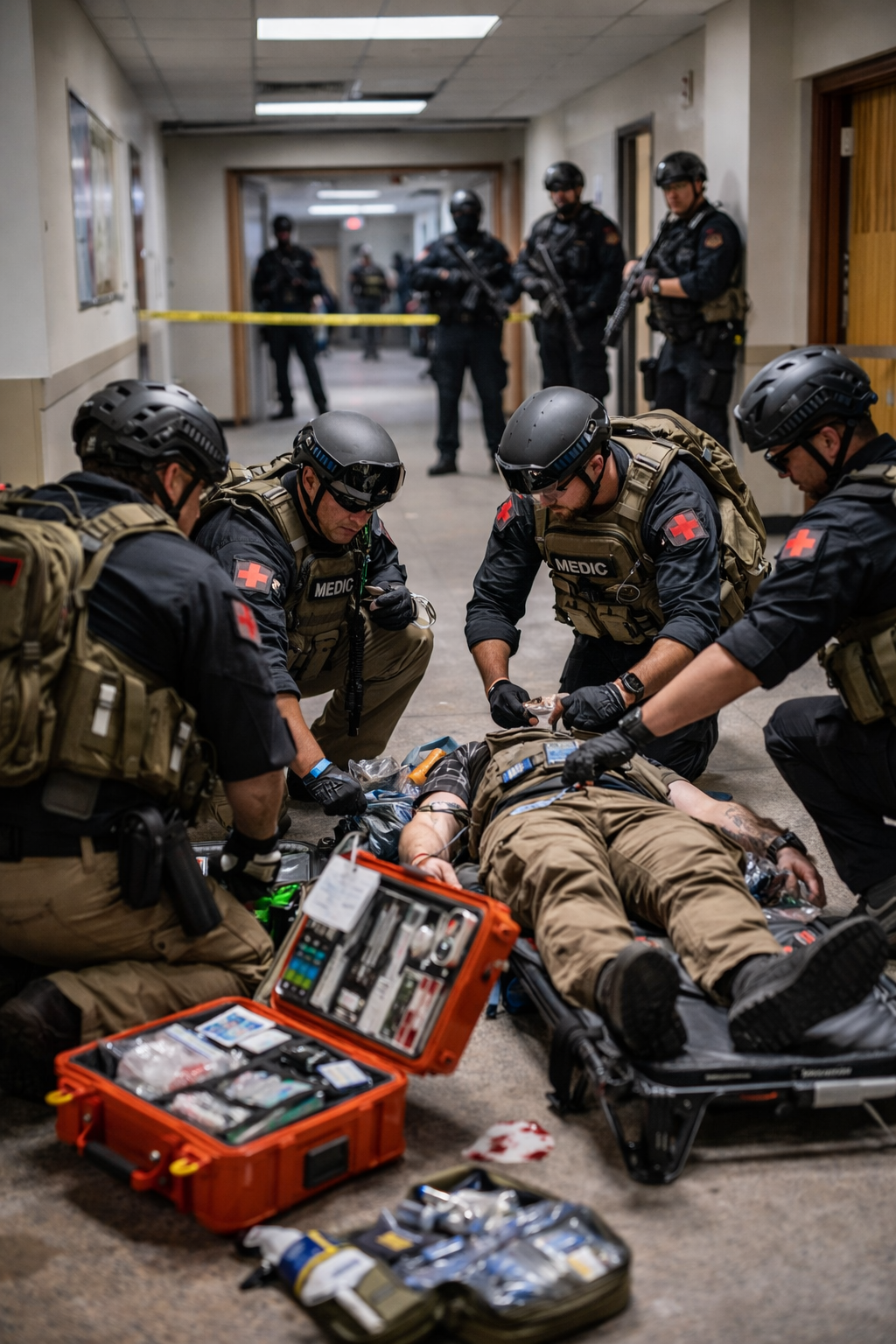
CSR and the Case for Interior CCP Placement
The CSR framework directly addresses the limitations of exterior CCP doctrine by reframing CCPs as tools for time compression, not symbols of safety. Within CSR, CCPs are placed inside protected Hot or Warm Zone boundaries—areas where threats are mitigated, not eliminated, and where managed risk enables decisive care.
Interior CCPs reduce the distance between injury and intervention. They shorten carry times, reduce handoffs, and allow life-saving care to begin sooner. Crucially, they do not eliminate risk; they manage it intentionally by aligning medical access with tactical control.
This approach recognizes a core truth: risk exists regardless of CCP location. The question is not whether risk can be avoided, but whether it is accepted in service of survivability.
Alignment With National Tactical Guidance
CSR’s approach to CCP placement does not exist in isolation. National programs such as ALERRT, ASHER, and ATIRC similarly emphasize early medical access within Warm Zone operations. These models recognize that waiting for absolute security delays care beyond survivable limits.
Across these frameworks, a consistent principle emerges: care must move forward as space is created, not wait for total clearance. CCPs placed within managed-risk zones enable this movement, providing predictable locations for triage, treatment, and extraction without requiring long-distance evacuation under threat.
The convergence of guidance reinforces the argument: interior CCPs are not radical—they are the logical evolution of tactical medicine.
Operational Advantages of Interior CCPs
Interior CCP placement produces several compounding operational benefits:
Reduced Time-to-Intervention
Shorter transport distances mean hemorrhage control, airway management, and stabilization occur sooner.Improved Casualty Flow
Patients move through predictable pathways rather than ad hoc extraction routes, reducing congestion and confusion.Decreased Secondary Exposure
Less movement through unsecured space reduces exposure to secondary threats and environmental hazards.Enhanced Coordination
CCPs positioned near operations improve communication between tactical elements and medical providers.
These advantages reinforce one another. Each minute saved improves survivability; each stabilized patient reduces system strain.
Addressing the Perceived Risk of Hot Zone CCPs
Resistance to interior CCP placement often centers on provider safety. This concern is legitimate—but incomplete. Exterior CCPs do not eliminate risk; they relocate it. They increase movement through dangerous space, extend exposure time, and divert personnel from threat awareness to transport tasks.
Interior CCPs, when properly protected and coordinated, reduce total exposure by shortening movement and concentrating care. Risk is bounded rather than dispersed.
Fire services routinely accept managed risk when entering unstable structures to rescue victims. Law enforcement accepts it during dynamic entries. Tactical medicine must be afforded the same operational logic. Avoiding risk entirely is impossible; managing it effectively is the only viable option.
MRTs as Enablers of Interior CCP Success
Medical Rescue Teams are essential to making interior CCPs viable. MRTs are trained to operate under threat, deliver focused interventions, and integrate seamlessly with law enforcement protection. Their presence transforms CCPs from static destinations into active care nodes.
MRTs prioritize the preventable causes of death and prepare casualties for movement. When interior CCPs are staffed by MRTs, care quality improves without compromising tempo. The CCP becomes a force multiplier, not a bottleneck.
This integration corrects a major deficiency in traditional models, where CCPs existed without the capability to intervene decisively.
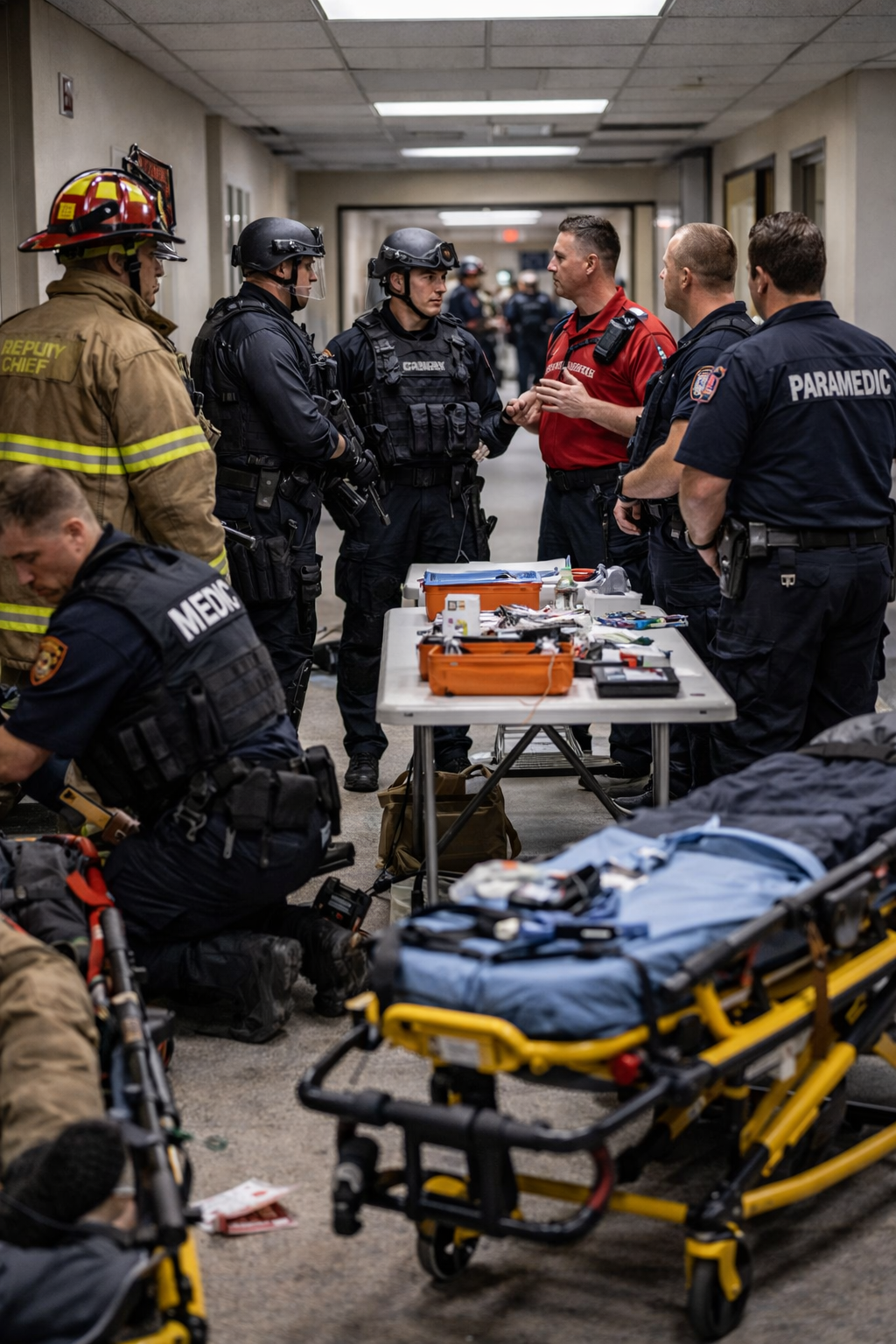
Command and Control: Making Interior CCPs Work
Interior CCP placement requires disciplined command and control. The Incident Command Post must designate CCP locations based on tactical geometry, threat mitigation, and access routes. These decisions must be dynamic, adapting as the incident evolves.
Unified Command ensures that law enforcement, EMS, fire, and EMAs share a common understanding of CCP purpose and protection. When CCP placement is coordinated rather than improvised, confusion diminishes and confidence increases.
Clear command intent is essential. When responders understand why a CCP is placed forward, compliance follows.
Progressive Emphasis: Time Over Distance
Across physiology, operations, and command, the same principle recurs: time matters more than distance. Exterior CCPs increase distance and cost time. Interior CCPs compress distance and buy time.
By returning to this emphasis repeatedly—through evidence, operational logic, and real-world outcomes—doctrine shifts from tradition to relevance.
Training Implications: Relearning CCP Doctrine
Optimizing CCP placement requires training that challenges assumptions. Exercises must include interior CCP establishment, MRT staffing, and protected access under uncertainty. Scenarios should demonstrate the consequences of delay and the benefits of forward care.
Repetition with variation ensures adaptability. Different venues, threat profiles, and casualty loads teach responders to place CCPs based on conditions, not habit. Over time, interior CCPs become the default, not the exception.
Overcoming Cultural Resistance
Cultural change is often harder than tactical change. Exterior CCP placement feels safer because it aligns with long-standing norms. Interior placement feels uncomfortable because it challenges identity and habit.
Effective reform names this discomfort explicitly. It reframes forward CCP placement not as recklessness, but as professionalism aligned with evidence. Leadership endorsement and policy protection are essential to sustain change.
Conclusion
Traditional CCP placement outside threat zones was built for incidents that no longer define modern response. In dynamic, high-threat environments, exterior CCPs delay care, increase exposure, and worsen outcomes. The evidence is clear: interior CCPs placed within protected Hot or Warm Zones reduce time-to-intervention and improve survivability.
The CSR framework, supported by national tactical guidance, challenges outdated EMS and fire models by aligning medical access with operational reality. When CCPs move forward, care follows—and lives are saved.
CCPs should not be monuments to caution. They should be instruments of speed, coordination, and survival.