
Improvised Explosive Device (IED) Awareness
Improvised Explosive Device (IED) Awareness
In contemporary high-threat incidents, the danger confronting responders rarely arrives in a single form. Increasingly, active shooter events are paired with secondary hazards designed to slow response, channel movement, or inflict additional casualties after initial engagement. Among these hazards, improvised explosive devices (IEDs) represent one of the most lethal and cognitively disruptive threats responders face. IEDs transform familiar environments into layered hazard zones where movement, medical care, and command decisions must be reconsidered continuously. Awareness is therefore not optional—it is a survival requirement.
This analysis examines IED awareness through an operational lens, emphasizing how hybrid attacks complicate response decision-making, alter movement patterns, and directly affect casualty care, CCP placement, and extraction routes. The central argument is that IEDs are not isolated bomb-squad problems; they are response-wide hazards. Every discipline—law enforcement, fire, EMS, and command—must integrate explosive awareness into tactical and medical operations from the earliest moments of an incident.
The Rise of Hybrid Threats
High-threat incidents increasingly combine firearms, incendiary devices, and explosives into hybrid attack profiles. These combinations are deliberate. Explosives are used not only to cause casualties, but to manipulate responder behavior—forcing hesitation, rerouting movement, or drawing personnel into secondary kill zones.
Historical and contemporary case analysis shows a pattern: attackers place or threaten secondary devices near entrances, exits, casualty clusters, or responder staging areas. The intent is predictable—to exploit predictable responder behavior. Hybrid attacks succeed not because responders lack courage, but because systems fail to anticipate layered hazards.
IED awareness must therefore begin with an acceptance of reality: if one device is suspected, others must be assumed until proven otherwise.
Secondary Devices and the Cognitive Trap
One of the most dangerous aspects of IED threats is their psychological effect. The discovery or suspicion of an explosive device creates cognitive anchoring—responders fixate on the visible threat and unconsciously narrow their attention. This fixation can lead to clustering, slowed movement, and degraded situational awareness.
Secondary devices exploit this effect. They are often placed where responders predictably congregate: near initial victims, along evacuation corridors, or adjacent to command posts. Awareness training must explicitly address this cognitive trap, reinforcing disciplined scanning and spacing even under emotional stress.
IED awareness is therefore as much about human factors as it is about technical recognition.
Recognizing Indicators Without Becoming Paralyzed
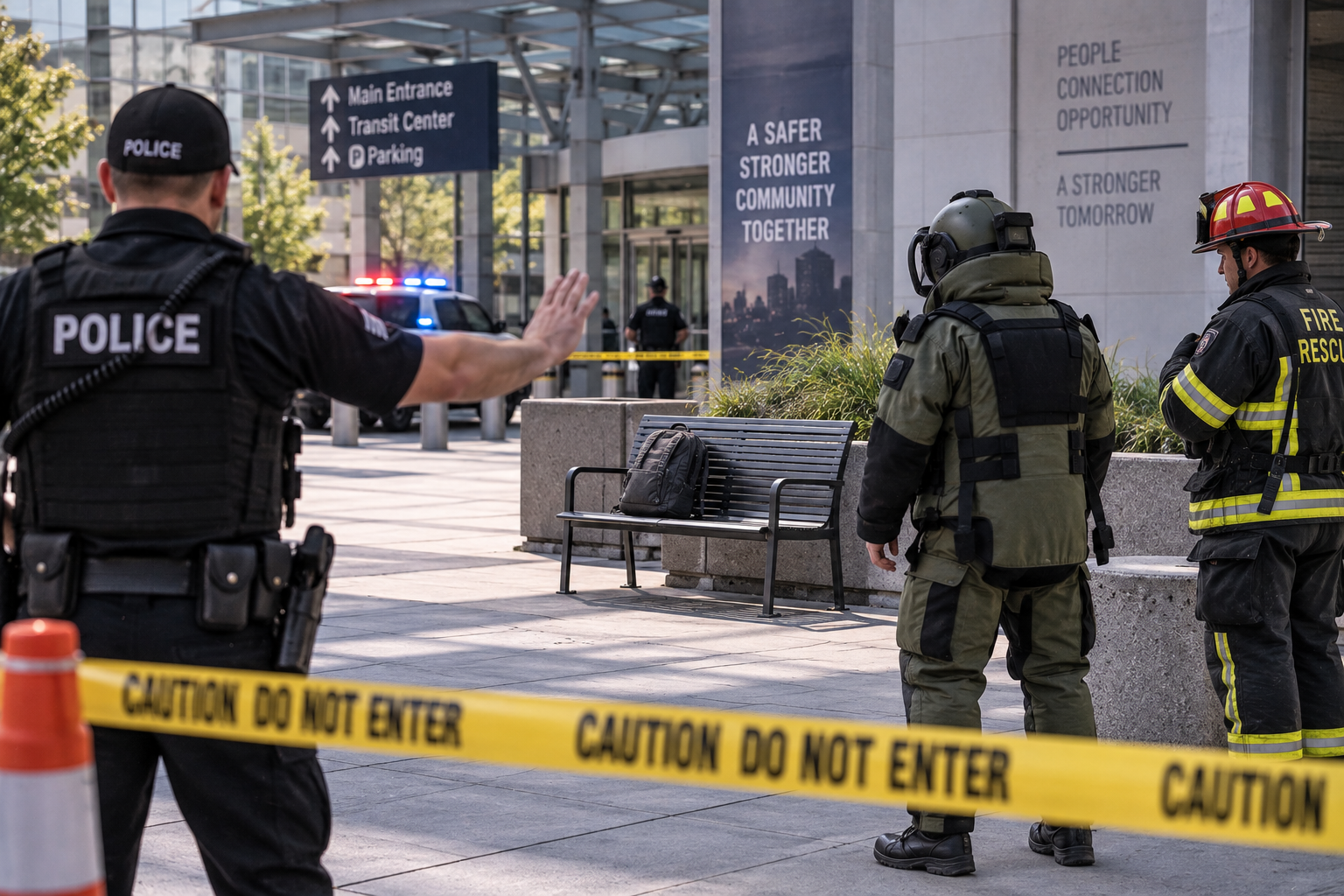
IED indicators may include unattended bags, wires, unusual containers, disturbed ground, or incongruous objects in high-traffic areas. However, in dynamic incidents, indicators are rarely clear or confirmed. Over-reliance on visual certainty can paralyze response, while complete disregard invites catastrophe.
Effective IED awareness balances caution with momentum. Responders are trained to:
Note anomalies without fixating on them.
Adjust spacing and movement rather than halting entirely.
Communicate suspicions rapidly and clearly.
Avoid unnecessary clustering around potential devices.
This balanced posture allows operations to continue while risk is managed rather than ignored.
Movement Patterns in Explosive-Aware Environments
IED presence fundamentally alters movement doctrine. Traditional movement toward sound, casualties, or exits must be tempered by blast considerations. Routes that appear optimal tactically may be catastrophic if compromised by explosives.
Explosive-aware movement emphasizes:
Route variability: avoiding predictable paths.
Spacing: reducing the number of responders exposed to a single blast.
Use of cover: understanding that concealment does not equal blast protection.
Avoidance of choke points: doorways, stairwells, and narrow corridors.
Movement decisions must also account for vertical hazards, as blast effects propagate upward and outward unpredictably in enclosed spaces.
Coordination With Bomb Technicians
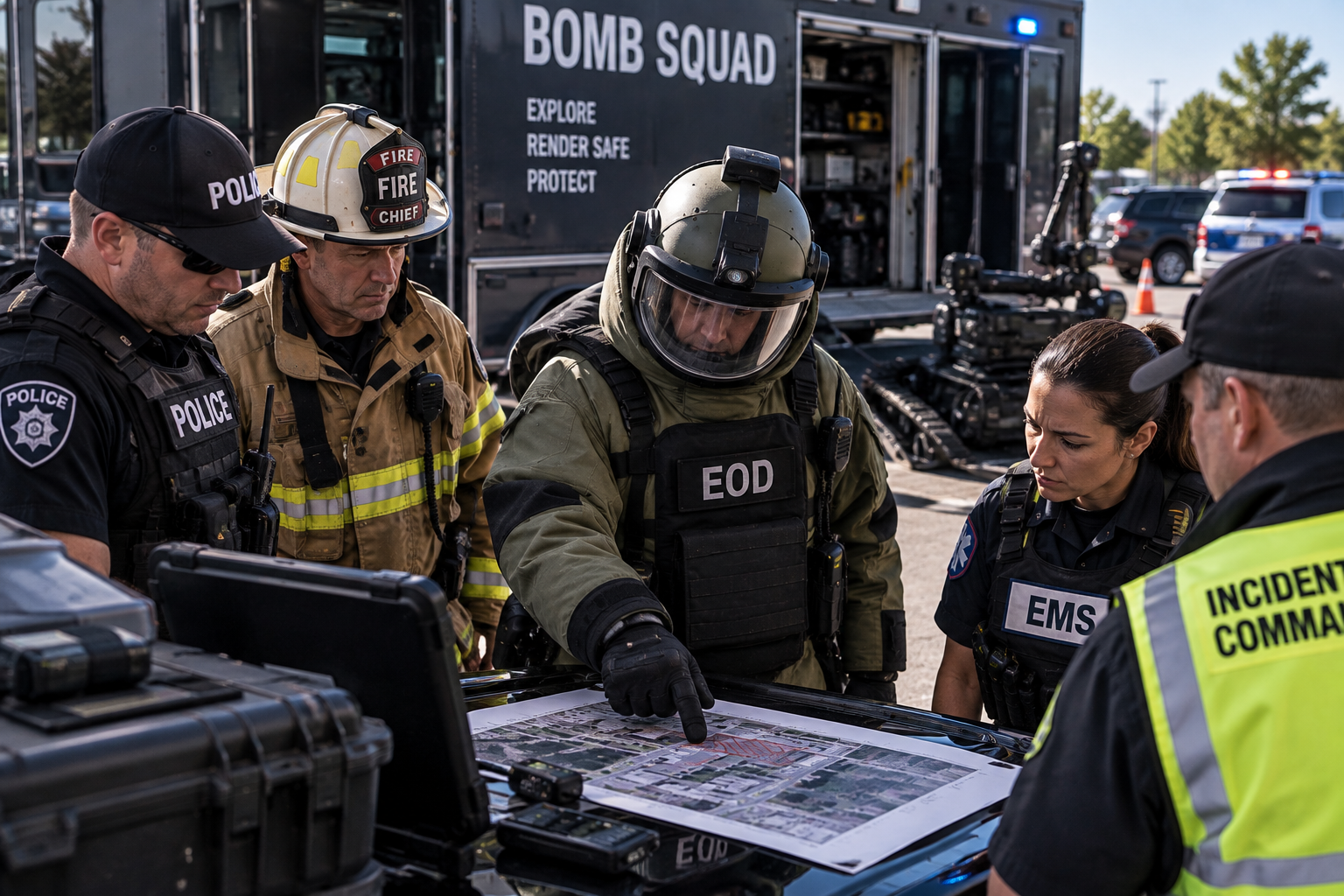
Bomb technicians bring specialized expertise, but they cannot be everywhere immediately. Their integration into high-threat response must be deliberate and prioritized. Early notification allows technicians to begin assessment, advise command, and influence movement and staging decisions even before arrival.
However, IED awareness cannot be deferred entirely to bomb squads. Initial responders must operate safely before technicians arrive. This requires shared terminology, understanding of basic blast principles, and disciplined communication regarding suspected devices.
Command must also resist the false binary of “safe” versus “unsafe.” Bomb technicians assess risk, not certainty. Operations continue under managed risk informed by their expertise.
Implications for Casualty Collection Points (CCPs)
IED threats significantly complicate CCP placement. Traditional logic—placing CCPs near casualty concentrations or convenient access routes—may place them directly within blast radii or secondary device zones.
Explosive-aware CCP placement prioritizes:
Offset locations away from obvious attack points.
Structural shielding capable of mitigating blast effects.
Multiple ingress and egress routes.
Continuous reassessment as intelligence evolves.
CCPs must remain mobile concepts rather than fixed destinations. If a location becomes suspect, CCPs must shift without hesitation. The ability to relocate rapidly preserves both patients and providers.
Extraction Routes Under Explosive Threat
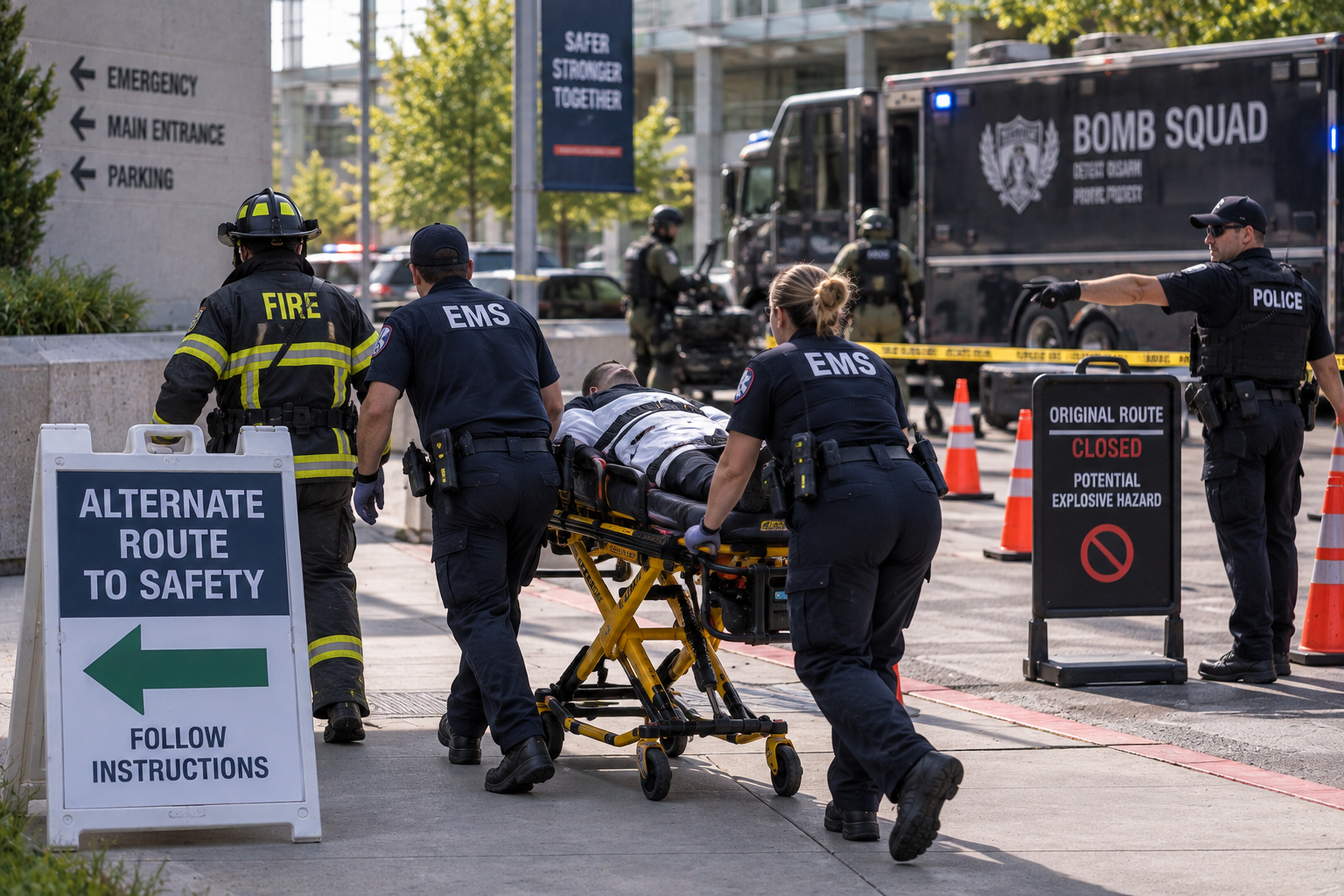
Extraction routes are particularly vulnerable to secondary devices. Attackers anticipate evacuation and target predictable pathways. Routes that are safe from ballistic threat may still be lethal due to blast exposure.
Explosive-aware extraction planning includes:
Redundant routes with equal priority.
Avoidance of linear movement through confined spaces.
Staggered evacuation rather than mass movement.
Coordination with bomb technicians and law enforcement for route clearance.
Extraction under explosive threat reinforces the importance of flow over accumulation. Prolonged staging of casualties increases exposure risk.
Medical Operations in the Shadow of Explosives
Medical responders face a difficult balance under IED threat: delaying care increases mortality, while uncontrolled exposure risks additional casualties. Awareness enables better decisions, not perfect safety.
Explosive-aware medical operations emphasize:
Rapid, high-yield interventions (e.g., hemorrhage control).
Movement of patients away from suspected device locations as soon as feasible.
Avoidance of extended treatment in unsecured or congested areas.
Coordination with tactical elements to maintain spacing and security.
This approach aligns with point-of-injury care principles—intervene early, move deliberately, reassess constantly.
Command and Information Integration
IED awareness must be embedded within command decision-making. Information about suspected devices, cleared areas, and assessed hazards must flow continuously between ECCs, field units, and command posts.
Commanders must synthesize:
Caller reports of explosions or suspicious objects.
Field observations from multiple disciplines.
Technical input from bomb technicians.
Operational requirements for medical access and extraction.
Failure to integrate this information leads to contradictory orders, unsafe movement, and stalled operations. Effective command accepts uncertainty while maintaining forward progress.
Training Gaps and Cultural Resistance
Despite the growing prevalence of explosives in hybrid attacks, IED awareness training remains inconsistent outside specialized units. Fire and EMS personnel often receive minimal exposure, reinforcing a dangerous assumption that explosives are “law enforcement problems.”
This cultural separation is operationally unsound. Explosives affect everyone on scene. Training must therefore be cross-disciplinary, emphasizing shared risk rather than segmented responsibility.
Effective training incorporates:
Recognition of indicators.
Movement and spacing drills.
Decision-making under uncertainty.
Integration with medical and rescue tasks.
Without training, awareness remains theoretical and collapses under stress.
Cognitive Discipline Under Uncertainty
Perhaps the most critical element of IED awareness is cognitive discipline. Responders must resist two extremes: paralysis and complacency. Both are fatal in different ways.
Cognitive discipline allows responders to:
Acknowledge risk without freezing.
Continue mission-critical tasks with modified tactics.
Communicate uncertainty clearly.
Adapt as new information emerges.
This discipline is built through repetition and leadership modeling. When leaders demonstrate calm, structured decision-making under explosive threat, teams follow suit.
Relevance Beyond Active Shooter Events
IED awareness applies far beyond active shooter incidents. Terrorist attacks, ambushes, domestic extremism, and even large-scale criminal events increasingly involve explosives. Any environment with crowds, symbolism, or responder concentration is vulnerable.
The principles remain consistent: expect layering, avoid predictability, and integrate awareness across all functions.
Conclusion
Improvised explosive devices represent a growing and evolving threat within modern high-threat incidents. Their purpose extends beyond physical harm to cognitive disruption—slowing response, fragmenting coordination, and exploiting predictable behavior. Awareness is therefore not a niche skill, but a system-wide requirement.
Effective IED awareness integrates recognition, movement adaptation, medical considerations, and command coordination. It influences CCP placement, extraction routes, and responder spacing, shaping every operational decision under threat.
In hybrid attacks, the absence of awareness multiplies risk, while informed, disciplined action preserves momentum and lives. Preparing responders to operate intelligently in the presence of explosive hazards is not an escalation of fear—it is an acknowledgment of reality and a commitment to survivability.