When Words Kill: Misapplied Military Terminology in Civilian Response
When Words Kill: Misapplied Military Terminology in Civilian Response
Language is not neutral in high-threat operations. Words shape perception, perception drives action, and action determines survival. In civilian active shooter and mass-violence response, one of the most underexamined sources of operational risk is the uncritical adoption of military terminology without the doctrine, structure, or capabilities that give those words meaning. When language is misapplied, it does not merely confuse—it actively creates unsafe behaviors. In this sense, words can kill.
The central argument of this analysis is that military terminology, when removed from its original operational context and applied to civilian public safety environments, introduces dangerous mismatches between expectation and reality. Terms such as “get off the X,” “clear,” “secure,” or “room cleared” assume command authority, force protection, staffing depth, and rules of engagement that do not exist in most civilian settings. When responders act on these words rather than on verified conditions, the result is premature movement, delayed medical access, or false assumptions of safety. Language, when it outpaces capability, becomes a hazard rather than a tool.
Military Terminology Is Context-Dependent by Design
Military language emerges from a specific ecosystem: hierarchical command, unified force composition, defined rules of engagement, and mission acceptance of risk. Terms are not shorthand for general ideas; they are compressed representations of doctrine, training, and capability. When a military unit says an area is “secure,” that declaration reflects control of terrain, denial of enemy movement, continuous overwatch, and the authority to use force without hesitation.
In contrast, civilian public safety operates under fragmented command structures, layered legal constraints, and diverse mission priorities. Law enforcement, fire, and EMS are separate disciplines with different authorities, training pipelines, and acceptable risk thresholds. Yet military terminology is often imported wholesale into civilian training because it sounds decisive, professional, and proven.
The problem is not the vocabulary itself. The problem is the assumption that the words mean the same thing across fundamentally different systems. Without the supporting doctrine, the words lose precision—and imprecision in high-threat environments is lethal.
Civilian Misuse Creates Unsafe Actions
When terminology is misapplied, it alters responder behavior in predictable ways. Responders move when they should hold. They hold when they should move. They assume protection exists when it does not. They delay care because a phrase suggests safety that has not been earned.
Consider the operational effect of declaring a space “clear” in a civilian environment. To law enforcement, this may mean a rapid visual sweep under time pressure. To EMS or fire personnel, the same word may be interpreted as absence of threat, implying permissive movement and relaxed posture. The linguistic disconnect produces exposure rather than safety.
This effect compounds under stress. Cognitive load compresses decision-making, causing responders to rely on familiar words rather than reassessing conditions. If the word implies safety, the body follows—even when the environment contradicts it. In this way, terminology becomes an accelerant of error.
“Get Off the X”: A Case Study in Misinterpretation
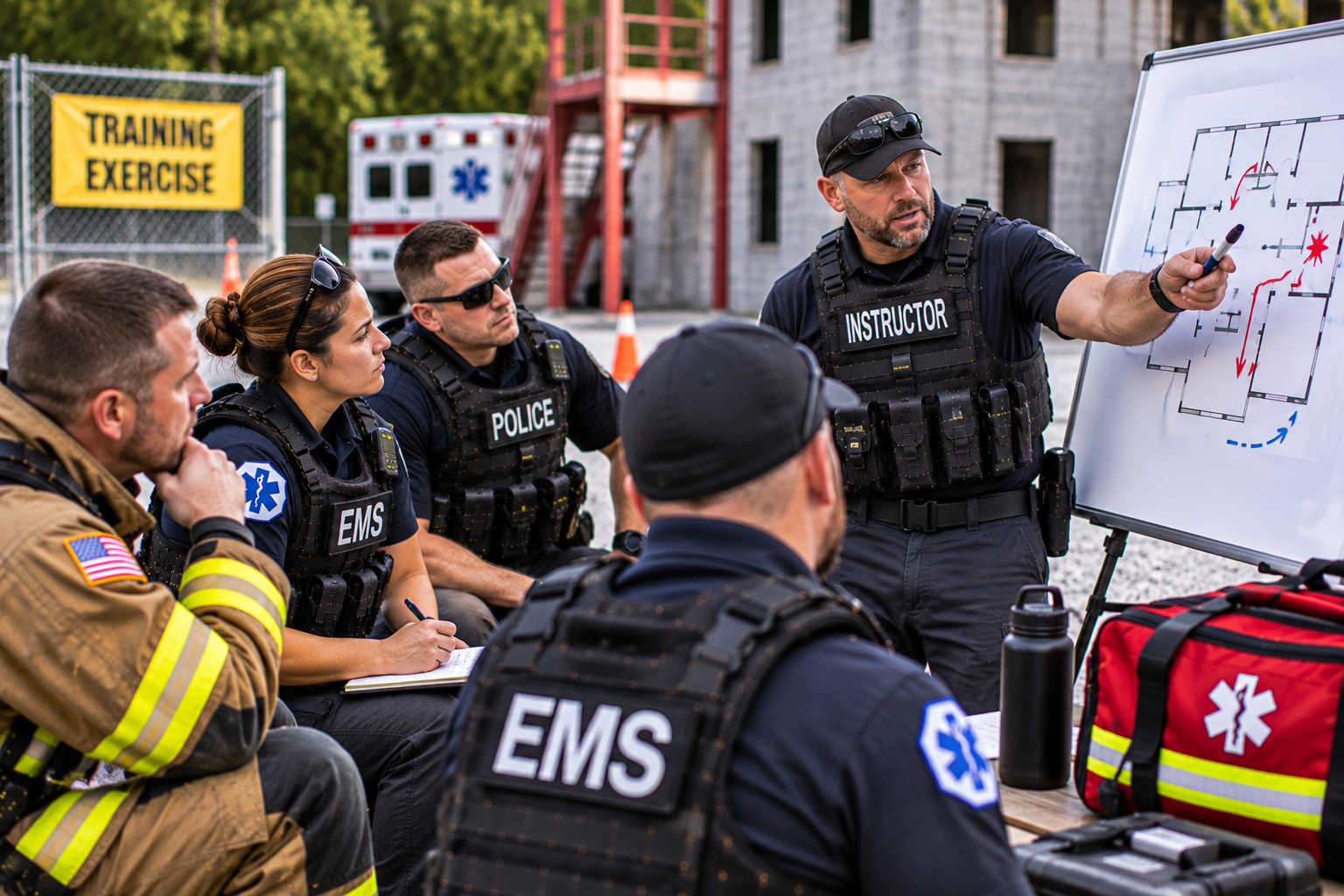
Few phrases illustrate this danger more clearly than “get off the X.” In military doctrine, the “X” refers to a known or anticipated kill zone—often defined by enemy fires, ambush geometry, or explosive placement. The imperative to move is paired with suppressive fires, bounding elements, and coordinated maneuver. Movement is supported, protected, and deliberate.
In civilian response, the phrase is often misinterpreted as “move away from the location,” regardless of context. This leads to two critical errors.
First, it reframes geography rather than threat. In active shooter incidents, the “X” is not the floor tile, hallway, or doorway—it is the shooter. Moving casualties or responders without addressing the threat vector simply relocates vulnerability.
Second, it encourages movement without protection. Civilian responders lack organic suppressive capability, maneuver elements, or overwatch. “Getting off the X” without force protection can increase exposure rather than reduce it, particularly during evacuations or hasty extractions.
The phrase, stripped of its doctrinal scaffolding, becomes not a survival tactic but a liability.
Terminology Drives Behavior Under Stress
Under extreme stress, responders do not analyze language—they obey it. Words act as cognitive triggers, activating rehearsed behaviors. This is why terminology must be aligned precisely with intended action.
If responders are trained that “scene secure” means medical entry, they will enter. If “secure” is used prematurely, medical personnel move into unresolved threats. If “clear” is used inconsistently, teams fragment. If “hold” is vague, momentum collapses.
Language is operational infrastructure. It tells people when to move, where to move, and how much risk is acceptable. When that infrastructure is unstable, the system fails in predictable ways.
Critically, this failure is not individual. It is systemic. Even highly competent responders will act unsafely if the language guiding them is flawed. Training excellence cannot overcome doctrinal ambiguity.
Capability Must Precede Language
A fundamental principle of safe operations is that language must reflect actual capability—not aspiration, not analogy, and not borrowed prestige. Civilian agencies must ask a hard question before adopting any military term: What does this word require us to be able to do?
If a term implies force protection, is force protection present?
If it implies sustained control, is sustained control achievable?
If it implies authority to act, does that authority exist across agencies?
If the answer is no, the language must change.
This does not mean civilian agencies must abandon all military-derived concepts. It means they must translate them accurately into civilian doctrine. Translation requires redefining terms in plain, function-based language that matches civilian reality.
For example:
Instead of “secure,” specify “no known contact, threat not eliminated.”
Instead of “clear,” specify “initial sweep completed, re-clearing required.”
Instead of “get off the X,” specify “move casualty laterally under cover toward protected access.”
Precision replaces bravado. Clarity replaces speed. Safety follows.
Interagency Consequences of Terminology Drift
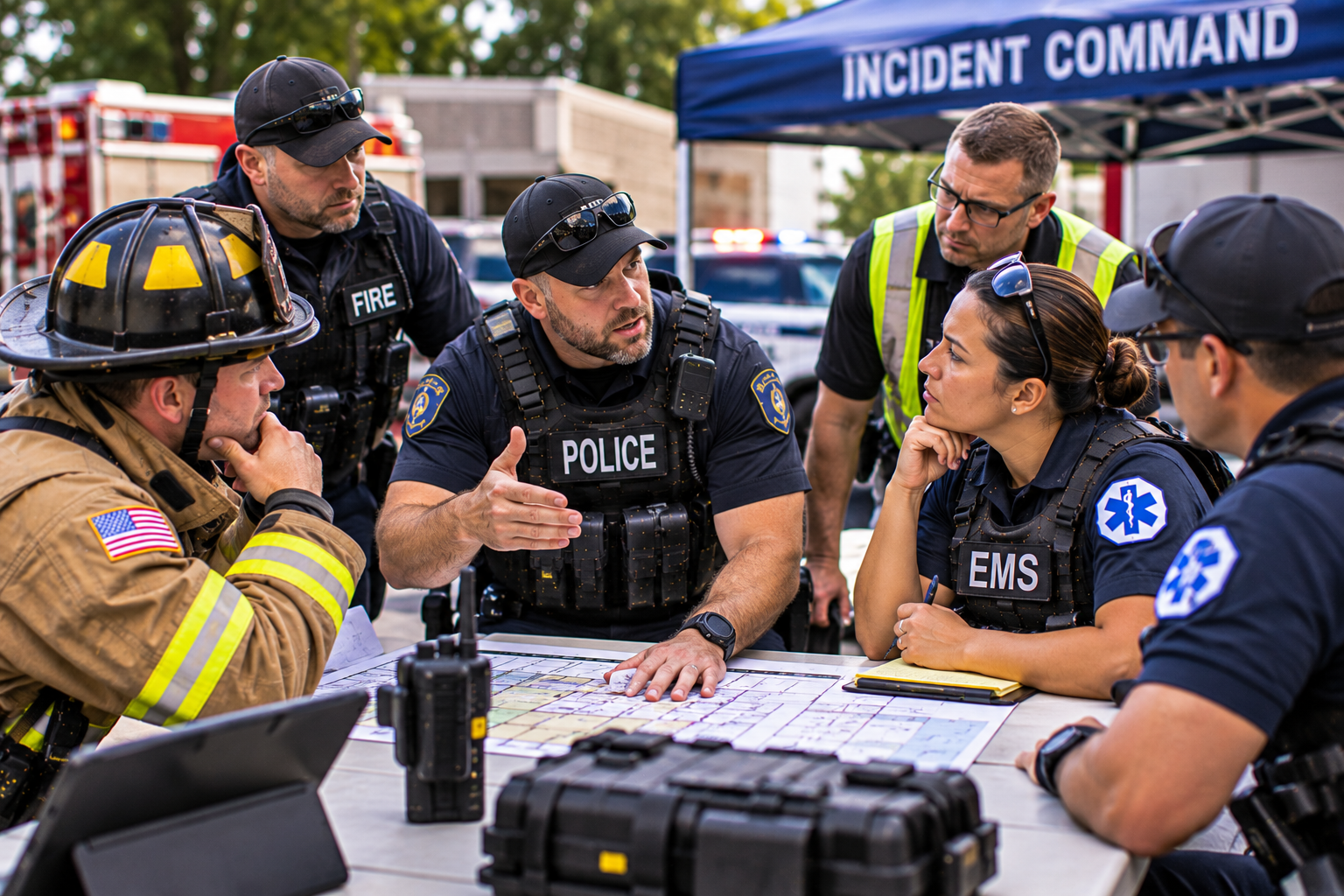
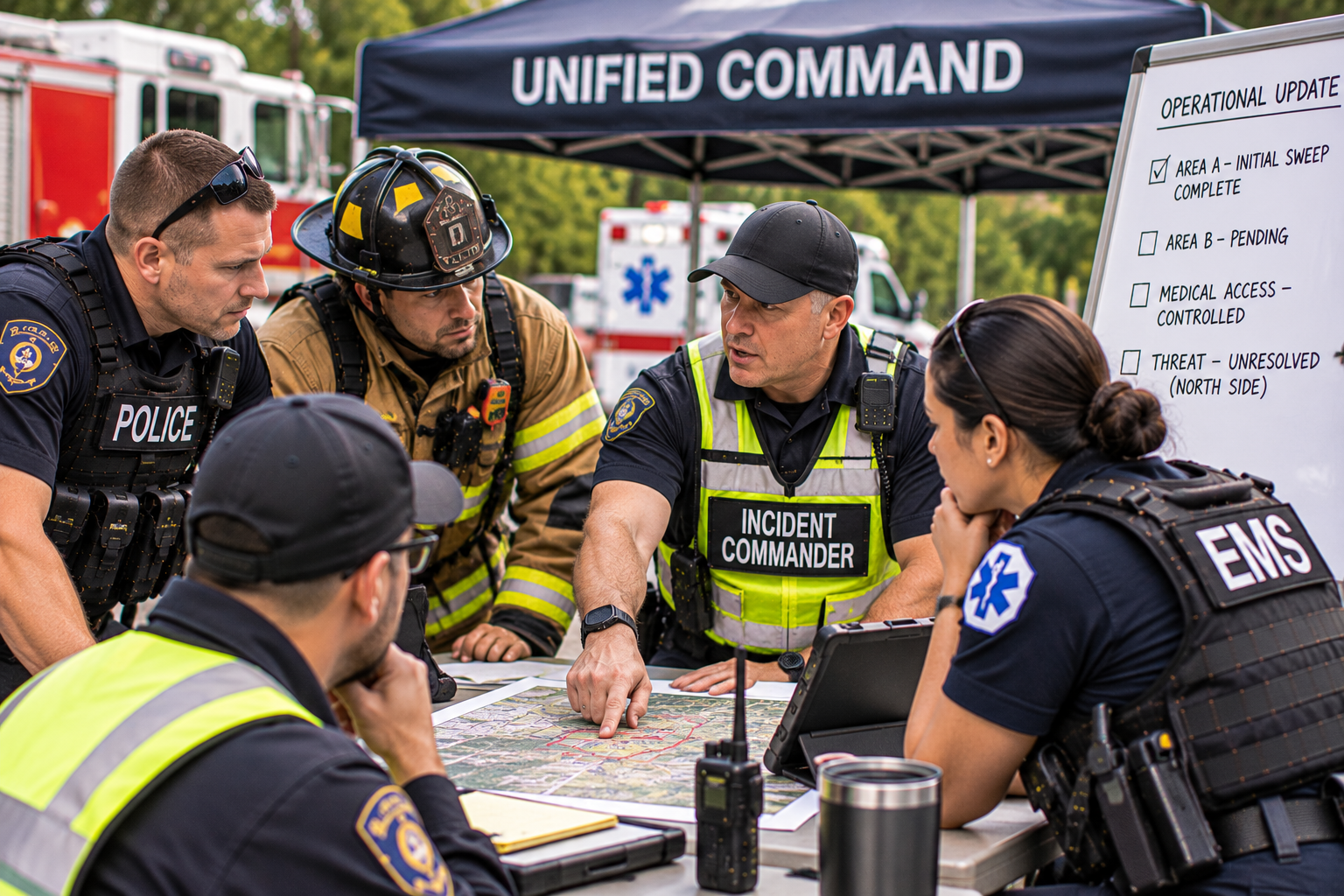
Misapplied terminology is especially dangerous in multi-agency operations. When law enforcement, EMS, and fire interpret the same word differently, unified command becomes performative rather than functional.
Shared situational awareness fractures. One agency believes conditions have changed; another does not. Movement occurs without coordination. Medical access is delayed because one group waits for a declaration that another believes has already occurred.
These breakdowns are not communication failures in the narrow sense—they are semantic failures. Agencies are speaking the same words but operating under different meanings.
Unified command requires unified language. Without it, coordination degrades precisely when it is most needed.
Ethical and Operational Implications
There is an ethical dimension to misapplied language. When responders are injured or killed due to false assumptions created by terminology, responsibility does not rest solely on the individual. It rests with the system that trained them to trust words that did not reflect reality.
Similarly, when casualties die because medical care was delayed based on linguistic assumptions rather than threat assessment, the cost is measured in preventable loss of life. Precision in language is not academic—it is moral.
Operationally, correcting this problem is achievable. It requires deliberate review of doctrine, removal of ambiguous military jargon, and replacement with function-driven, capability-aligned terms. Training must reinforce not just what to do, but what words mean—and what they do not mean.
Toward Safer, Civilian-Centered Language
The goal is not to dilute urgency or decisiveness. The goal is to align language with truth. Civilian response demands words that reflect dynamic risk, incomplete control, and shared responsibility across disciplines.
When language accurately reflects conditions, responders act appropriately. When it does not, they act on fiction. In high-threat environments, fiction kills.
Conclusion
Military terminology carries power, but power without context is dangerous. In civilian high-threat response, misapplied military language distorts perception, drives unsafe behavior, and delays life-saving action. Phrases like “get off the X” or “scene secure” are not inherently wrong—but when divorced from their doctrinal foundations, they become operational traps.
Words shape movement. Movement shapes exposure. Exposure determines survival.
If civilian agencies wish to improve safety and effectiveness, they must scrutinize not only tactics and equipment, but the language that governs action. Language must match capability. Doctrine must match reality. Only then can words guide responders toward survival rather than silently steering them toward harm.