
Pediatric Trauma Considerations in Mass Violence
Pediatric Trauma Considerations in Mass Violence
When mass violence occurs, the presence of pediatric victims fundamentally alters the operational, medical, and ethical landscape of response. Children are not simply smaller adults. Their physiology, psychology, and dependency on others create a distinct casualty profile that many response systems remain inadequately prepared to manage. In high-threat incidents, where time, access, and clarity determine survival, the failure to account for pediatric trauma needs transforms survivable injuries into preventable deaths.
This analysis examines pediatric trauma considerations through an operational lens, emphasizing how gaps in equipment, triage models, training, and planning compromise outcomes during mass violence. The central argument is straightforward: pediatric trauma must be intentionally integrated into tactical medical doctrine, CCP design, and extraction planning rather than treated as a peripheral or downstream concern. Without deliberate preparation, response systems optimized for adults collapse when confronted with injured children.
Why Pediatric Trauma Changes the Response Equation
Mass-casualty response models have historically evolved around adult physiology, adult injury patterns, and adult decision-making capacity. This orientation reflects responder demographics and traditional EMS call volumes. However, when violence occurs in schools, places of worship, community events, or family-oriented venues, children rapidly become a significant portion of the casualty population.
Pediatric casualties introduce immediate complications:
They deteriorate physiologically faster with blood loss.
They present airway challenges unfamiliar to many responders.
They require age- and size-appropriate equipment rarely carried forward.
They generate intense emotional stress that degrades responder performance.
These realities demand not only medical adaptation but operational foresight. Systems that are not built with pediatric trauma in mind fail under pressure.
Equipment Mismatch: A Predictable and Persistent Failure
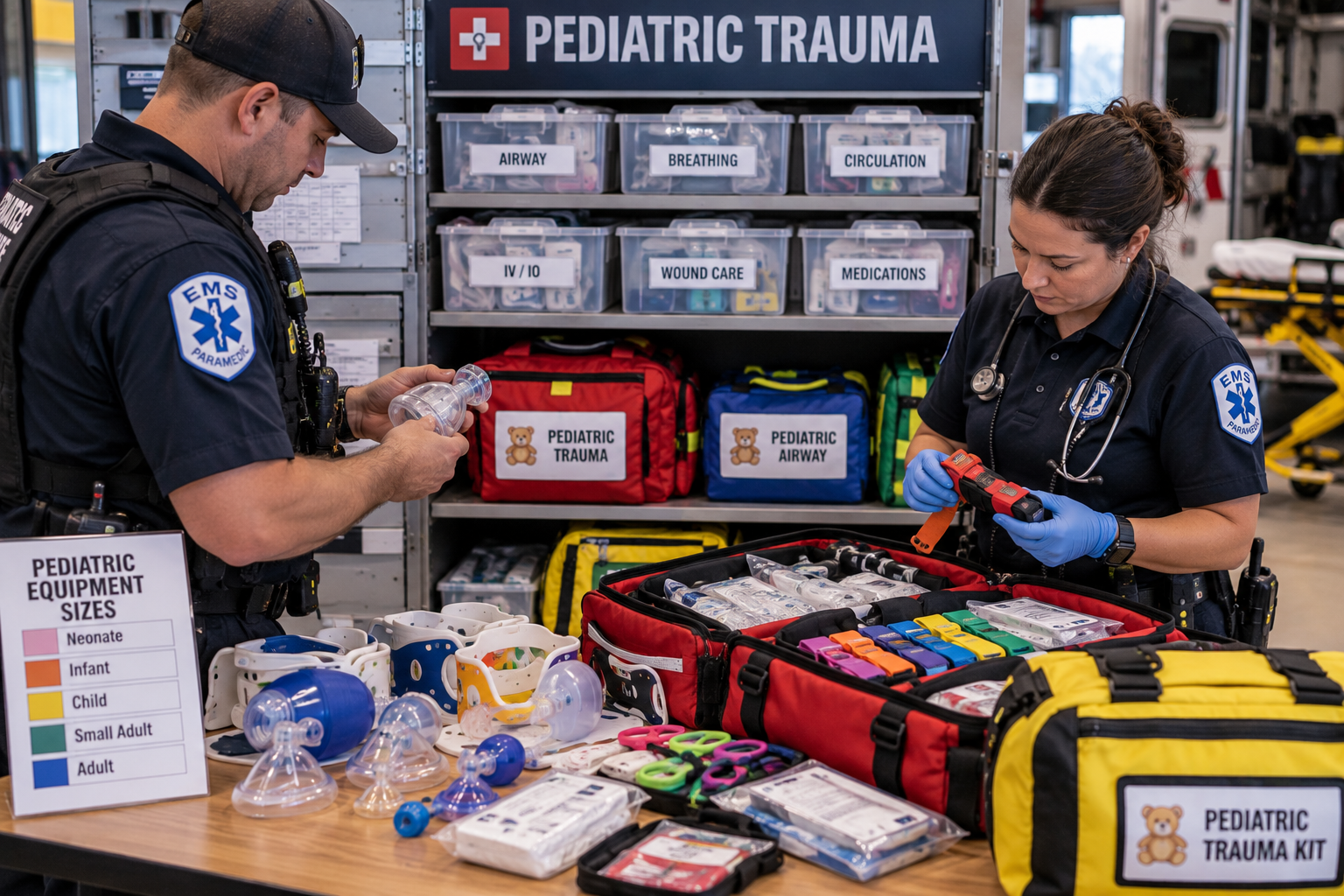
One of the most consistent deficiencies identified in after-action reviews is the absence of pediatric-capable trauma equipment. Tourniquets sized for adults do not reliably occlude hemorrhage in small extremities. Airway adjuncts are often unavailable in pediatric sizes. Chest seals may not adhere or seal appropriately on smaller chests. Cervical immobilization devices are frequently adult-only.
These gaps are not theoretical. They manifest immediately at CCPs when responders are forced to improvise with adult equipment that does not fit, does not function, or actively delays care. Improvisation under fire increases error rates and consumes precious time.
The problem is compounded by logistics. Even agencies that possess pediatric equipment often store it in distant apparatus, specialty units, or hospitals—locations inaccessible during the critical first minutes of mass violence. Pediatric capability that cannot reach the point of injury is functionally nonexistent.
Pediatric Hemorrhage: Smaller Volume, Higher Stakes
Hemorrhage remains the leading cause of preventable death across all age groups, but its impact on children is magnified by physiology. Children have lower total blood volume, meaning that smaller absolute losses result in rapid shock and decompensation. What appears to be a “moderate” wound in an adult can be fatal in a child within minutes.
Additionally, pediatric hemorrhage control presents mechanical challenges. Extremities may be too small for standard tourniquets. Junctional bleeding is harder to compress effectively. Responders unfamiliar with pediatric anatomy may underestimate bleeding severity until collapse occurs.
Despite widespread emphasis on hemorrhage control, pediatric-specific application is often omitted from training. This gap results in delayed or ineffective intervention during the most time-sensitive phase of care.
Airway Management in Pediatric Casualties
Airway compromise represents another high-risk area where adult-centric training falls short. Pediatric airways differ anatomically in size, shape, and vulnerability to obstruction. Tongue proportion, airway diameter, and head anatomy increase the risk of occlusion, especially in unconscious or supine children.
Basic airway positioning may be sufficient when performed correctly, but responders unaccustomed to pediatric patients may default to adult techniques that are ineffective or harmful. Advanced airway interventions are rarely feasible in hot or warm zones, making early, correct basic maneuvers critical.
The absence of pediatric airway adjuncts further exacerbates the problem. When appropriate tools are unavailable, even skilled providers are forced into suboptimal solutions.
Triage Limitations and the Pediatric Blind Spot
Traditional civilian triage systems, including START and JumpSTART, were designed for rapid categorization under controlled conditions. In dynamic, high-threat environments, these systems often falter—particularly with pediatric patients.
Children may not follow commands, cannot reliably report symptoms, and may present deceptively “stable” moments before rapid deterioration. Static triage models fail to capture this volatility. As a result, pediatric casualties are frequently under-triaged and deprioritized during initial sorting.
Military and TECC-aligned triage approaches emphasize immediate treatment of life-threatening conditions rather than rigid categorization. Applying this mindset to pediatric patients improves outcomes but requires deliberate training and doctrinal support.
Psychological Impact on Young Survivors
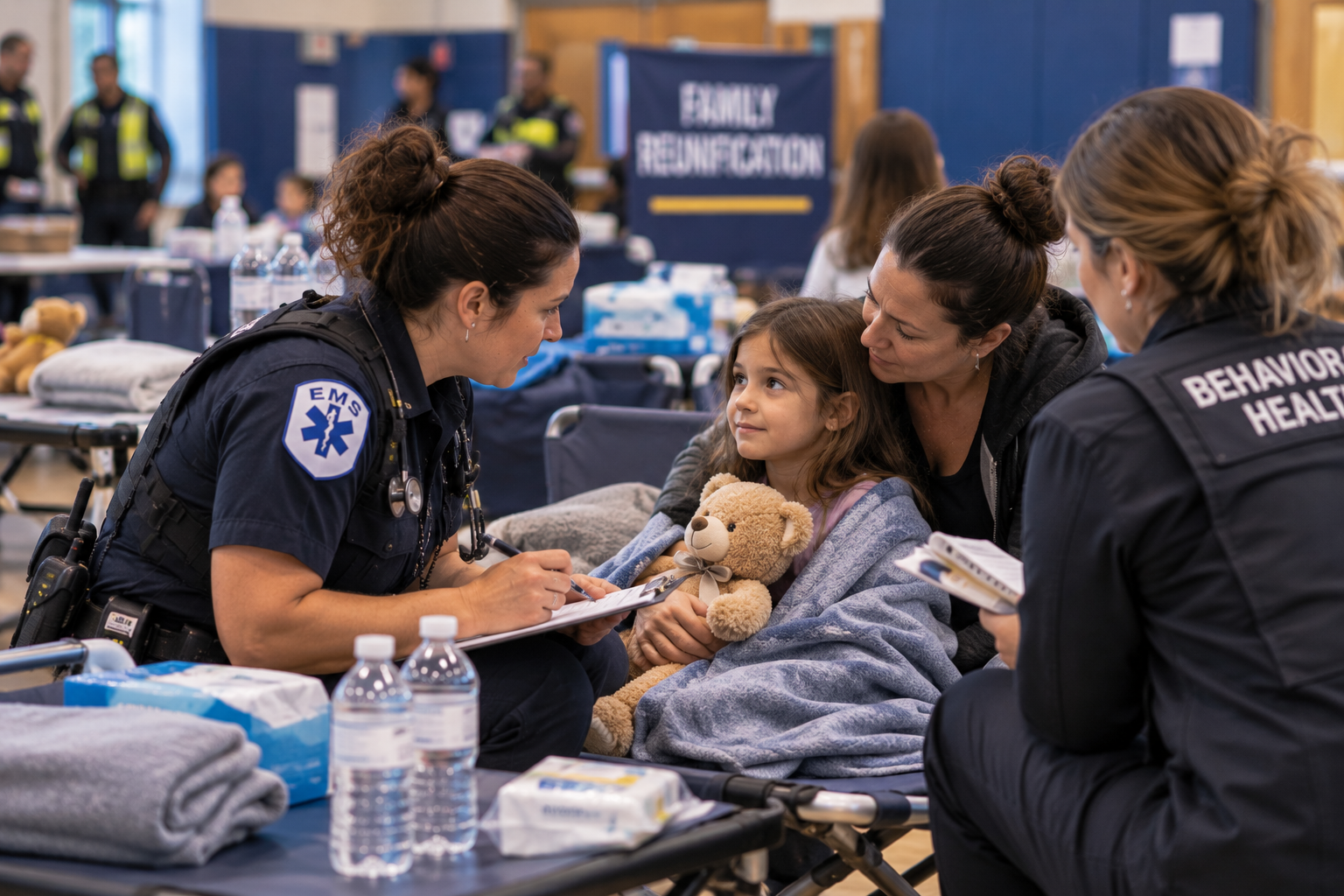
Beyond physical injury, pediatric victims experience profound psychological trauma during mass violence. Fear, separation from caregivers, and exposure to death create lasting mental health consequences. These effects begin at the point of injury and are shaped by early responder interactions.
Children who are frightened, nonverbal, or combative due to fear complicate assessment and treatment. Responders may misinterpret behavior as noncompliance rather than trauma response. Without preparation, this misinterpretation delays care and increases distress.
Responder exposure to injured or dying children also carries psychological consequences. Unprepared personnel are more susceptible to stress injury, moral distress, and long-term burnout. Training that includes pediatric scenarios helps inoculate responders against shock and cognitive overload.
Integrating Pediatric Considerations Into CCP Operations
Casualty Collection Points are central nodes for triage, treatment, and movement. When pediatric patients are present, CCP design and operation must adapt accordingly. Space must allow for caregivers when possible. Equipment caches must include pediatric-capable supplies. Providers trained in pediatric assessment must be identified early.
Failure to integrate pediatric considerations into CCP planning leads to predictable breakdowns:
Delayed intervention while searching for appropriate equipment.
Bottlenecks created by complex assessments.
Increased mortality due to missed deterioration.
CCPs optimized only for adults are structurally misaligned with the realities of mass violence involving children.
Extraction Planning and Pediatric Movement
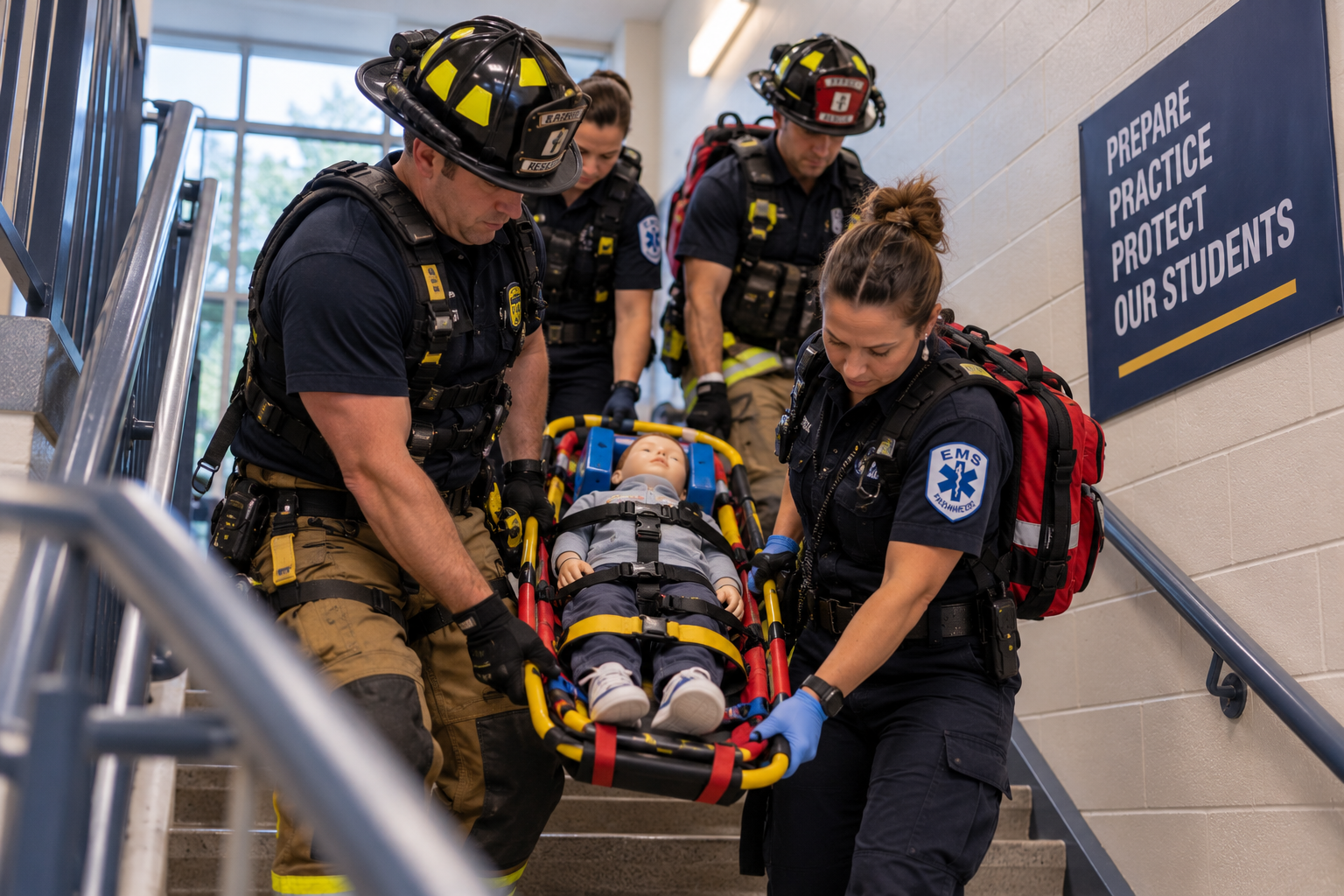
Extraction of pediatric casualties presents unique challenges. Children cannot always self-evacuate, may resist movement, or may require physical carrying. Stairs, debris, and confined corridors complicate movement further.
Extraction plans must account for:
Weight and size differences affecting carrying techniques.
The need for child-appropriate litters or improvised carriers.
Protection of airways and hemorrhage control during movement.
Additionally, pediatric patients may need to be transported with siblings or caregivers to prevent separation-related distress. These considerations require coordination, not improvisation.
The Gap Between Policy and Practice
Many agencies acknowledge pediatric considerations in policy documents, yet fail to operationalize them. Equipment lists include pediatric items that are rarely deployed. Training modules mention pediatric trauma without meaningful hands-on practice. Drills exclude child mannequins or role players due to discomfort or logistical complexity.
This gap between theory and practice mirrors broader failures in tactical medicine doctrine. What is acknowledged abstractly is often ignored operationally. In mass violence, that disconnect becomes lethal.
Continuous Relevance: Why Pediatric Integration Cannot Be Optional
Every mass violence incident involving children reinforces the same lesson: systems unprepared for pediatric trauma fail early and visibly. The public expects responders to save children. Responders expect their training and equipment to support that mission. When neither is adequate, trust erodes and preventable deaths occur.
Integrating pediatric trauma considerations into planning, training, equipment selection, and CCP operations is not a specialty concern—it is a core readiness requirement. Children are present wherever communities gather. Response models that ignore them are incomplete by definition.
Conclusion
Pediatric trauma in mass violence exposes the weakest points in modern response systems. Equipment gaps, triage limitations, airway challenges, and psychological stress converge to create a high-risk environment where delay and error carry disproportionate consequences.
Effective response demands intentional integration of pediatric considerations into every phase of operations—from point-of-injury care to CCP management and extraction planning. Training must move beyond acknowledgment to repetition. Equipment must be accessible, not theoretical. Doctrine must reflect reality rather than aspiration.
Children cannot adapt to flawed systems. Systems must adapt to children. In mass violence, preparedness for pediatric trauma is not an enhancement—it is a moral and operational imperative.