
Addressing Psychological and Physical Health Needs
Addressing Psychological and Physical Health Needs: Sustaining People, Preserving Capacity, and Completing Recovery
When the sirens fade and the scene is secured, the most enduring injuries of a high-threat incident often remain unseen. Psychological stress injuries, delayed physical complications, and cumulative responder fatigue persist long after tactical success is declared. In the Recovery Phase of the Chaos–Stabilization–Recovery (CSR) framework, addressing these needs is not ancillary—it is mission-critical. Systems that fail to care for people after the incident erode readiness, amplify long-term harm, and undermine community trust. Systems that act early, deliberately, and compassionately preserve lives, careers, and institutional capacity.
The central thesis of this analysis is clear: the Recovery Phase must prioritize integrated psychological and physical health support for victims, families, and responders. Early identification, structured debriefing, evidence-based behavioral health care, and comprehensive medical follow-up reduce chronic injury, strengthen resilience, and enable genuine recovery. Applying the science of listener attention—front-loaded relevance (primacy), structured cognitive chunking, progressive emphasis, repetition with variation, and continuous relevance anchoring—this article explains why health support completes the response and safeguards the future.
Why Health Support Is an Operational Imperative
Front-loading relevance matters. High-threat incidents tax human systems at their limits. Acute stress reactions, moral injury, sleep disruption, dehydration, smoke or particulate exposure, blunt and penetrating trauma, and delayed complications are predictable, not exceptional. If organizations treat health support as optional or deferred, these predictable effects become chronic impairments—lost personnel, reduced performance, and preventable suffering.
Recovery is therefore not complete when evidence is collected or buildings reopen. Recovery is complete when people are stabilized, supported, and monitored. This is both an ethical obligation and an operational necessity.
The Recovery Phase Priority: People First
Within CSR, the Recovery Phase prioritizes restoration—of order, of trust, and of human capacity. Psychological and physical health support sits at the center of that restoration. Early, structured interventions reduce the likelihood that acute stress responses calcify into long-term disorders and ensure physical injuries and exposures are identified before complications arise.
Research consistently demonstrates that early recognition and intervention mitigate severity and duration of stress injuries, while timely medical follow-up reduces morbidity from occult trauma and environmental exposure (Berglund, 2017). The message is consistent across disciplines: act early, act deliberately, and normalize care.
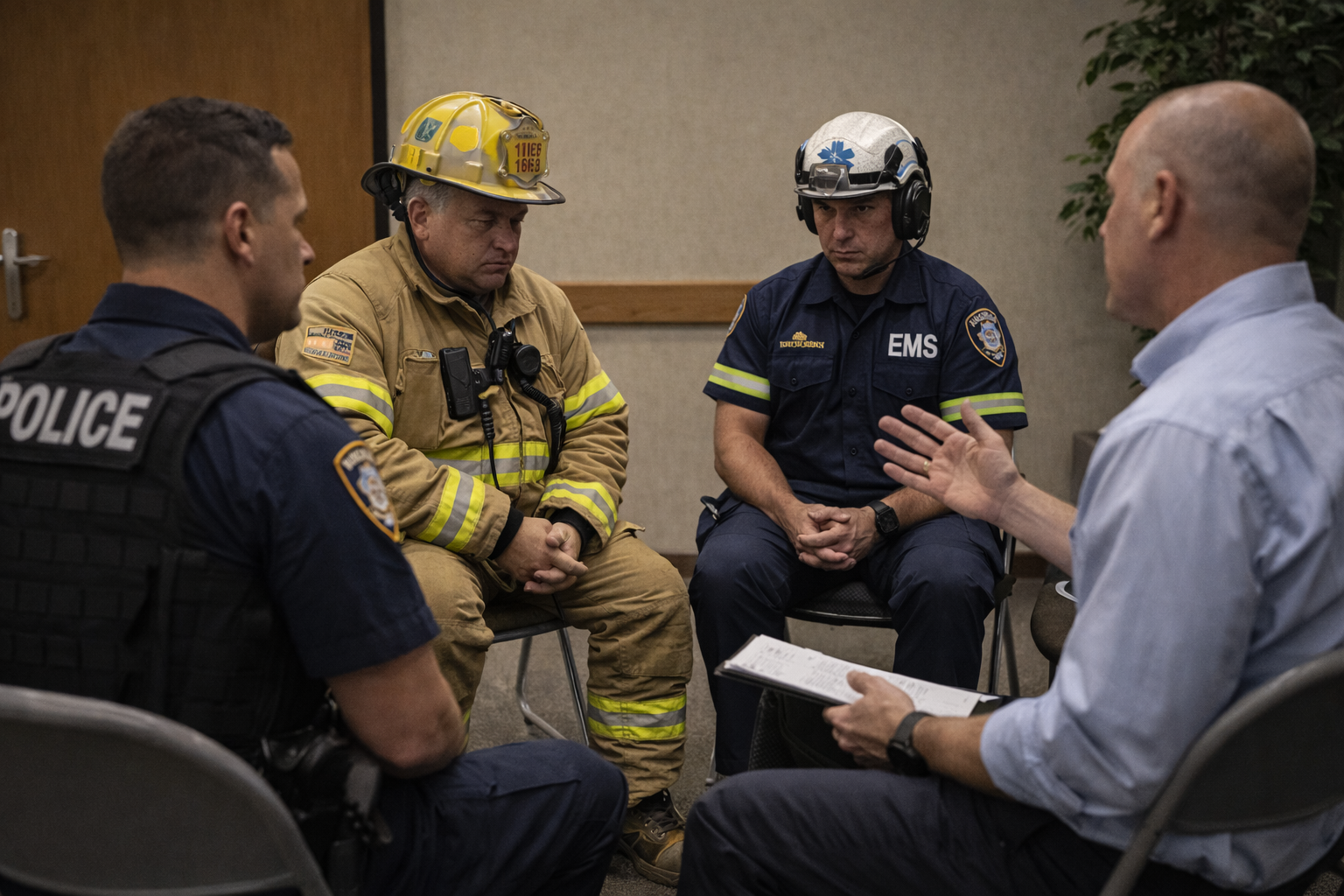
Structured Debriefings: From Event Review to Health Protection
Debriefings are often misunderstood. When poorly designed, they become exhaustive recountings that risk retraumatization. When properly structured, they are protective tools that identify stress injuries, reinforce coping strategies, and route individuals to appropriate support (Kerr, 2024).
Effective post-incident debriefings share common features:
Purpose clarity: health screening and support—not investigation or critique.
Time-bound structure: focused sessions that respect fatigue and cognitive load.
Qualified facilitation: leaders trained to recognize stress responses and trigger referrals.
Voluntary participation with clear confidentiality boundaries.
Repetition with variation matters here. Debriefings should occur at multiple intervals—immediate, short-term, and follow-up—because symptoms evolve. What is absent on day one may emerge weeks later. Continuous reassessment protects people as conditions change.

Psychological Stress Injuries: Naming the Risk Without Stigma
High-threat response exposes individuals to moral dilemmas, graphic injury, perceived helplessness, and loss—fertile ground for stress injuries. These injuries are functional responses to abnormal stress, not personal weakness. Language matters. Framing symptoms as “stress injuries” rather than disorders reduces stigma and increases help-seeking.
Behavioral health professionals play a critical role in translating this framing into care pathways that include:
Psychological First Aid (PFA) for immediate stabilization.
Evidence-based therapies (e.g., trauma-focused cognitive behavioral approaches) when indicated.
Family-inclusive support, recognizing secondary trauma among loved ones.
Anchoring attention on normalization—this is expected; help is available—improves engagement and outcomes.
Physical Health Follow-Ups: The Injuries That Appear Later
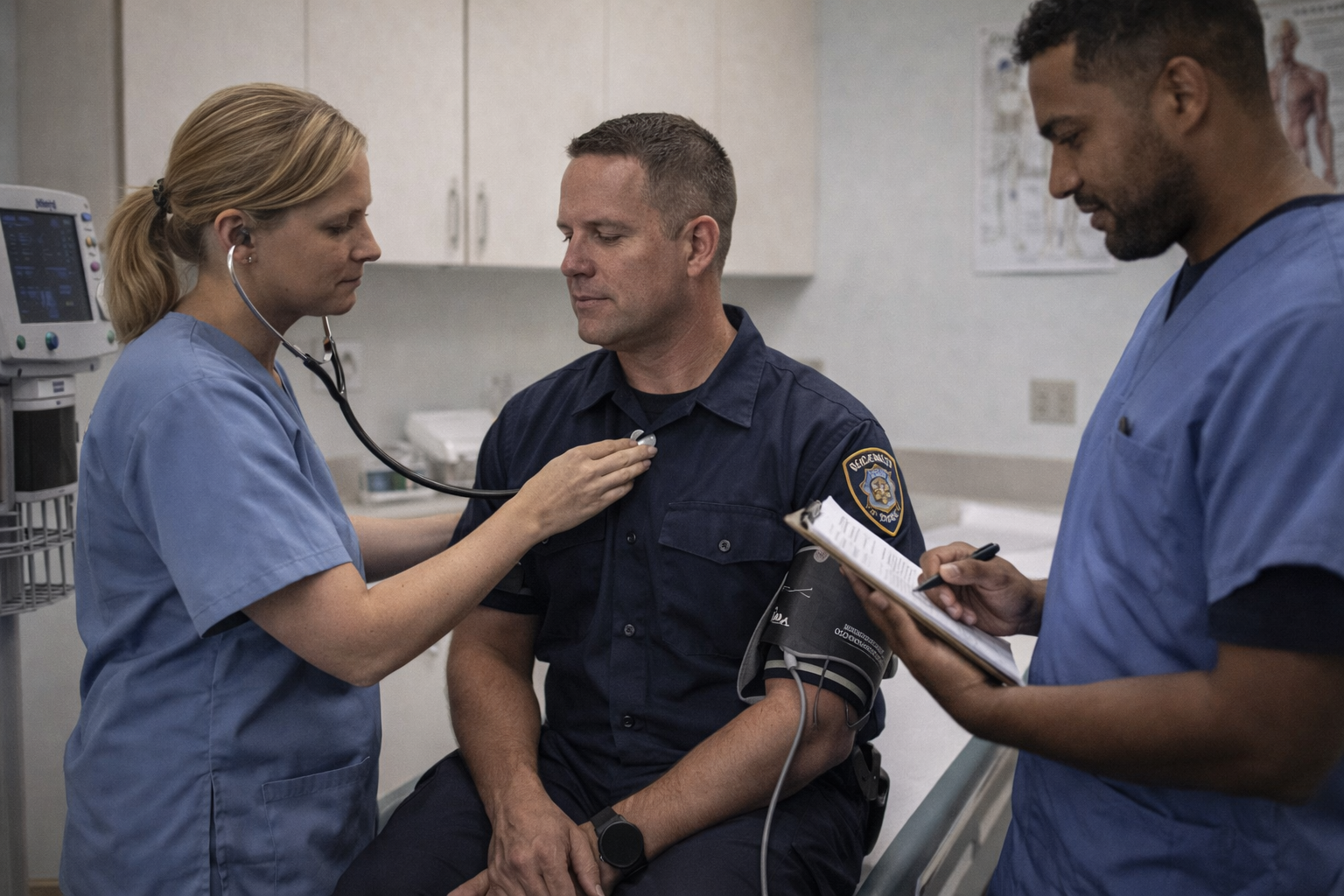
Physical injuries do not always declare themselves immediately. Adrenaline masks pain; smoke and particulate exposure produce delayed respiratory symptoms; concussive forces cause subtle neurologic effects; dehydration and heat stress manifest later. The Recovery Phase must therefore include systematic medical follow-up.
Best practice includes:
Baseline documentation of exposures and injuries for responders and victims.
Scheduled follow-ups to reassess symptoms after the acute phase.
Specialty referrals (pulmonary, neurology, orthopedics) based on exposure profiles.
Clear return-to-duty protocols that prioritize safety and performance.
Progressive emphasis reinforces the point: early medical follow-up prevents chronic injury and preserves workforce readiness.
Integrating Behavioral and Physical Care: One System, Not Two
Psychological and physical health are inseparable. Sleep disruption worsens pain; pain worsens anxiety; anxiety impairs recovery. Integrated care models—where medical and behavioral health teams coordinate—reduce fragmentation and improve adherence.
Operationally, integration means:
Shared screening tools and referral pathways.
Co-located services when feasible.
Unified messaging from leadership that endorses care.
Repetition with variation across agencies ensures that integration is practiced, not aspirational.
Supporting Survivors and Families: Extending the Circle of Care
Recovery extends beyond responders. Survivors and families experience grief, fear, displacement, and uncertainty. Behavioral health support must be accessible, culturally competent, and sustained. Short-term counseling, support groups, and community-based services reduce isolation and facilitate healing.
Clear communication about available resources—delivered consistently through trusted channels—anchors attention and increases utilization. Community recovery capacity grows when care is visible, coordinated, and compassionate.
Leadership’s Role: Setting the Tone for Health
Leadership behavior is a decisive variable. When leaders attend debriefings, endorse follow-ups, and model help-seeking, participation increases. When leaders minimize or delay care, stigma thrives.
Effective leaders:
Publicly prioritize health as part of mission success.
Protect time for debriefings and follow-ups.
Ensure confidentiality and non-punitive policies.
Monitor trends and adjust resources accordingly.
This repetition—message, action, reinforcement—anchors health support as standard operating procedure.
Measuring What Matters: Outcomes, Not Optics
Programs must be evaluated on outcomes: symptom reduction, return-to-function timelines, retention, and satisfaction. Data collection—handled ethically and confidentially—guides improvement and demonstrates value.
Continuous relevance anchoring keeps attention on impact: health support works when it reduces harm and preserves capacity.
Addressing Barriers: Time, Trust, and Access
Common barriers include time pressure, distrust of confidentiality, and limited access—especially in rural or resource-constrained settings. Solutions include telehealth, peer support integration, clear privacy policies, and flexible scheduling.
Variation in delivery—without variation in standards—ensures equity and reach.
Training for Recovery: Making Health Support Routine
Training should prepare responders for the Recovery Phase with the same seriousness as earlier phases. This includes recognizing stress injuries, conducting supportive check-ins, and navigating referral pathways. Practiced behaviors become defaults under stress.
Repetition with variation—tabletops, role-plays, and after-action integration—builds competence and confidence.
Progressive Emphasis: Early Care, Lasting Benefit
Across psychology and medicine, one principle recurs: early, integrated care produces lasting benefit. Delay increases severity; stigma reduces engagement; fragmentation erodes outcomes. The Recovery Phase exists to counter these risks deliberately.
Conclusion
Addressing psychological and physical health needs is not a compassionate add-on; it is the completion of response. In the Recovery Phase of the CSR framework, structured debriefings, evidence-based behavioral health care, and comprehensive medical follow-up protect responders, support survivors, and strengthen community recovery capacity (Berglund, 2017; Kerr, 2024).
When organizations act early, normalize care, and integrate services, they preserve readiness and trust. When they do not, injuries persist and capacity erodes. High-threat incidents test systems in the moment; recovery tests whether those systems value the people who carry the mission forward.