The Imperative of Rapid, Integrated Intervention: Matching Incident Tempo to Save Lives
Introduction
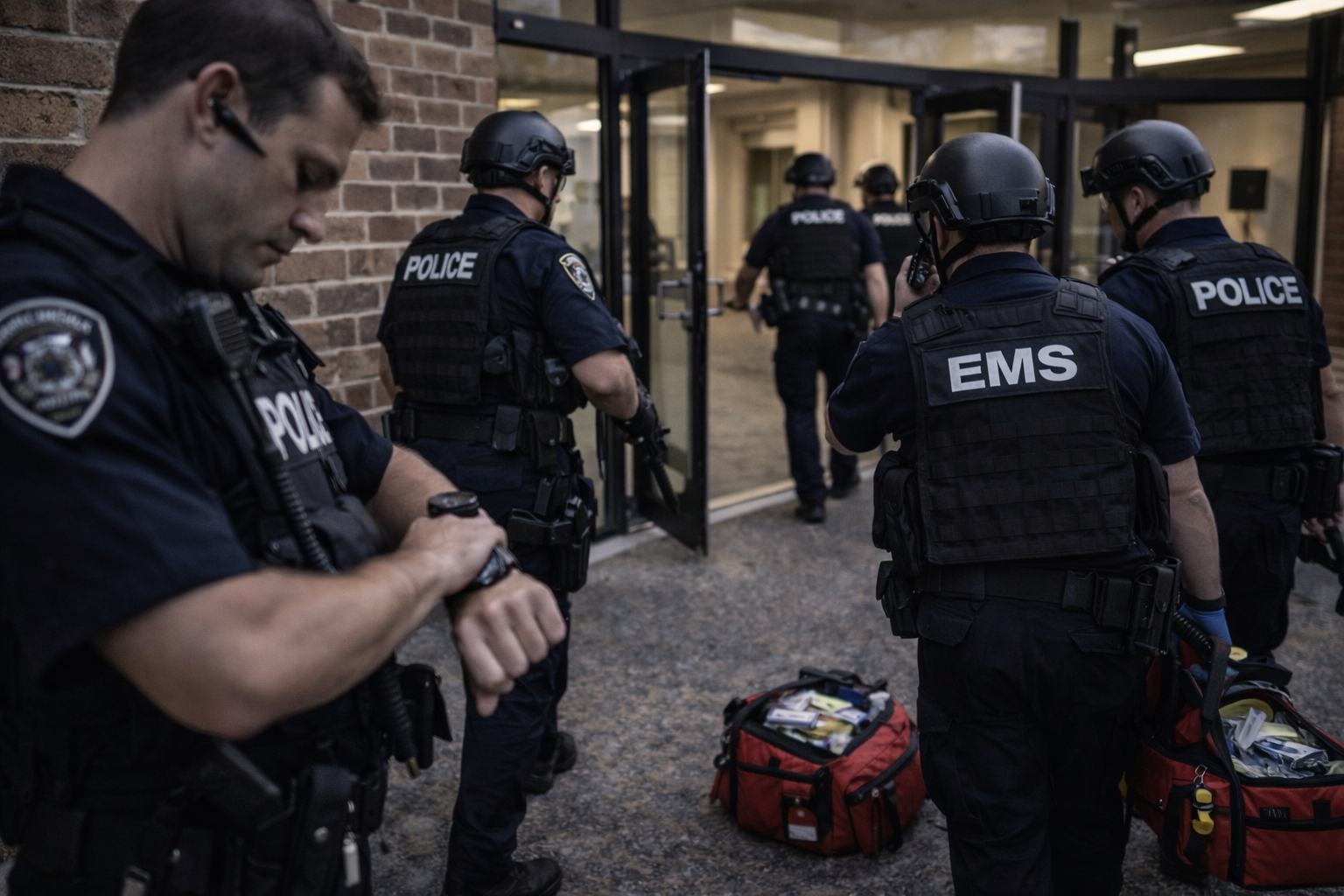
In high-threat incidents, time—not intent—decides survival. The earliest minutes compress decisions, physiology, and operational outcomes into a narrow window where delay converts survivable injury into preventable death. Contemporary evidence underscores this reality: most active shooter incidents conclude within minutes, often before traditional medical staging and evacuation models can activate. When response systems are designed for certainty rather than tempo, they fail by default. The imperative, therefore, is not simply faster action, but rapid, integrated intervention—medical and tactical efforts advancing together from the outset.
This analysis advances a central claim: integrated medical intervention must occur during the incident, not after it. By front-loading relevance (primacy), structuring the argument into cognitive chunks, and reinforcing core principles through repetition with variation, this article demonstrates why Hot/Warm Zone care, rapidly formed Medical Rescue Teams (MRTs), and the Chaos–Stabilization–Recovery (CSR) framework are essential to matching incident tempo and reducing preventable mortality.
Why Tempo Matters More Than Perimeters
Modern high-threat events are short, violent, and decisive. Empirical reporting consistently shows that most incidents end within 2–5 minutes, with a small minority extending longer. This timeline exposes a fatal mismatch: sequential response models—secure, then stage, then treat—activate too late to influence outcomes. By the time care is authorized, physiology has already decided.
Trauma science is unambiguous. Uncontrolled hemorrhage, airway compromise, and tension physiology progress rapidly and predictably. Early, simple interventions—tourniquets, wound packing, airway positioning, chest decompression—save lives only when delivered early. When medical access is delayed in pursuit of spatial certainty, the survivable window closes. Tempo, not territory, is the decisive variable.
Primacy and the Cost of Waiting
Listener-attention science explains why delay persists despite evidence. Primacy anchors behavior: what responders learn first and practice most becomes their default under stress. When training frames medical care as downstream, responders wait. When it frames integration as the norm, responders move.
Under cognitive load, ambiguity narrows attention. Responders fall to their lowest mastered level of training, not a higher one. If that training privileges waiting for clearance, hesitation follows—even when minutes matter. Rewriting outcomes therefore requires rewriting the default: care advances with action.
The Case for Rapid MRT Formation and Deployment
Rapid, integrated intervention demands purpose-built medical capability that can operate under protection and uncertainty. MRTs exist to fill this role. They must be rapidly formed, equipped, and deployed in tempo with law enforcement actions—not assembled after the fact. As operational research emphasizes, MRT effectiveness depends on readiness, not availability (Dailey & Laskey, 2023).
MRTs are not conventional EMS units pushed forward; they are tactically integrated teams trained to deliver immediate, high-yield interventions at or near the point of injury. Their mission is narrow and decisive: interrupt preventable death, enable movement, and reduce physiological deterioration during extraction. Complexity is the enemy; focus is the advantage.
Hot/Warm Zone Care: Aligning Care With Reality
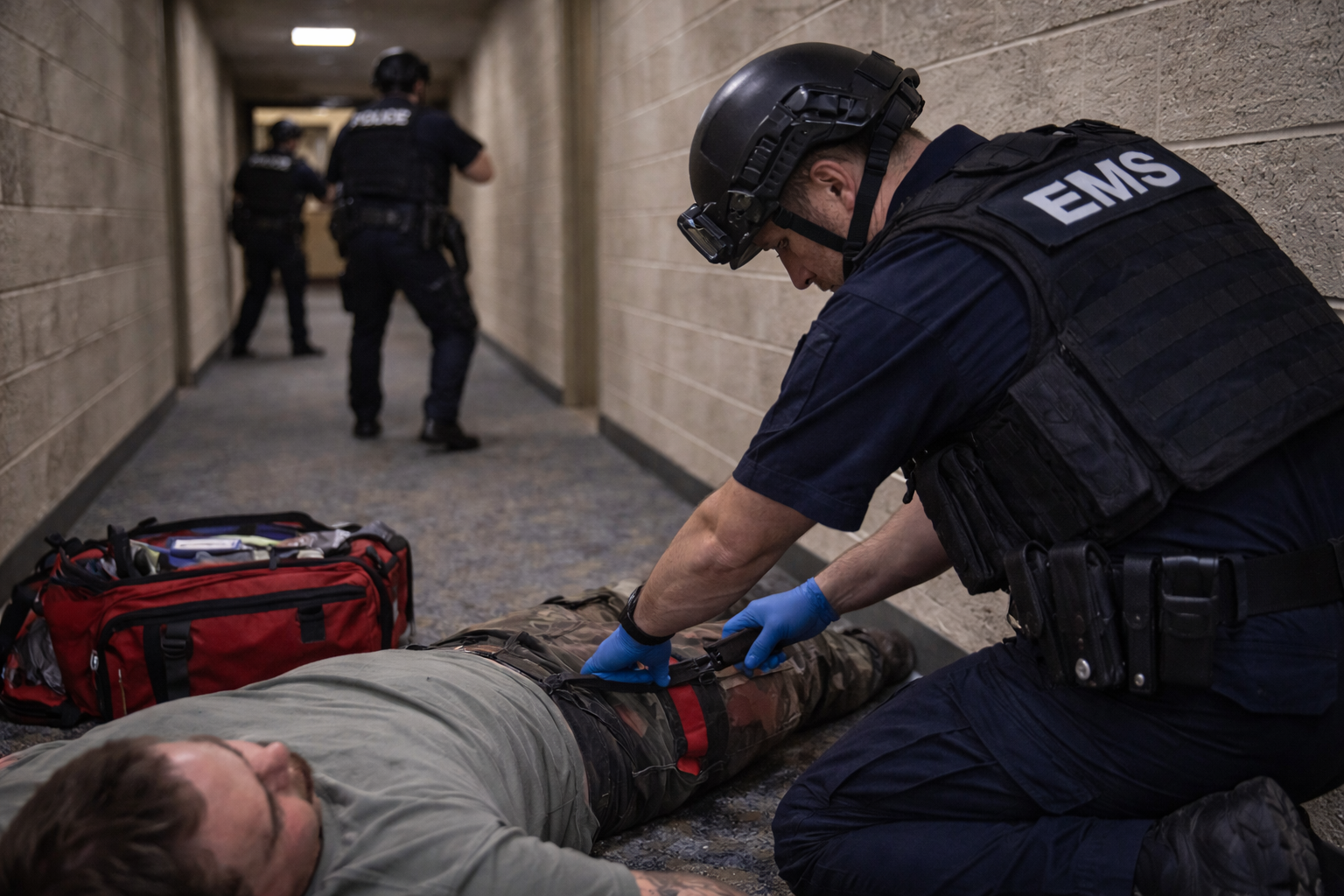
Hot and Warm Zone care is not reckless exposure; it is managed risk aligned with physiology. These zones are operational conditions, not declarations of safety. They change rapidly—and so must care.
Hot/Warm Zone operations prevent the delays inherent in CCP-first models, which require evacuation before treatment begins. Evacuation without stabilization is displacement, not rescue. Movement worsens bleeding, airway compromise, shock, and hypothermia. Each transfer consumes time, personnel, and attention while increasing exposure to secondary threats.
By contrast, care that moves to the patient—as early as conditions permit—shortens time-to-intervention, stabilizes casualties before movement, and accelerates extraction. The operational benefits compound: fewer deaths, smoother casualty flow, and faster transition to stabilization.
CSR: Elevating Medicine to a Co-Equal Priority
The CSR framework resolves the tempo mismatch by elevating medical intervention to a co-equal operational priority with threat neutralization. During the Chaos Phase, suppression and care advance in parallel. Stabilization builds on space and time created by early action. Recovery consolidates gains.
CSR does not diminish law enforcement’s mandate to stop the threat; it recognizes that stopping the killing and saving the wounded are complementary objectives. Tactical success without medical integration is incomplete success. CSR operationalizes this truth by embedding medical action where it matters most—early and under protection.
Integrated Command: Enabling Speed Without Losing Control
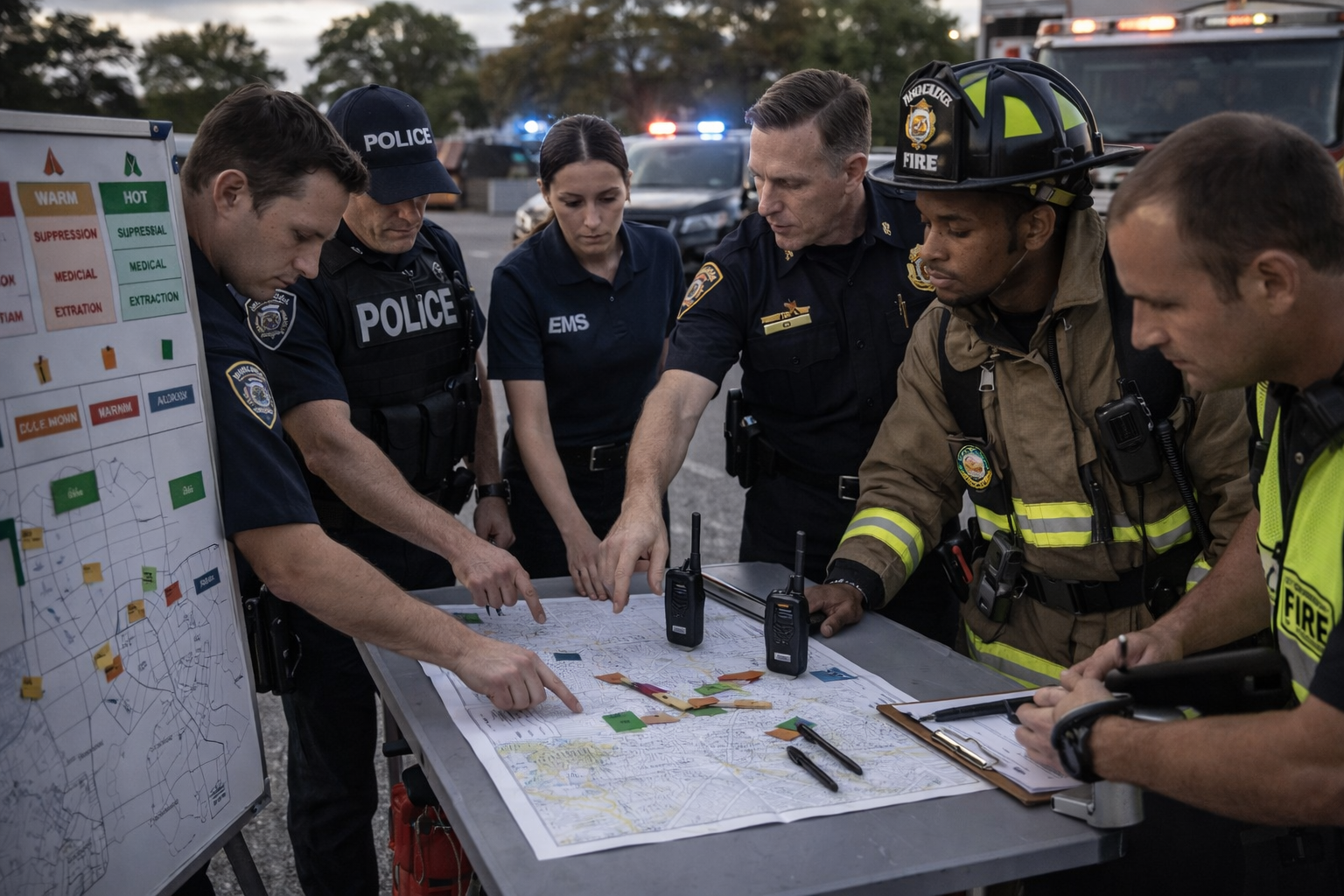
Rapid, integrated intervention succeeds only when command enables it. The Incident Command Post (ICP) must function as a synchronization engine, not a gatekeeper. Its role in the Chaos Phase is to authorize parallel action, manage MRT deployment, maintain communication pathways, and preserve tempo.
Over-centralization kills speed. Effective ICPs articulate acceptable risk thresholds in advance, enabling trained teams to act without waiting for perfect information. When intent is clear and authority is delegated, coordination becomes habitual—and faster.
Repetition With Variation: Training for Reality
Training must reflect the conditions responders will face. Sanitized exercises that deny uncertainty produce hesitation; repetition with variation builds adaptability. Scenarios should compress timelines, obscure information, and force early decisions about access and care.
Crucially, training must be joint. Law enforcement, MRTs, EMS, fire, and command should rehearse together, building shared mental models and anticipation. When teams expect each other’s movements, coordination persists even when radios fail and plans fray.
Risk, Reframed
Objections to early medical access often cite risk. The answer is not denial, but risk management. Fire services accept managed risk to rescue victims from unstable structures. Law enforcement accepts it during dynamic entries. Tactical medicine must be afforded the same operational logic.
Managed risk is defined, trained, and supported. Policies must protect responders who act within doctrine. Confidence follows clarity. Waiting for zero risk guarantees loss; managing risk enables survival.
Progressive Emphasis: Returning to What Matters
Across physiology, cognition, command, and training, the same truth returns—repeated with variation to anchor attention: time matters most.
Rapid intervention shortens time-to-care.
Shorter time-to-care saves lives.
Saved lives stabilize operations and accelerate control.
This progression is evidentiary, not ideological.
Operational Outcomes: Fewer Deaths, Faster Stabilization
Integrated, rapid intervention reduces secondary harm, improves outcomes, and streamlines operations. Early hemorrhage control prevents exsanguination. Early airway management prevents hypoxic injury. Early stabilization enables safer movement. As casualties stabilize, law enforcement consolidates gains; command clarity improves; tempo stabilizes.
The system becomes proactive rather than reactive—because time was respected.
Conclusion
The imperative of rapid, integrated intervention is dictated by reality. High-threat incidents conclude quickly. Physiology deteriorates faster. Sequential models that wait for certainty activate too late. Hot/Warm Zone care, rapidly deployed MRTs, and CSR’s co-equal prioritization of medicine and tactics align response with incident tempo.
The lesson is simple and demanding: care must advance with action. When medical intervention is integrated early—protected, purposeful, and synchronized—preventable mortality falls, operations stabilize sooner, and response systems fulfill their mission. In the minutes that decide survival, integration is not an enhancement; it is the intervention.