
Recovery Phase in the CSR Framework
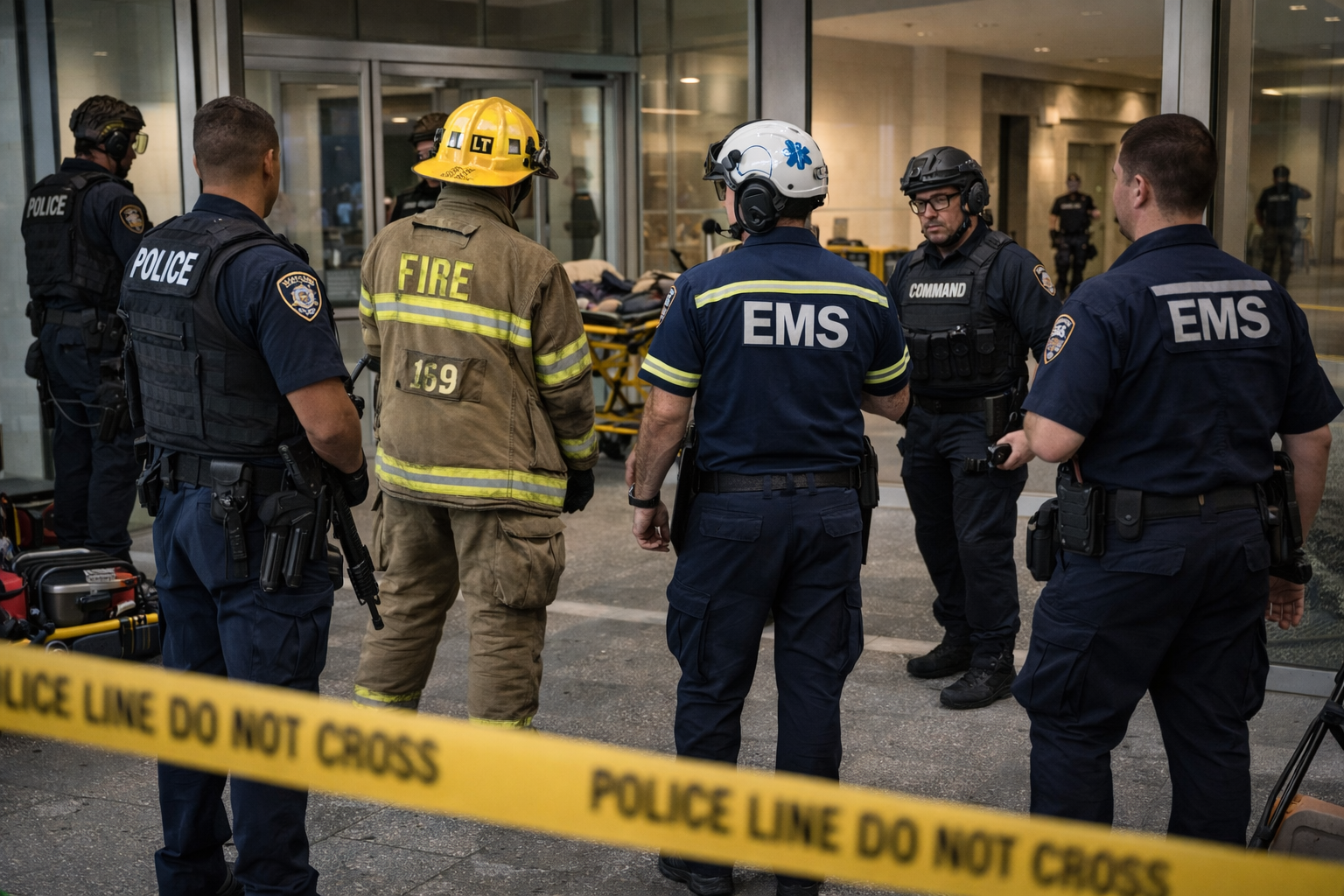
Recovery Phase in the CSR Framework: Restoring Order and Securing the Incident Area
When violence stops, the incident does not end—it transitions. The Recovery Phase of the Chaos–Stabilization–Recovery (CSR) framework begins at the moment immediate threats are neutralized and coordinated operations give way to sustained control, accountability, and restoration. This phase determines whether early tactical and medical gains are preserved or eroded. Communities judge outcomes not only by how swiftly threats were stopped, but by how effectively order was restored, hazards mitigated, and trust rebuilt.
The central thesis of this analysis is straightforward: the Recovery Phase is an operational necessity, not an administrative afterthought. By restoring order, securing the incident area, and confirming accountability, agencies prevent secondary harm and create the conditions required for long-term recovery. Applying the science of listener attention—front-loaded relevance (primacy), structured cognitive chunking, progressive emphasis, repetition with variation, and continuous relevance anchoring—this article explains why disciplined recovery operations are essential to closing high-threat incidents responsibly and credibly.
From Stabilization to Recovery: A Deliberate Transition
The Recovery Phase begins only after the Stabilization Phase has achieved sufficient control: threats are neutralized or contained, command is synchronized, and medical evacuation is underway. Recovery is not synonymous with “all clear.” Rather, it represents a shift in operational intent—from managing immediate danger to preventing residual harm.
Front-loading this distinction matters. Premature relaxation of posture risks missed hazards, overlooked victims, and compromised investigations. Recovery requires the same discipline as earlier phases, applied to different priorities: safety assurance, environmental control, and accountability.
Reestablishing Order as a Public Safety Function
Restoring order is the first visible task of recovery—and a critical one. Public anxiety persists after violence; confusion and misinformation can generate secondary emergencies. Clear, coordinated actions by responders signal that the situation is controlled.
Order is reestablished through deliberate measures: controlled access points, visible security presence, and coordinated communications. These actions reduce panic, deter opportunistic threats, and allow essential services to resume in a managed fashion. Recovery, in this sense, is both operational and psychological—stabilizing space and perception simultaneously.
The emphasis bears repeating: order is not cosmetic. It is a protective function that prevents cascading harm.
Clearing Operations: Identifying and Mitigating Residual Hazards
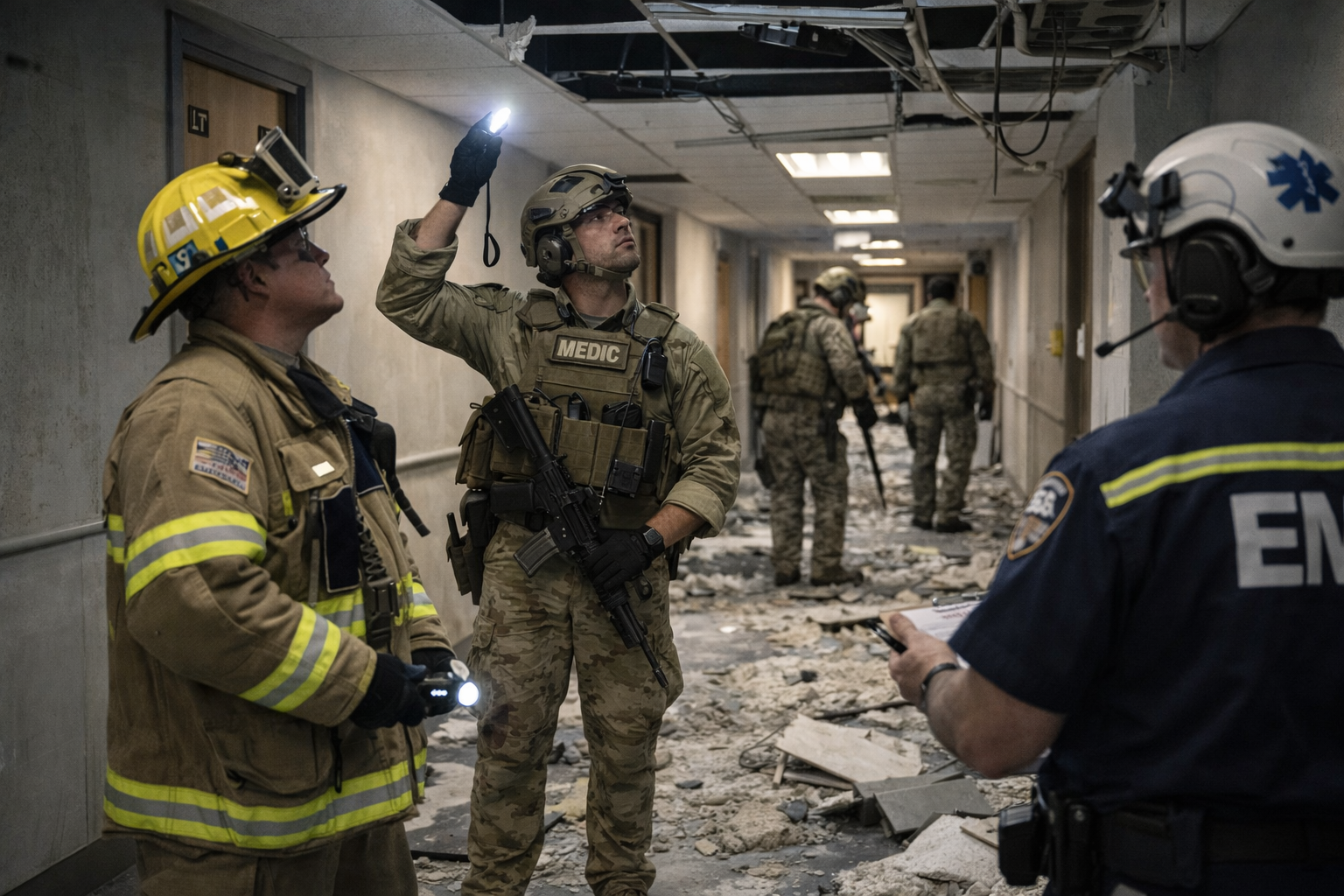
Clearing operations are foundational to recovery. Even when attackers are neutralized, the environment may remain dangerous. Debris, damaged infrastructure, fires, hazardous materials, and unexploded devices pose ongoing risks to responders and civilians alike.
Systematic clearing identifies and mitigates these hazards. Fire services assess structural integrity and fire risk; law enforcement conducts methodical searches for weapons or devices; EMS supports responder safety and remains prepared for delayed medical needs. This multidisciplinary approach ensures no single hazard domain is overlooked.
Repetition with variation reinforces the point: hazards differ by venue, but the need for disciplined clearing does not. Schools, workplaces, and public venues each present unique vulnerabilities that must be addressed before recovery can proceed.
Establishing Security Perimeters for Investigation and Restoration
As immediate operations wind down, security perimeters are redefined, not removed. During recovery, perimeters protect investigative integrity and safeguard restoration activities. They prevent contamination of evidence, control access, and shield responders from interference or renewed threats.
Perimeter management during recovery differs from earlier phases in purpose but not importance. Where stabilization cordons enabled care and coordination, recovery perimeters enable truth-finding and rebuilding. Adjustments are deliberate, informed by investigative needs and community considerations (Hanifen, 2023).
This continuity matters. Perimeters signal that the incident is still being actively managed—even as urgency subsides.
Accountability: Accounting for All Individuals and Casualties
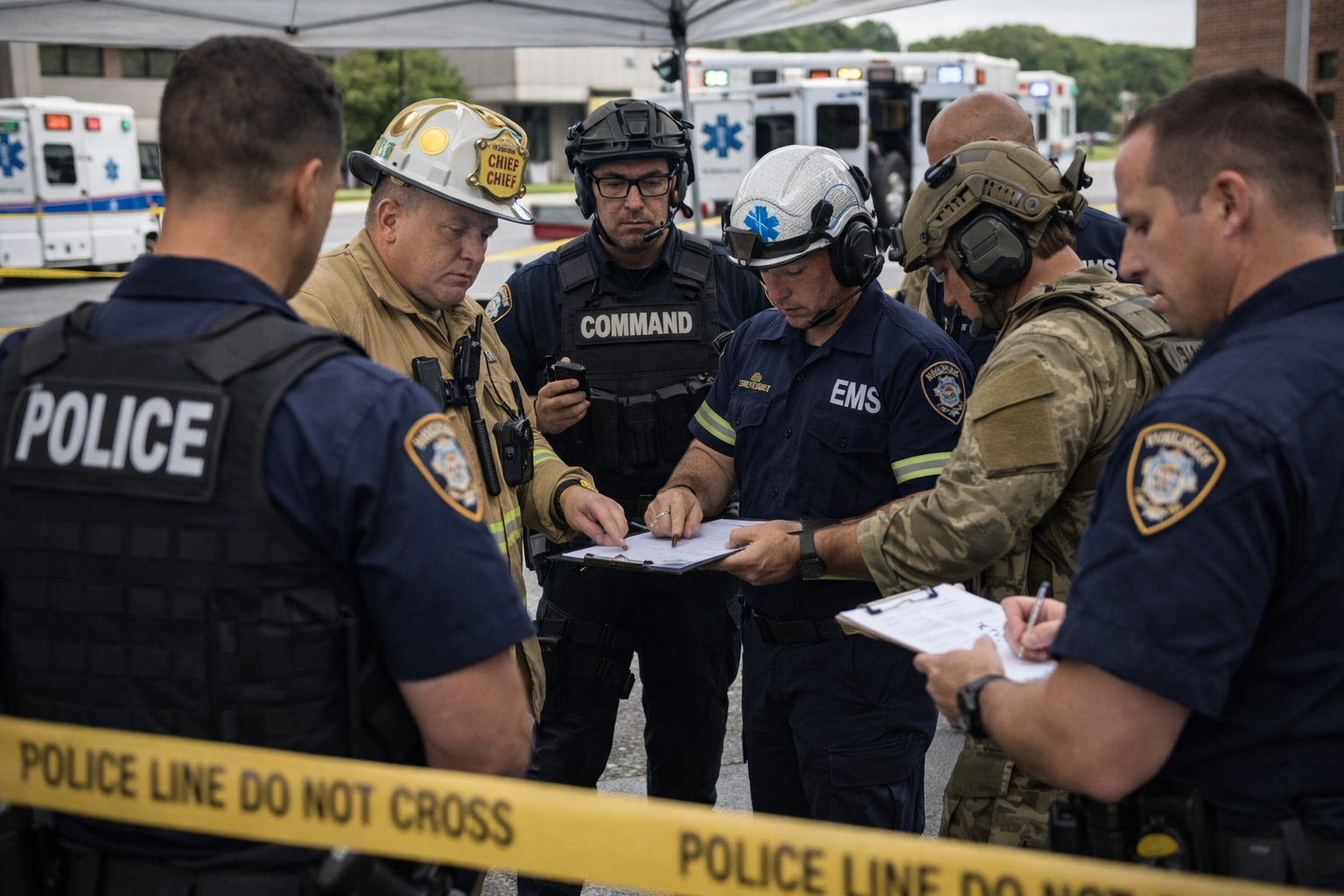
One of the most critical—and often underestimated—tasks of the Recovery Phase is full accountability. Agencies must verify the status and location of all individuals involved: victims, suspects, responders, and bystanders. This process ensures no one is missing, injured, or trapped.
Accountability requires close collaboration among law enforcement, EMS, fire services, and emergency management agencies. Patient tracking systems, responder accountability logs, and witness coordination converge to produce a complete picture (DHS, 2019).
The importance of this task cannot be overstated. Unaccounted individuals represent potential victims, unresolved threats, or investigative failures. Recovery is incomplete until accountability is confirmed.
Verifying the Absence of Remaining Threats
A defining obligation of recovery is verifying that no remaining threats exist. This includes confirming that suspects are in custody or deceased, secondary devices are ruled out, and no credible follow-on attacks are imminent.
This verification is deliberate and methodical. Rushing to declare safety undermines trust and exposes agencies to preventable risk. Recovery demands confidence grounded in evidence, not optimism.
Here, repetition with variation anchors attention: whether the threat was a single actor or a coordinated assault, verification is essential before transitioning to long-term recovery.
Interagency Collaboration as the Backbone of Recovery
Recovery is inherently interagency. Law enforcement leads investigations and security. Fire services address structural safety and hazards. EMS supports medical follow-up and responder welfare. Emergency management coordinates logistics, public messaging, and intergovernmental support.
Unified collaboration prevents gaps. When agencies operate in isolation, recovery fragments—hazards persist, information conflicts, and communities receive mixed signals. Coordinated recovery ensures consistency, transparency, and efficiency.
This collaboration reflects lessons emphasized by the Department of Homeland Security, which underscores unified response as essential to post-incident stabilization and recovery (DHS, 2016).
Cognitive Transition: From Crisis Response to Deliberate Control
The Recovery Phase requires a cognitive shift for responders. After prolonged high arousal, teams must recalibrate from rapid action to deliberate assessment. This transition is challenging; fatigue and vigilance decay are real risks.
Explicitly naming the Recovery Phase helps teams adjust expectations and behaviors. The tempo slows, but attention remains focused. Decisions become analytical rather than intuitive. Training that rehearses this transition improves performance and reduces error.
Listener attention science supports this approach: labeling phase changes helps reorient attention and prevents premature disengagement.
Protecting the Community During Recovery
Recovery extends beyond the incident footprint. Traffic disruptions, displaced populations, school closures, and media attention affect surrounding communities. Emergency management agencies play a key role in coordinating services, communicating clearly, and addressing community needs.
This outward focus prevents secondary harm. It also reinforces legitimacy—communities are more likely to trust agencies that manage recovery thoughtfully and visibly.
Anchoring attention here reinforces a core truth: recovery is about people, not just places.
Documentation and Transition to Long-Term Recovery
As immediate recovery tasks conclude, documentation becomes paramount. Accurate records support investigations, legal processes, and after-action learning. They also inform long-term recovery planning and policy refinement.
Transitioning to long-term recovery—rebuilding, memorialization, and mental health support—depends on the quality of short-term recovery operations. Errors or omissions here reverberate for years.
Progressive Emphasis: Recovery Preserves Trust
Across clearing, perimeters, accountability, and verification, one principle recurs: recovery preserves trust. Trust in institutions, trust in safety, trust in process. Each disciplined action reinforces the message that the incident is being handled comprehensively and responsibly.
This emphasis is not rhetorical; it is operational. Trust reduces panic, supports cooperation, and accelerates normalization.
Training and Doctrine Implications
Effective recovery does not happen by accident. Training must include post-incident operations: clearing protocols, accountability drills, perimeter transitions, and interagency coordination. Doctrine must define recovery triggers and responsibilities explicitly.
Repetition with variation—different incident types and community contexts—builds adaptability while preserving core principles.
Conclusion
The Recovery Phase of the CSR framework is where high-threat incidents are responsibly closed. By restoring order, mitigating hazards, securing the scene, and confirming accountability, agencies prevent secondary harm and prepare the ground for long-term recovery.
Recovery demands discipline equal to chaos and stabilization. When executed deliberately—through unified collaboration, rigorous verification, and community-focused action—it preserves trust and completes the mission.
In high-threat response, how an incident ends matters as much as how it begins.