
Responder Mental Health and Operational Stress
Responder Mental Health and Operational Stress
The success of any high-threat response is inseparable from the psychological health of the responders who execute it. While doctrine, equipment, and tactics dominate discussions of preparedness, responder mental health remains one of the most under-addressed determinants of operational effectiveness. Active shooter incidents and mass violence expose responders to graphic injury, death, moral conflict, and sustained uncertainty—often within minutes of arrival. These exposures do not end when the scene is secured. They persist, shaping decision-making, career longevity, and long-term well-being.
This analysis examines responder mental health and operational stress as an operational issue rather than a post-incident afterthought. The central premise is clear: psychological readiness is as critical to mission success as tactical competence, and failure to address it degrades performance before, during, and long after high-threat incidents.
Acute Psychological Injury in High-Threat Response
Active shooter incidents confront responders with sensory overload: sights, sounds, and experiences that exceed normal human processing capacity. Graphic injuries, pediatric casualties, officer-down scenarios, and perceived personal threat combine to create acute psychological injury, even among seasoned professionals.
Unlike cumulative occupational stress, acute psychological injury occurs rapidly. It may manifest during the incident as tunnel vision, auditory exclusion, impaired working memory, or slowed decision-making. These reactions are not signs of weakness; they are predictable neurobiological responses to extreme stress.
The operational consequence is immediate. Cognitive narrowing reduces situational awareness. Emotional flooding interferes with communication. Unmanaged stress compromises judgment precisely when clarity is most needed. Treating these effects as personal shortcomings rather than physiological responses prevents meaningful mitigation.
Chronic Stress, Burnout, and the Aftermath of Violence
While acute stress dominates the incident itself, chronic stress defines its aftermath. Responders often return to duty while carrying unresolved psychological burden. Sleep disruption, hypervigilance, irritability, emotional numbing, and intrusive recollections become normalized rather than addressed.
Burnout frequently follows. Responders disengage emotionally as a protective mechanism, reducing empathy and job satisfaction. Over time, this disengagement erodes team cohesion, increases errors, and accelerates attrition. Agencies experience the downstream effects through increased sick leave, early retirement, and reduced institutional knowledge.
Crucially, chronic stress is not limited to those who were physically injured or directly engaged. Dispatchers, command staff, medical personnel, and support roles experience parallel stress exposure through responsibility, uncertainty, and secondhand trauma.
Moral Injury and Ethical Conflict
Beyond fear and horror, responders often face moral injury—psychological distress arising from actions taken, not taken, or perceived to violate deeply held values. Decisions about triage, delayed access, or inability to save victims can haunt responders long after the incident concludes.
Moral injury is particularly prevalent in incidents involving children or prolonged delays in care. Responders may intellectually understand operational constraints while emotionally internalizing perceived failure. Without structured processing, these experiences solidify into guilt, shame, and withdrawal.
Operational culture frequently discourages discussion of moral injury, equating emotional processing with weakness. This silence compounds harm by isolating individuals who need support most.
The Illusion of Resilience Without Support
Public safety culture often celebrates resilience while neglecting the systems required to sustain it. Resilience is not an inherent trait; it is a dynamic capacity shaped by preparation, support, and recovery. Expecting responders to absorb repeated trauma without structured intervention is not resilience—it is neglect.
Training that focuses exclusively on tactical readiness without psychological preparation leaves responders vulnerable. They may perform effectively in the moment yet suffer significant deterioration afterward. True readiness requires acknowledging that exposure to violence has consequences and planning accordingly.
Peer Support and Structured Decompression
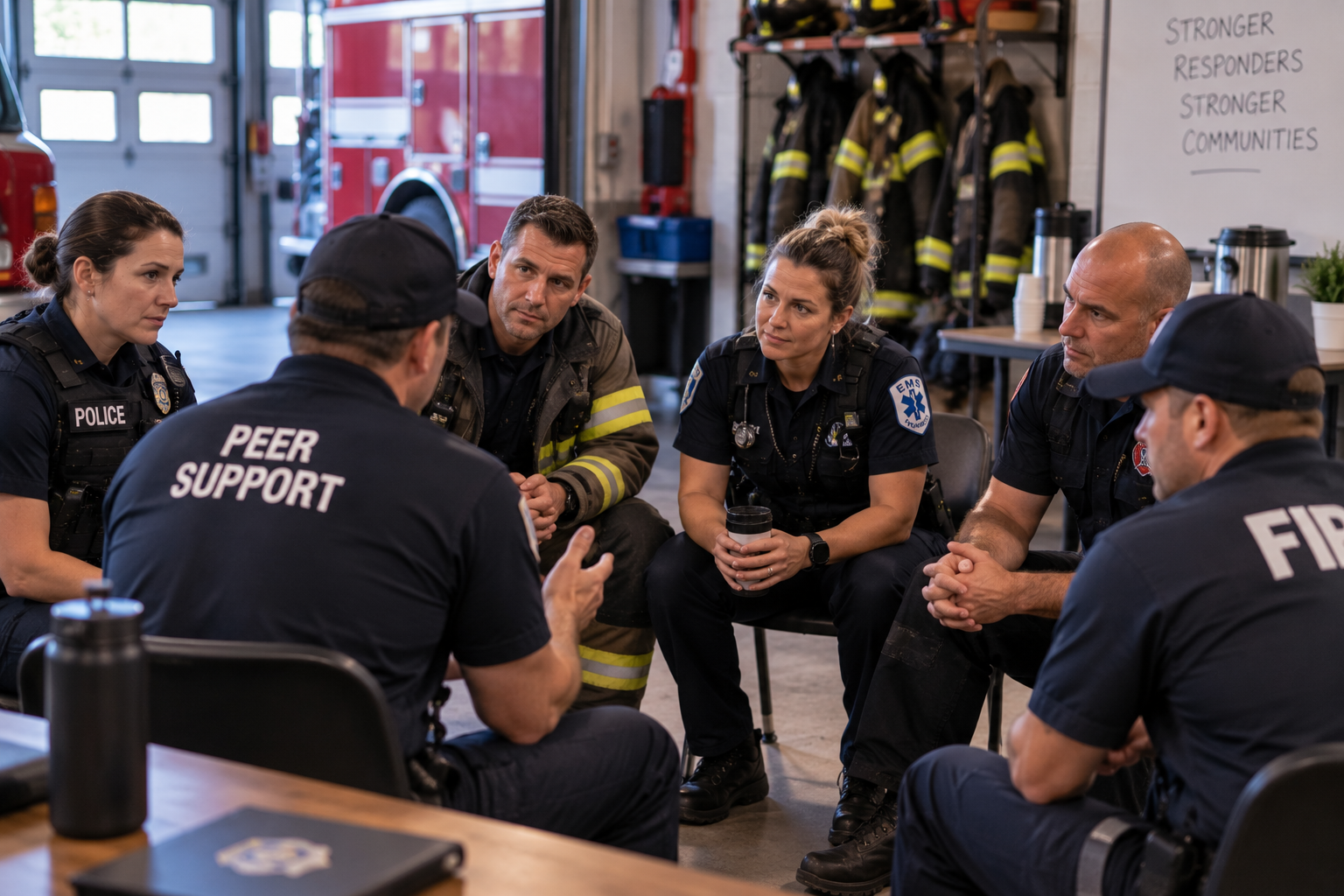
One of the most effective mitigations for operational stress is structured peer support. Responders consistently report that support from colleagues who share similar experiences is more accessible and credible than external counseling alone.
However, peer support must be intentional. Informal conversations, while valuable, are insufficient for processing complex trauma. Structured decompression sessions provide space to normalize reactions, clarify events, and identify early warning signs of psychological injury.
Timing matters. Early intervention—within days, not months—reduces the likelihood of long-term pathology. Delayed support allows maladaptive coping mechanisms to take root.
Leadership’s Role in Psychological Readiness
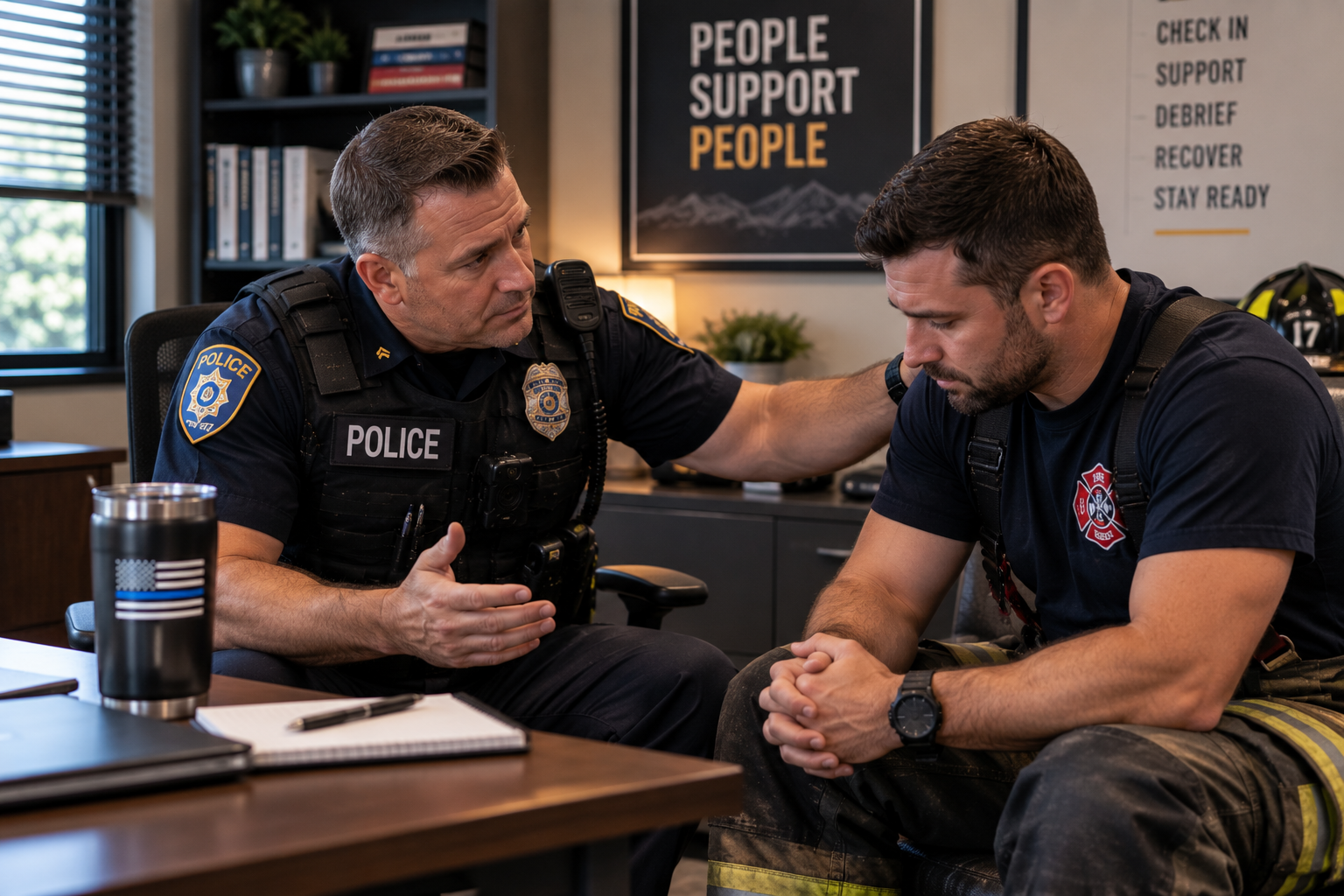
Leadership behavior sets the tone for how mental health is perceived and addressed. When leaders model psychological readiness—by acknowledging stress, participating in debriefings, and seeking support—they legitimize help-seeking behavior across the organization.
Conversely, leadership silence reinforces stigma. If command staff treat mental health as peripheral, responders internalize that expectation. This dynamic discourages reporting of distress and delays intervention until crises emerge.
Operational credibility is enhanced, not diminished, when leaders recognize psychological health as a readiness issue. Agencies that integrate mental health into operational planning demonstrate maturity and foresight.
Training for Psychological Performance Under Stress
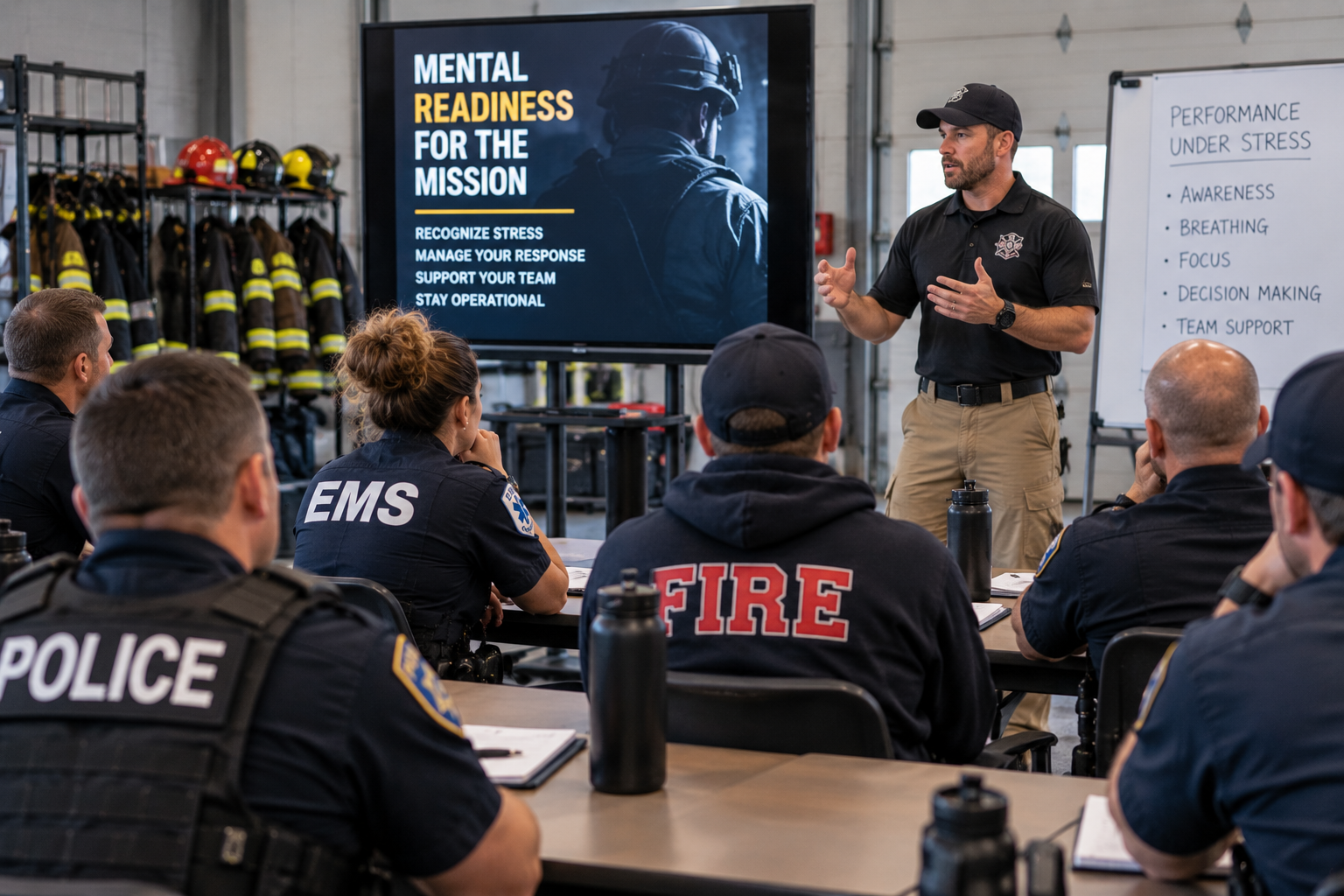
Just as tactical skills are trained through repetition, psychological performance can be strengthened through preparation. Stress exposure training, realistic scenarios, and after-action processing build familiarity with physiological stress responses.
When responders understand how stress affects perception and cognition, they are less likely to misinterpret their reactions as failure. This understanding preserves confidence and decision-making capacity under pressure.
Training should also address emotional responses to specific stressors, such as pediatric trauma or officer-down events. Exposure in controlled environments reduces shock during real incidents and supports adaptive coping.
Early Intervention and Long-Term Outcomes
Research consistently demonstrates that early psychological intervention reduces the severity and duration of post-traumatic stress. Screening, follow-up, and access to behavioral health resources must be embedded into post-incident protocols.
Importantly, intervention should not be limited to those who self-identify as struggling. Many responders delay seeking help due to stigma or lack of insight. Proactive outreach ensures that support reaches those who might otherwise remain silent.
Long-term resilience is not achieved through single interventions but through sustained commitment. Agencies must view responder wellness as an ongoing operational responsibility.
Continuous Relevance: Mental Health as Mission Readiness
Responder mental health is not a secondary concern reserved for recovery phases. It directly influences operational performance, safety, and effectiveness. A psychologically compromised responder is more likely to make errors, withdraw from teamwork, or leave the profession entirely.
By framing mental health as mission readiness, agencies align wellness initiatives with core operational goals. This framing shifts the conversation from accommodation to necessity.
High-threat incidents will continue to challenge responders physically and psychologically. Systems that prepare only for the physical aspects of response are incomplete.
Conclusion
Responder mental health and operational stress represent a critical, yet often overlooked, dimension of high-threat preparedness. Acute psychological injury, chronic stress, moral injury, and burnout are predictable consequences of exposure to mass violence—not personal failures.
Effective response systems recognize this reality and integrate mental health support into training, leadership practice, and post-incident operations. Structured peer support, early intervention, and leadership engagement reduce long-term harm and preserve operational capability.
In the end, the resilience of public safety systems depends on the resilience of the people within them. Protecting responder mental health is not optional—it is foundational to sustained readiness, ethical practice, and the ability to respond when communities need it most.