
Venue Bags and Reality: Preparing for Ballistic and Blast Injury
Venue Bags and Reality: Preparing for Ballistic and Blast Injury
In modern high-threat incidents, the effectiveness of medical response is determined long before the first casualty is treated. It is determined by what equipment is available, where it is positioned, and whether it matches the actual injury patterns responders encounter. Venue bags—intended to support early medical intervention in active shooter and mass-violence events—often represent a well-intentioned but poorly aligned solution. Stocked according to generic checklists or legacy assumptions, many venue bags fail to reflect the realities of ballistic and blast injury, resulting in delayed care, inefficient triage, and preventable deterioration. Preparing venue bags for reality, rather than theory, is therefore a critical component of operational readiness.
This discussion begins with a simple but uncomfortable truth: most venue bags are designed for incidents that responders hope will occur, not the ones they actually face. Gunshot wounds dominate early injury patterns, blast mechanisms complicate triage and treatment, pediatric needs are routinely overlooked, and bag placement frequently limits access at the moment it matters most. When venue bags are instead built around these realities—and integrated into Medical Rescue Team (MRT) operations—they become decisive tools for survivability rather than symbolic equipment.
Ballistic Trauma as the Dominant Injury Pattern
Across domestic and international after-action reports, ballistic trauma consistently emerges as the most common and immediate cause of injury during active shooter incidents. Extremity gunshot wounds, junctional hemorrhage, penetrating thoracic injuries, and multi-site trauma are the norm, not the exception. Despite this, many venue bags remain oriented toward generalized trauma care rather than the specific demands of gun violence.
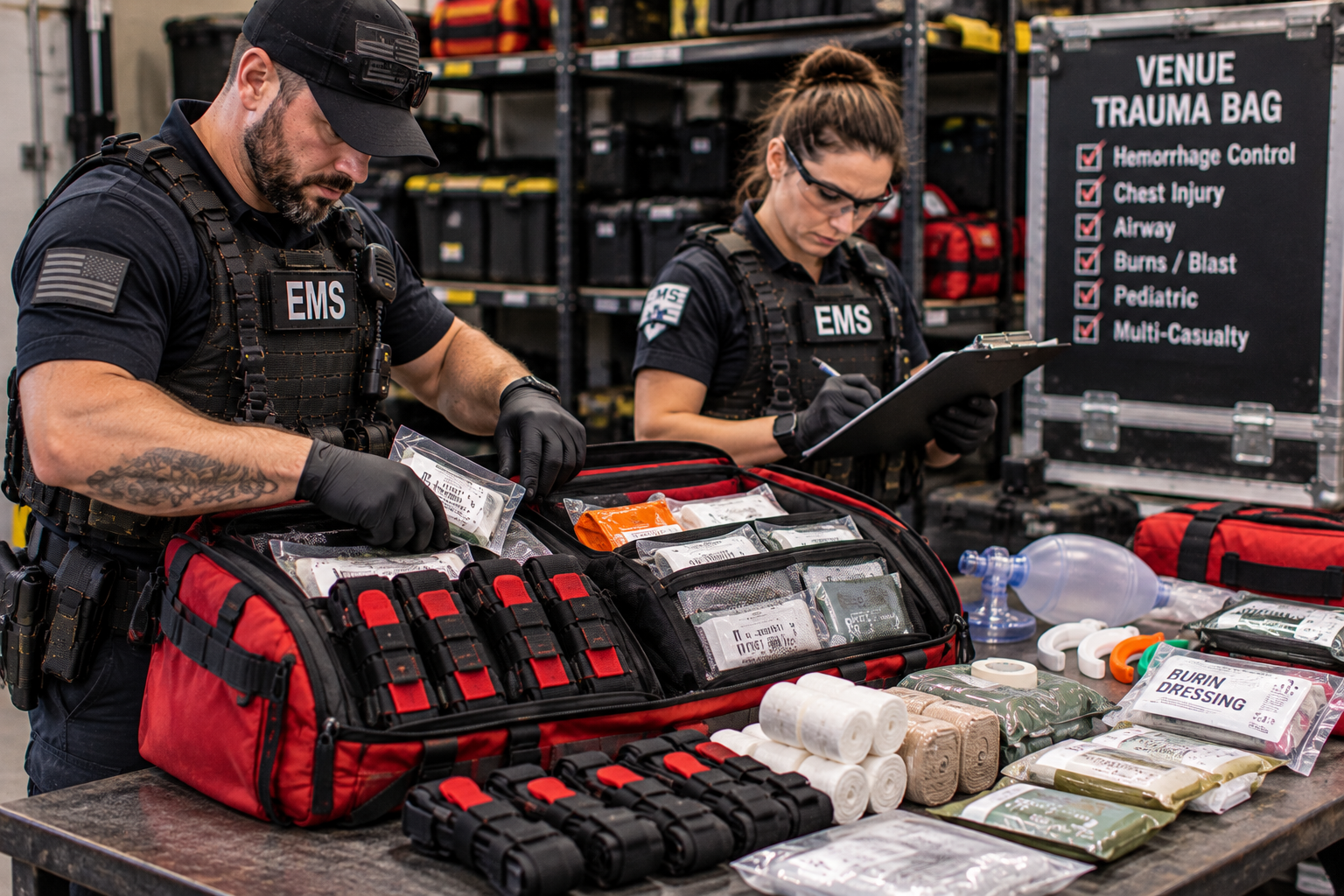
Ballistic injuries demand rapid hemorrhage control above all else. Tourniquets, hemostatic gauze, pressure dressings, and chest seals are not optional components; they are foundational. Yet venue bags are frequently understocked in these areas, containing insufficient quantities to manage multiple casualties simultaneously. One or two tourniquets may appear adequate on paper but collapse under the realities of clustered casualties.
Moreover, ballistic injuries often require repeated intervention. Dressings saturate quickly, tourniquets may need reassessment or augmentation, and multiple wounds may be present on a single patient. Venue bags that lack depth force responders into resource rationing at precisely the moment when decisiveness is required. Preparing for ballistic trauma means accepting that hemorrhage control will be the dominant task and equipping venue bags accordingly.
Blast Injuries and the Complexity of Triage
While firearms account for most injuries, an increasing number of attacks incorporate explosives, incendiary devices, or secondary blast hazards. Blast injuries introduce a level of complexity that many venue bags—and many responders—are unprepared to manage. Unlike isolated gunshot wounds, blast trauma affects multiple body systems simultaneously and may not be immediately obvious.
Primary blast injuries can damage lungs and ears without external signs. Secondary blast injuries introduce penetrating trauma from shrapnel. Tertiary effects cause blunt-force injuries from displacement. Quaternary injuries include burns and inhalation injuries. This spectrum complicates triage decisions, as patients who appear stable may deteriorate rapidly.
Venue bags must account for this complexity by supporting reassessment and prioritization rather than one-time intervention. Additional chest seals, burn dressings, airway adjuncts, and monitoring tools become more relevant in blast-involved incidents. Just as importantly, responders must be trained to recognize blast mechanisms and adjust triage expectations accordingly. A venue bag built solely around gunshot wounds may be technically adequate yet operationally insufficient when blast injuries are present.
The Persistent Pediatric Gap
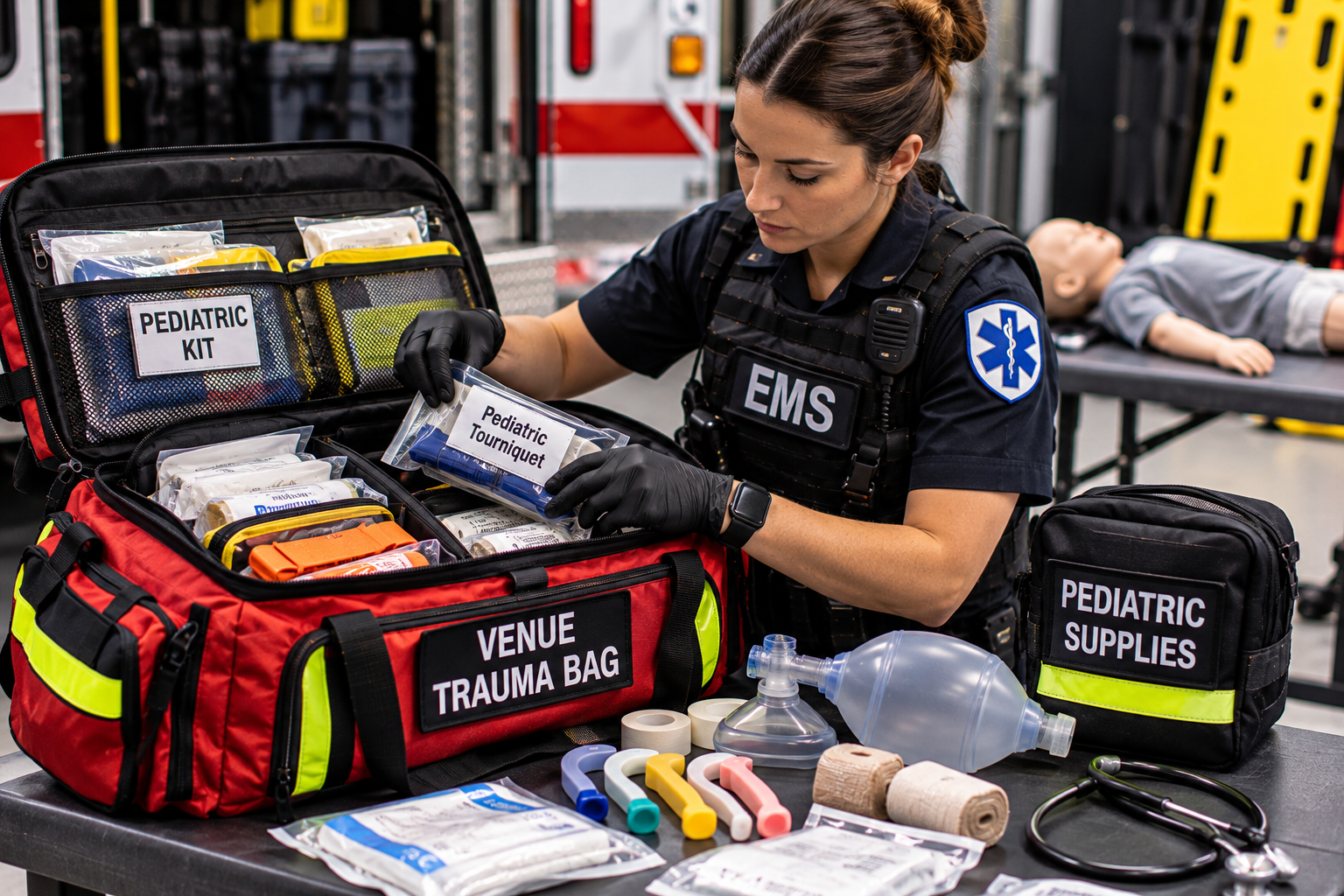
One of the most critical and recurring failures in venue bag preparation is the absence of pediatric-capable equipment. Despite repeated incidents involving children—particularly in school and community settings—many venue bags remain adult-centric by default. This gap is not merely logistical; it is conceptual.
Children present unique anatomical and physiological challenges. Standard tourniquets may not fit small limbs without modification. Airway adjuncts sized for adults may be ineffective or dangerous. Hypothermia develops more rapidly, and blood loss that appears minimal by adult standards can be catastrophic in pediatric patients.
The absence of pediatric hemorrhage-control tools, airway options, and thermal management equipment forces responders to improvise under stress, increasing error rates and delays. Venue bags intended for public spaces must assume the presence of children unless proven otherwise. Pediatric capability is not a specialty consideration; it is a baseline requirement for realistic preparedness.
Bag Placement and the Tyranny of Distance
Even the best-equipped venue bag is useless if it cannot be accessed quickly. Bag placement is therefore as critical as bag content. Yet many venue bags are stored according to administrative convenience rather than operational logic—locked in vehicles, staged at command posts, or placed in areas that become inaccessible once the incident unfolds.
In high-threat environments, time to access determines time to intervention. Responders cannot afford to traverse unsecured spaces, fight upstream against evacuating crowds, or wait for permission to retrieve equipment. Venue bags must be positioned where responders are already operating or will arrive early: near entry points, with MRT or RTF elements, or embedded within law enforcement and fire response teams.
Effective placement also requires redundancy. A single venue bag positioned centrally assumes ideal access conditions that rarely exist. Distributed placement—multiple bags staged across likely response routes—acknowledges uncertainty and increases the probability that at least one kit reaches the point of injury quickly.
MRT-Ready Kits Versus Generic Venue Bags
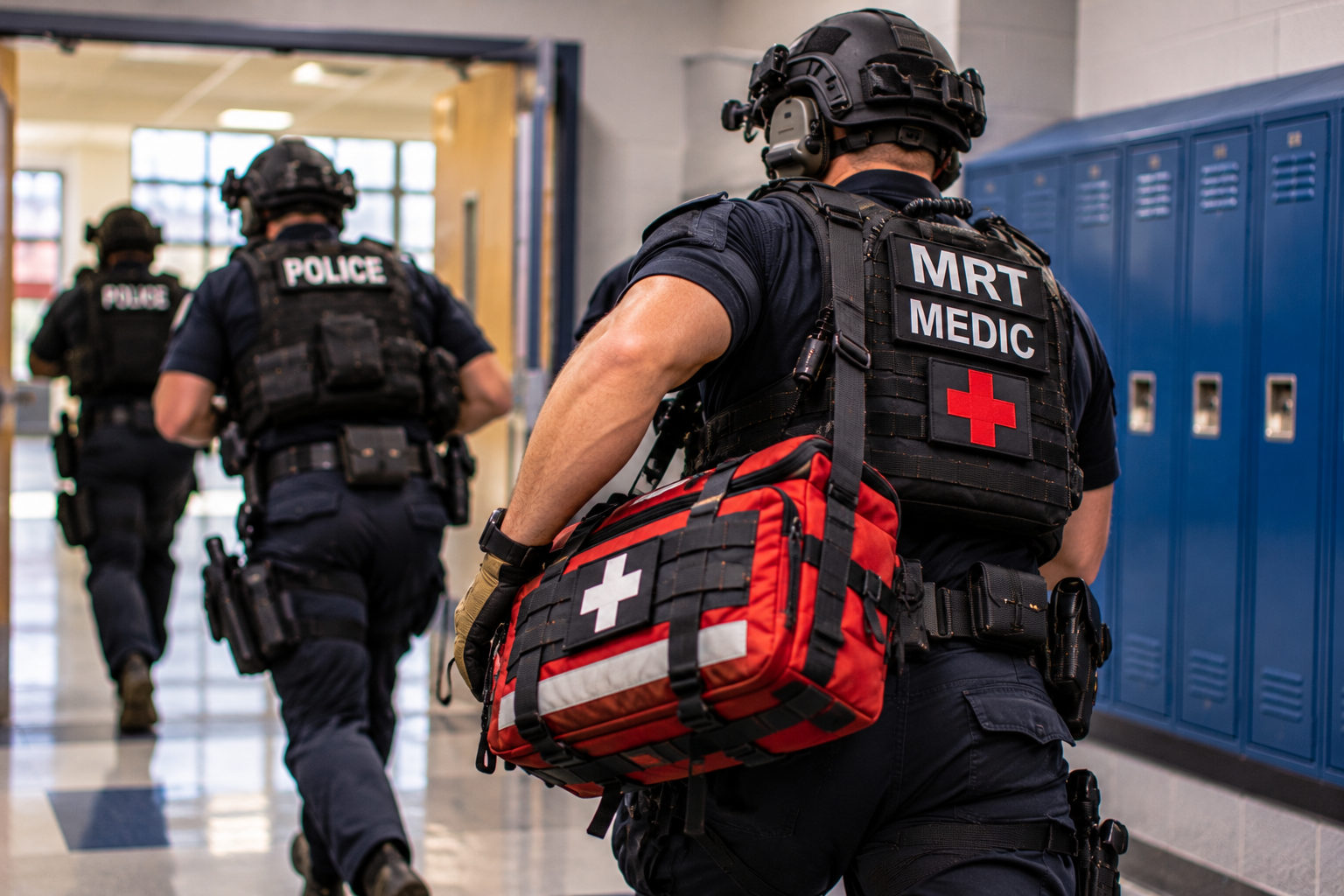
A critical distinction exists between generic venue bags and MRT-ready kits. Generic bags are often assembled with broad, non-specific contents intended to “cover all bases.” MRT-ready kits, by contrast, are purpose-built for early entry, movement under protection, and point-of-injury care in warm or hot zones.
MRT-ready kits prioritize compactness, rapid access, and high-yield interventions. They are designed to move with responders, not wait for them. Their contents reflect realistic casualty loads and focus on interventions that can be performed quickly under threat. This alignment with operational tempo is what makes MRT-ready kits consistently outperform generic venue bags.
The difference is not merely one of equipment, but of philosophy. Generic venue bags assume delayed care in controlled environments. MRT-ready kits assume early care in contested spaces. Preparing for reality requires embracing the latter assumption.
Training, Familiarity, and Cognitive Load
Venue bags also fail when responders are unfamiliar with their contents or layout. Infrequently used equipment, inconsistent packing, and lack of hands-on training increase cognitive load during crisis. Responders waste time searching, second-guessing, or avoiding tools they do not trust.
Standardization and repetition mitigate this problem. When venue bags are packed consistently and integrated into regular training, responders develop spatial memory and confidence. Repetition across varied scenarios—ballistic-only, blast-involved, pediatric-heavy—reinforces adaptability without sacrificing speed.
Training must also address prioritization. Venue bags cannot and should not do everything. Responders must learn to identify which interventions matter most in the first minutes and which can wait. This clarity reduces hesitation and aligns action with survivability.
Anchoring Equipment to Operational Reality
At every level, effective venue bag preparation depends on anchoring decisions to operational reality rather than administrative comfort. This means confronting uncomfortable truths: that ballistic trauma will dominate, that blast injuries will complicate care, that children will be present, that access will be contested, and that early medical action must occur before full scene control.
When venue bags are designed with these realities in mind, they become force multipliers. When they are not, they become symbols of preparedness without substance. The difference is measured not in policy compliance but in blood loss prevented and lives sustained.
Conclusion
Venue bags occupy a critical position in the continuum between personal medical kits and advanced EMS resources. Their effectiveness depends on how honestly they reflect the threats responders face. Gunshot wounds dominate early injury patterns, blast injuries complicate triage, pediatric needs are frequently overlooked, and access challenges undermine even well-stocked kits.
MRT-ready venue bags—intentionally stocked, positioned, and trained—consistently outperform generic alternatives because they align equipment with operational tempo and injury reality. Preparing venue bags for ballistic and blast injury is not an exercise in adding more gear; it is an exercise in precision, prioritization, and realism.
In high-threat incidents, the gap between theory and reality is measured in minutes and milliliters. Venue bags built for reality close that gap, enabling responders to deliver life-saving care where and when it matters most.