
Venue Bag and Medical Loadout Optimization
Venue Bag and Medical Loadout Optimization
In high-threat incidents, outcomes are often determined less by the intent to provide care than by the immediate availability of the right tools at the right moment. Nowhere is this more apparent than in the use—or misuse—of venue bags and medical loadouts during active shooter and mass-casualty events. Despite advances in tactical medicine and widespread adoption of hemorrhage-control principles, many response systems remain constrained by poorly optimized, inconsistently stocked, or inaccessible medical equipment. The result is a familiar and preventable failure: capable responders arriving at the point of injury without the resources necessary to intervene effectively.
This analysis examines venue bag and medical loadout optimization as an operational readiness issue rather than a procurement exercise. The central argument is straightforward: medical capability does not reside in policy or training alone—it resides in the equipment that actually reaches the casualty under threat. Optimized venue bags, MRT-ready loadouts, and standardized configurations across agencies directly reduce treatment delays, improve point-of-care capability, and enhance survivability in real-world trauma environments.
Why Venue Bags Matter in the First Minutes
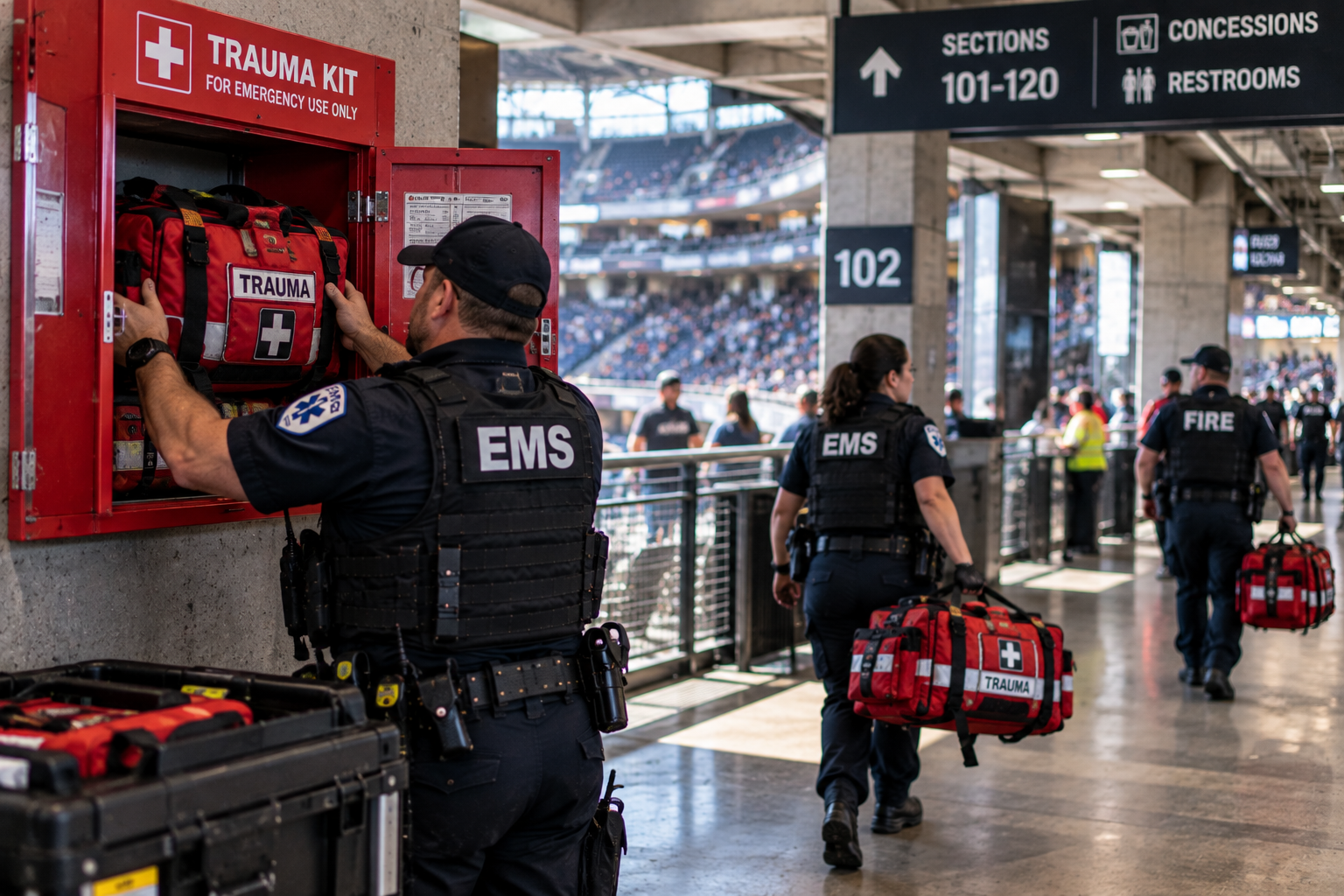
The first minutes of a high-threat incident define survivability. Massive hemorrhage, airway compromise, and blast-related injuries progress rapidly, often outpacing traditional EMS deployment timelines. Venue bags—portable trauma kits designed for rapid access—exist to bridge this gap. When properly configured and positioned, they enable responders to initiate life-saving interventions before full medical infrastructure is established.
However, many venue bags are designed around theoretical needs rather than empirical injury patterns. They may reflect compliance checklists or generalized trauma concepts rather than the realities of ballistic and blast trauma. When this occurs, venue bags become symbolic assets rather than functional tools.
Front-loading the relevance is essential: a venue bag that cannot immediately address the leading causes of preventable death is operationally irrelevant.
Accessibility as a Determinant of Effectiveness
Equipment that exists but cannot be accessed under stress fails by design. Venue bags are frequently stored in locked compartments, distant vehicles, or centralized locations that are unreachable during the Chaos Phase of an incident. In some cases, responders must choose between advancing toward casualties or retreating to retrieve equipment—an unacceptable tradeoff.
Optimized loadouts prioritize proximity and speed. Venue bags must be:
Carried forward by entry or follow-on elements
Positioned along anticipated casualty flow routes
Lightweight enough for rapid movement
Organized for one-handed or low-light access
Accessibility is not an afterthought; it is the defining characteristic of effective medical equipment in high-threat environments.
Tailoring Equipment to Ballistic and Blast Trauma
Active shooter and mass violence injuries are not equivalent to routine trauma. Ballistic wounds, fragmentation injuries, and blast effects create complex hemorrhage patterns, penetrating trauma, and poly-system injury. Venue bags optimized for medical calls or MVCs fail to address these demands.
Essential components of ballistic- and blast-focused venue bags include:
Multiple tourniquets capable of rapid application
Hemostatic gauze suitable for deep wound packing
Pressure dressings designed for high-volume bleeding
Occlusive chest seals for penetrating thoracic trauma
Tools to manage blast-related amputations and shrapnel
The absence of these items forces responders into improvisation, delays intervention, and increases preventable mortality. Equipment selection must be driven by injury epidemiology, not tradition.
The Pediatric Gap in Venue Bags
One of the most consistent and concerning deficiencies in venue bag configuration is the absence of pediatric-capable equipment. Children are frequently present in the very environments most vulnerable to mass violence—schools, religious institutions, community events—yet venue bags remain overwhelmingly adult-centric.
Pediatric considerations extend beyond size. Children have:
Lower total blood volume, accelerating shock
Smaller airways prone to obstruction
Extremities that may not accommodate standard tourniquets
Optimized venue bags must include pediatric-appropriate tourniquets, compression options, airway adjuncts, and hemorrhage-control solutions. Failure to do so transforms survivable pediatric injuries into fatal outcomes.
This gap persists not because pediatric needs are unknown, but because they are often deprioritized during equipment planning.
MRT-Ready Loadouts and Point-of-Care Capability
Medical Rescue Teams (MRTs) and similarly integrated medical elements represent a shift toward point-of-injury care under protection. This operational model demands loadouts capable of sustaining early intervention without reliance on distant trauma bags or ambulances.
MRT-ready loadouts differ from traditional EMS kits in both scale and intent. They prioritize:
Redundancy for multiple casualties
Speed over completeness
Interventions that stabilize rather than definitively treat
An optimized MRT loadout is often best conceptualized as a scaled-up IFAK: focused, efficient, and purpose-built for the Chaos and early Stabilization Phases. Overloading these kits with nonessential items increases weight, slows movement, and reduces effectiveness.
Standardization and Cognitive Load Reduction
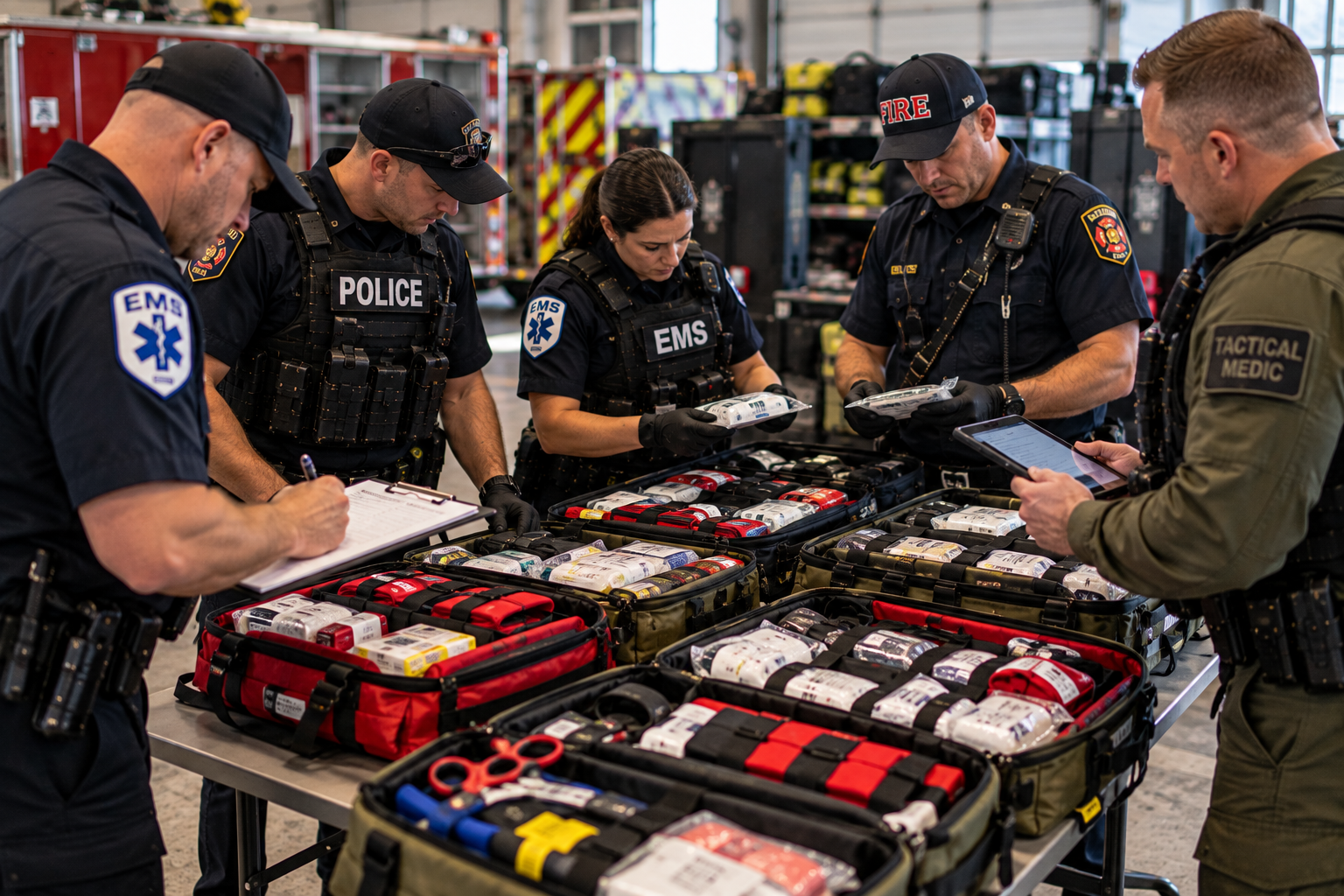
In multi-agency responses, equipment inconsistency creates friction. When venue bags vary widely between agencies—or even between units—responders waste time searching for familiar tools or deciphering unfamiliar layouts. Under stress, this cognitive burden delays care.
Standardization addresses this problem directly. When agencies align on:
Common bag layouts
Consistent equipment placement
Shared labeling conventions
responders transition seamlessly between kits regardless of ownership. This interoperability mirrors successful practices in law enforcement weapons systems and military medical loadouts.
Standardization does not eliminate agency autonomy; it enhances collective effectiveness.
Training Alignment With Actual Loadouts
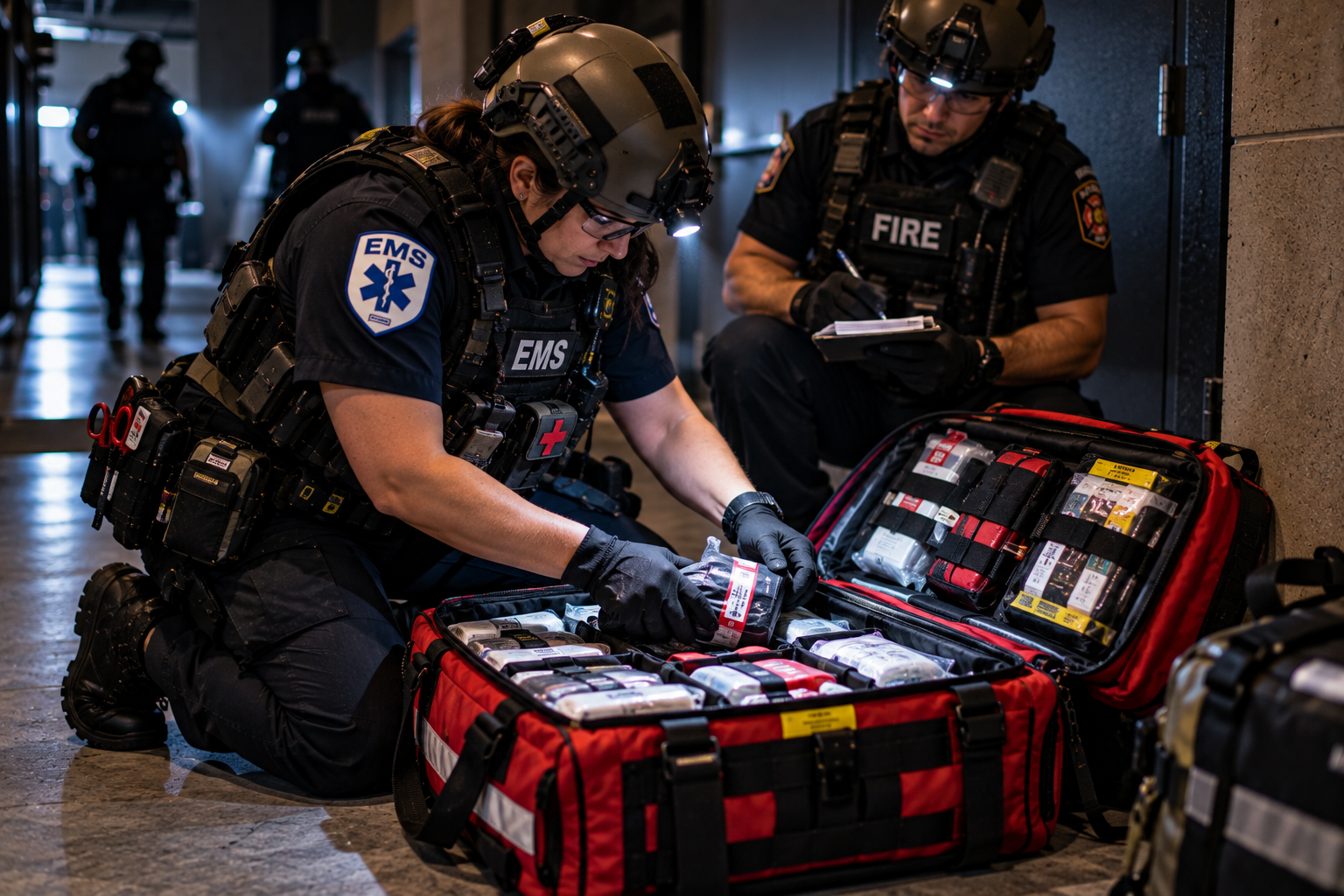
Equipment optimization fails when training does not reflect reality. Responders frequently train with idealized kits or classroom examples that differ from what they carry operationally. Under stress, this mismatch leads to hesitation, error, and inefficiency.
Training must be conducted with:
Actual venue bags and MRT loadouts
Full PPE and realistic movement constraints
Low-light and high-noise conditions
Repetition with variation—across different environments and casualty profiles—builds familiarity and confidence. Responders who know their equipment instinctively perform faster and more accurately when seconds matter.
Logistics, Sustainment, and Inspection
Optimized loadouts require sustainment. Expired tourniquets, degraded hemostatic agents, and incomplete kits are common findings in after-action reviews. Without routine inspection and replenishment, venue bags deteriorate silently.
Effective programs implement:
Scheduled inventory checks
Clear responsibility for kit maintenance
Rapid replacement pathways for used items
Sustainment is an operational responsibility, not an administrative one. Equipment readiness must be treated with the same seriousness as weapon or vehicle readiness.
Venue-Specific Optimization
Not all venues present the same risk profile. Schools, hospitals, transportation hubs, and open-air events each generate distinct injury patterns and access challenges. Optimized venue bags should reflect these differences.
For example:
Schools require pediatric-focused equipment
Transit hubs demand redundancy for high casualty volume
Large venues benefit from distributed bag placement
Context-specific optimization enhances relevance and reduces reliance on improvisation.
Continuous Relevance: Equipment as Capability
Venue bags and medical loadouts are not accessories; they are capability. The presence of trained responders without appropriate equipment creates a false sense of preparedness. Conversely, well-optimized loadouts amplify the impact of even small medical teams.
Every high-threat incident tests the same question: Did the right equipment reach the casualty in time? When the answer is no, the failure is rarely due to lack of intent—it is due to poor optimization.
Implications for Policy and Leadership
Leadership decisions shape equipment outcomes. When leaders prioritize evidence-based loadout design, standardization, and sustainment, readiness improves measurably. When equipment planning is delegated without oversight, gaps persist.
Policy should explicitly link venue bag configuration to threat profiles, MRT deployment models, and CCP placement. Procurement must follow doctrine—not the reverse.
Conclusion
Venue bag and medical loadout optimization is a decisive factor in high-threat medical response. Well-stocked, accessible, and standardized kits enable early intervention, reduce cognitive load, and improve survivability. Conversely, poorly designed or inconsistently maintained equipment undermines even the most advanced training and doctrine.
Optimized loadouts tailored to ballistic and blast trauma, inclusive of pediatric needs, and aligned with MRT operations transform intent into capability. Standardization across agencies reduces confusion and accelerates care. Training anchored in real equipment ensures performance under stress.
In high-threat environments, equipment is not neutral. It either enables life-saving action or becomes a silent point of failure. Optimizing venue bags is therefore not a logistical refinement—it is a moral and operational imperative.