
Contradictions in Traditional Active Shooter Response Models
Contradictions in Traditional Active Shooter Response Models
Active shooter response doctrine in the United States is often presented as mature, standardized, and evidence-informed. Yet when examined under real-world conditions, many traditional response models reveal internal contradictions that actively undermine their stated objectives. These contradictions are most apparent at the intersection of tactical action and medical care—where doctrine claims to prioritize life-saving intervention, yet operationalizes delay. The result is a system that appears coherent in training manuals but fractures under the tempo, ambiguity, and urgency of actual high-threat incidents.
This analysis interrogates those contradictions directly. By examining the origins of zone-based response models, the separation of tactical and medical functions, and the misapplication of military terminology to civilian environments, this discussion demonstrates how legacy concepts persist despite being misaligned with modern threat realities. The central argument is clear: traditional active shooter response models contain conceptual conflicts that delay medical access, confuse responder action, and ultimately endanger lives. Addressing these contradictions requires not incremental adjustment, but a fundamental reassessment of how response doctrine is constructed and applied.
The Promise and Paradox of Zone-Based Response
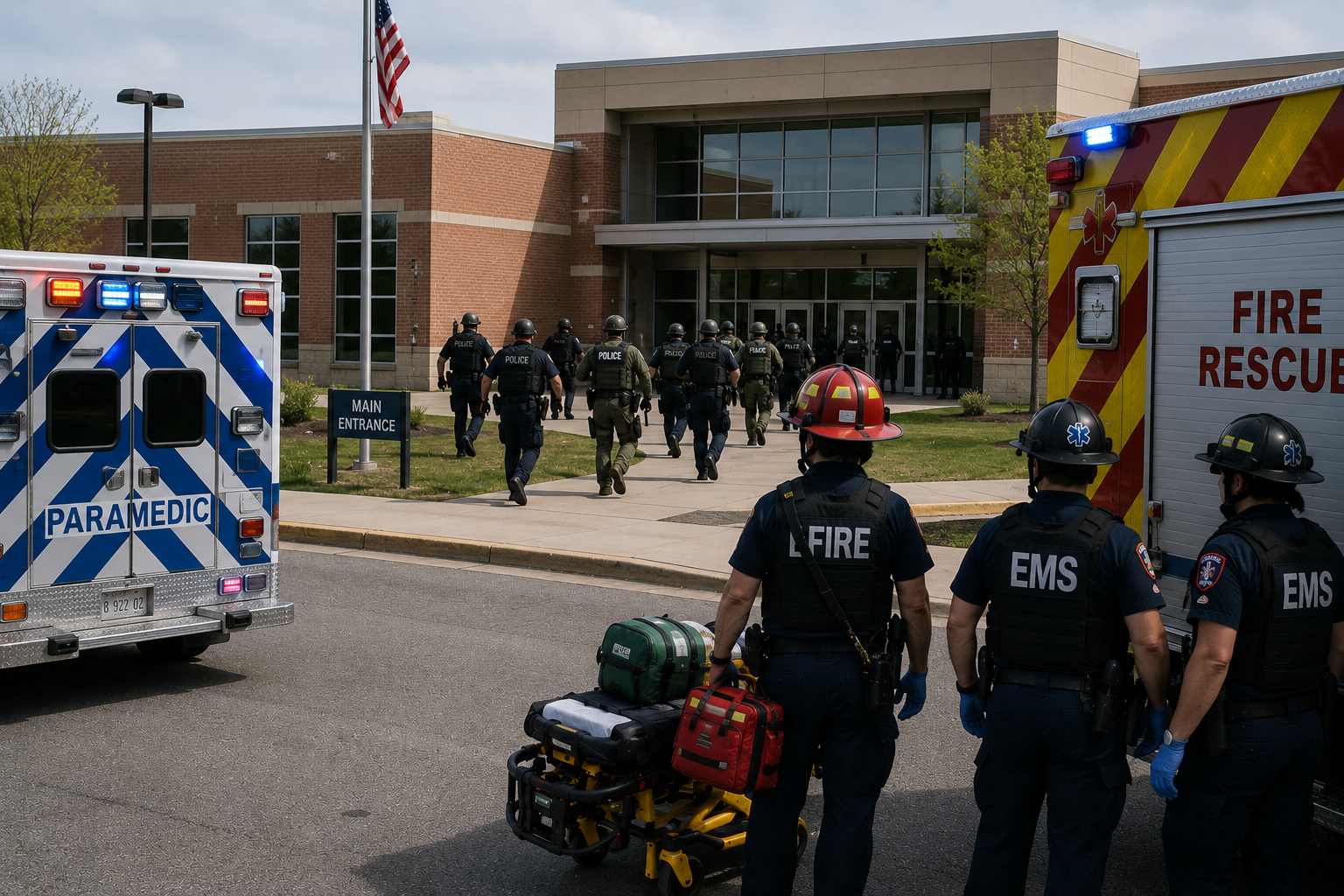
Zone-based response models—Hot, Warm, and Cold Zones—were developed to create clarity in hazardous environments. In theory, these zones establish graduated levels of risk, guiding responder movement and task allocation. Tactical operations occur in the Hot Zone, limited support functions occur in the Warm Zone, and medical staging occurs in the Cold Zone until the scene is declared secure.
On paper, this structure appears logical and safety-oriented. In practice, it introduces a paradox. Active shooter incidents are not static hazard scenes; they are dynamic, evolving threats. The boundaries between zones shift rapidly, often faster than command can redefine them. When zones are treated as fixed permissions rather than fluid conditions, responders default to inaction rather than adaptation.
The contradiction emerges when doctrine acknowledges that time-critical injuries occur in the Hot Zone but prohibits medical access to that zone until certainty is achieved. The model recognizes the need for early care while structurally preventing it.
Rigid Separation of Tactical and Medical Functions
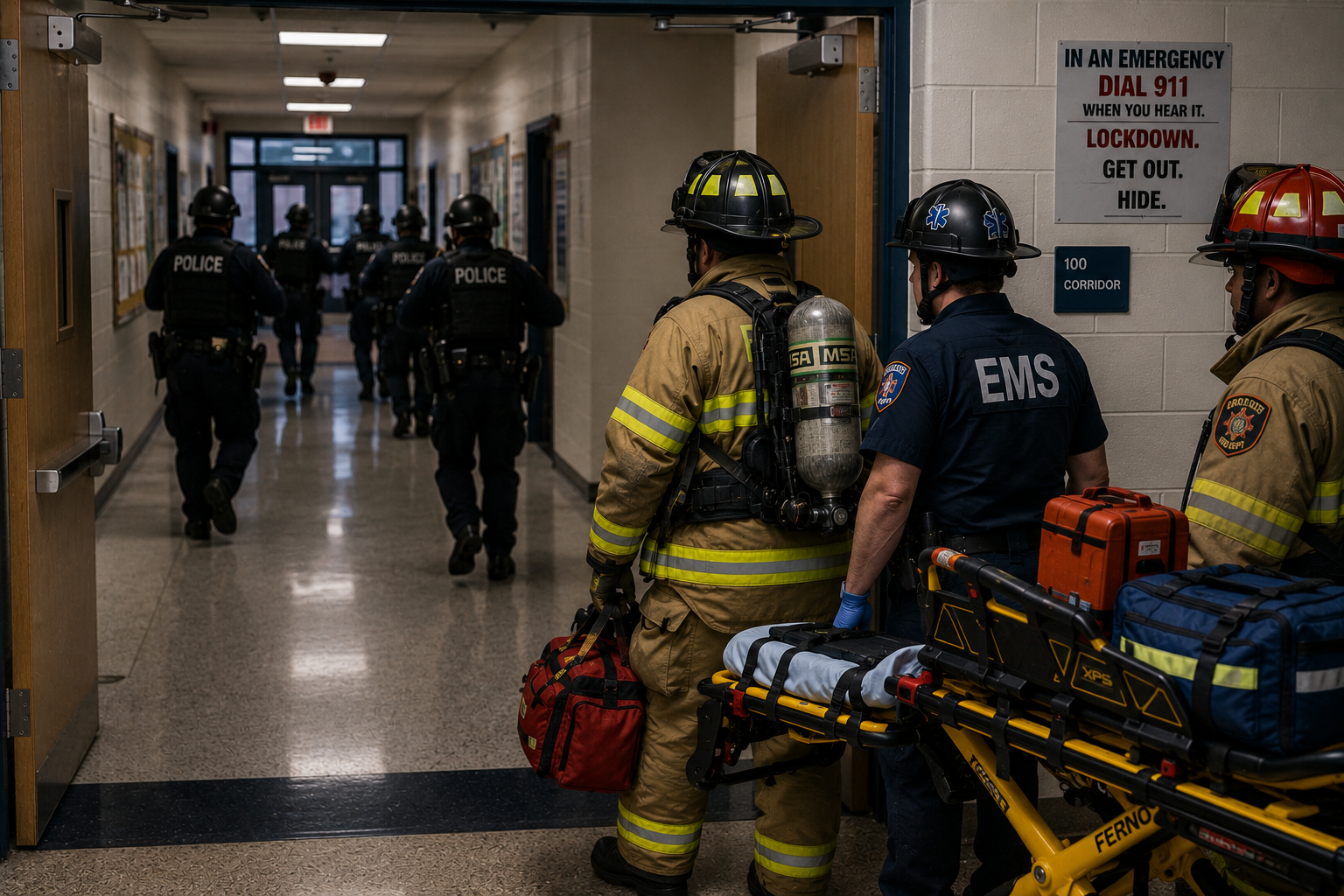
Traditional protocols reinforce this paradox by rigidly separating tactical and medical roles. Law enforcement is tasked with threat engagement and area security. EMS and fire are instructed to stage until law enforcement declares the environment safe enough for entry. This separation assumes that tactical success precedes medical relevance.
However, active shooter incidents routinely invalidate this assumption. Threats may be neutralized quickly, relocate unpredictably, or self-terminate before responders arrive. Casualties, meanwhile, begin dying within minutes of injury. When medical care is conditioned on tactical certainty, survivability windows close before care begins.
This separation is not the result of operational necessity; it is a doctrinal artifact. It reflects an outdated belief that safety and care are sequential rather than concurrent priorities. In modern high-threat environments, this belief creates preventable delay.
Military Origins and Civilian Misalignment
Many zone-based and task-separation concepts originate from military doctrine developed for battlefield conditions. In military operations, units operate under unified command, standardized training, and defined rules of engagement. Casualty care is embedded within maneuver elements, and medical evacuation is planned alongside tactical objectives.
When these concepts are imported into civilian public safety without their supporting doctrine, contradictions emerge. Civilian responders operate under different legal authorities, staffing models, and mission scopes. Unlike military units, civilian agencies are independent organizations that must coordinate rather than command one another.
The problem is not that military doctrine is flawed; it is that partial adoption without contextual adaptation produces misalignment. Civilian systems inherit terminology without inheriting the operational assumptions that give that terminology meaning.
Misapplied Tactical Language and Conceptual Drift
One of the most damaging manifestations of this misalignment is the misapplication of military tactical language—particularly phrases such as “getting off the X.” In military usage, the “X” refers to a point of enemy contact where remaining stationary increases vulnerability. Movement away from that point is a survival imperative.
In civilian active shooter response, this concept is often misunderstood. Responders are sometimes taught to “get off the X” by moving casualties away from the location of injury rather than addressing the threat itself. This interpretation treats geography as the hazard rather than the attacker.
In civilian settings, the “X” is the shooter—not the floor, hallway, or classroom where the injury occurred. Moving casualties without addressing the threat may relocate them, but it does not reduce risk. Worse, it can delay hemorrhage control, expose responders to additional danger, and create false progress.
This conceptual drift illustrates how borrowed language, when stripped of context, produces operational error.
Moving Toward the Threat Versus Away From Care
Another contradiction arises when doctrine simultaneously emphasizes rapid threat engagement while instructing medical elements to remain distant. Law enforcement is trained to move toward the threat to stop the killing. Medical doctrine, however, often instructs EMS and fire to move away from the threat until safety is confirmed.
These opposing movements fracture response coherence. Law enforcement advances without integrated medical support. Medical teams remain positioned to receive casualties that may never arrive in time. Command is forced to reconcile conflicting priorities under pressure.
The contradiction is not tactical—it is conceptual. If the shooter is the hazard, then movement toward threat resolution and movement toward casualty care must be synchronized, not segregated. Models that treat these movements as incompatible undermine both objectives.
The Illusion of Safety Through Distance
Zone-based models often justify delay by appealing to responder safety. The implicit logic is that distance from the threat equates to reduced risk. In dynamic shooter incidents, this logic is frequently false. Threats are mobile, unpredictable, and often conclude rapidly. Distance does not guarantee safety, and delay does not eliminate exposure.
Moreover, prolonged staging can increase risk by clustering responders in predictable locations, delaying situational awareness, and allowing casualties to deteriorate. Safety achieved by inaction is often illusory.
Effective safety in high-threat environments is achieved through managed risk, coordinated movement, and situational awareness—not through rigid adherence to distance-based rules.
Delayed Medical Support as a Predictable Outcome
When these contradictions converge—rigid zones, separated functions, misapplied language—the predictable outcome is delayed medical support. Casualties with survivable injuries succumb to hemorrhage or airway compromise while resources wait just outside arbitrary boundaries.
These delays are not the result of individual hesitation or lack of training. They are systemically produced by models that prioritize doctrinal consistency over operational reality. When responders follow doctrine correctly and patients still die, the problem is not compliance—it is design.
Contradictions Between Training and Expectation
Another fault line appears between public expectation and responder instruction. Communities expect immediate action, rapid care, and decisive response during active shooter events. Responders, however, are often trained to delay, stage, and wait for conditions that may never fully materialize.
This mismatch places responders in an untenable position. Acting early may violate policy; waiting may violate moral and professional instincts. Over time, this tension erodes trust within agencies and between responders and the public they serve.
Doctrine that forces responders to choose between compliance and conscience is inherently unstable.
Relevance to Modern Threat Dynamics
Modern active shooter incidents are characterized by speed, ambiguity, and compressed timelines. Many conclude before full command structures are established. In this environment, doctrines built around linear progression and static zones are fundamentally mismatched.
Contradictions that may have been tolerable in slower-moving incidents now produce catastrophic delay. As threat dynamics evolve, response models that fail to evolve alongside them become liabilities.
Toward Conceptual Consistency and Operational Alignment
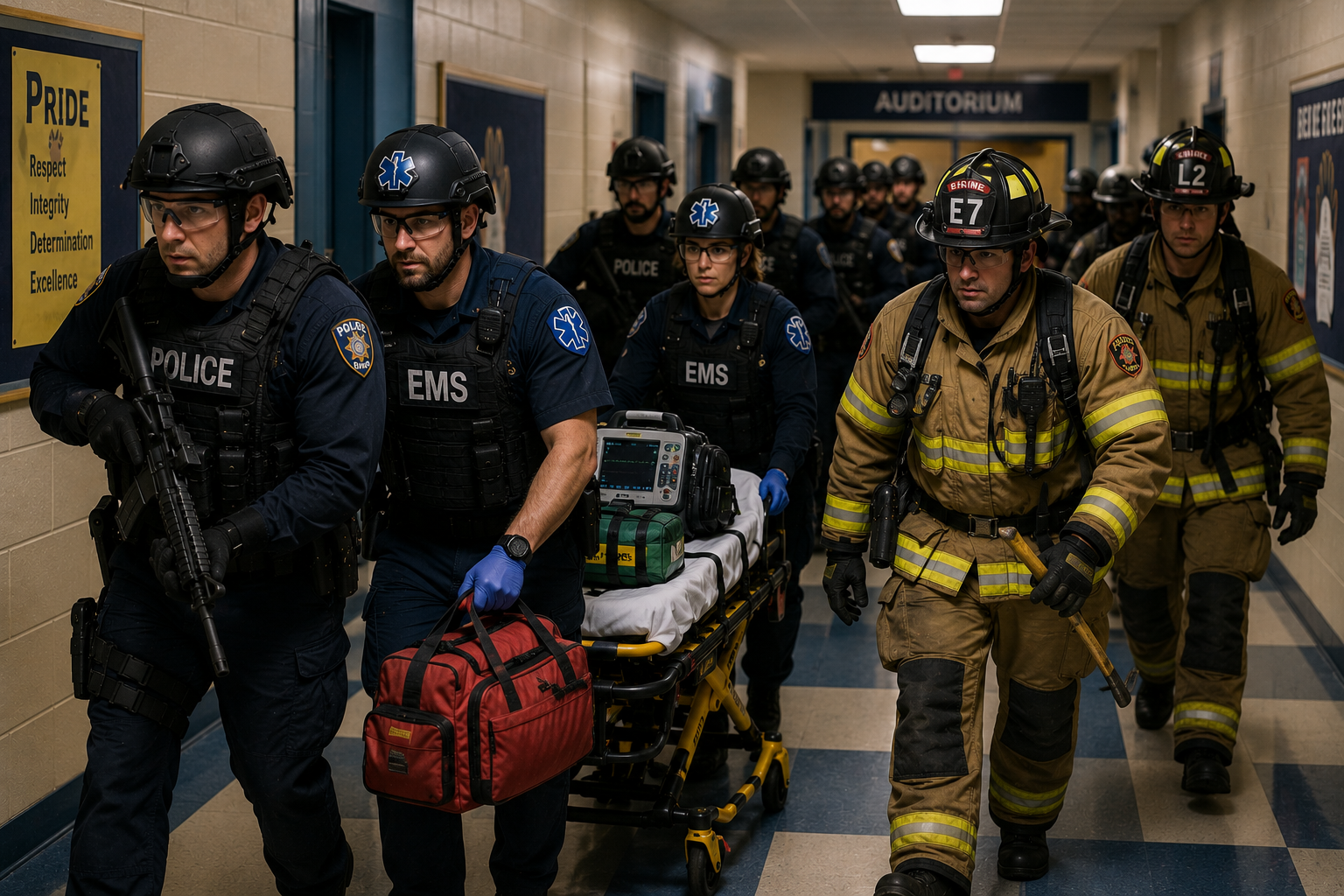
Resolving these contradictions requires more than procedural adjustment. It requires conceptual clarity. Response models must align hazard identification with action. If the shooter is the threat, then doctrine must support movement that addresses both threat mitigation and casualty care concurrently.
Terminology must be redefined within civilian context. Zones must be treated as fluid conditions rather than fixed permissions. Tactical and medical functions must be integrated by design rather than coordinated ad hoc.
Conceptual consistency is not academic—it is operationally decisive.
Implications for Doctrine and Training
Training programs that perpetuate these contradictions reinforce failure. Responders will default to the lowest common denominator under stress—often staging and waiting—if doctrine provides no clear alternative.
Conversely, doctrine that acknowledges and resolves these contradictions empowers responders to act decisively within defined risk parameters. Training can then reinforce realistic decision-making rather than idealized sequencing.
Conclusion
Traditional active shooter response models contain internal contradictions that undermine their own objectives. Zone-based separation, rigid role division, and misapplied military concepts create a system that delays medical access while claiming to prioritize life-saving care.
In civilian high-threat environments, the shooter—not the location—is the true hazard. Response models that fail to reflect this reality misdirect action, confuse responders, and cost lives. Addressing these contradictions requires a deliberate shift away from borrowed language and rigid sequencing toward integrated, contextually grounded doctrine.
Until response models achieve conceptual alignment between threat recognition and medical urgency, preventable deaths will continue to occur—not because responders failed to act, but because doctrine failed to support them.