
Enhancing Community Preparedness Through the CSR Approach
Enhancing Community Preparedness Through the CSR Approach: Building Adaptive Capacity, Responder Readiness, and Long-Term Resilience
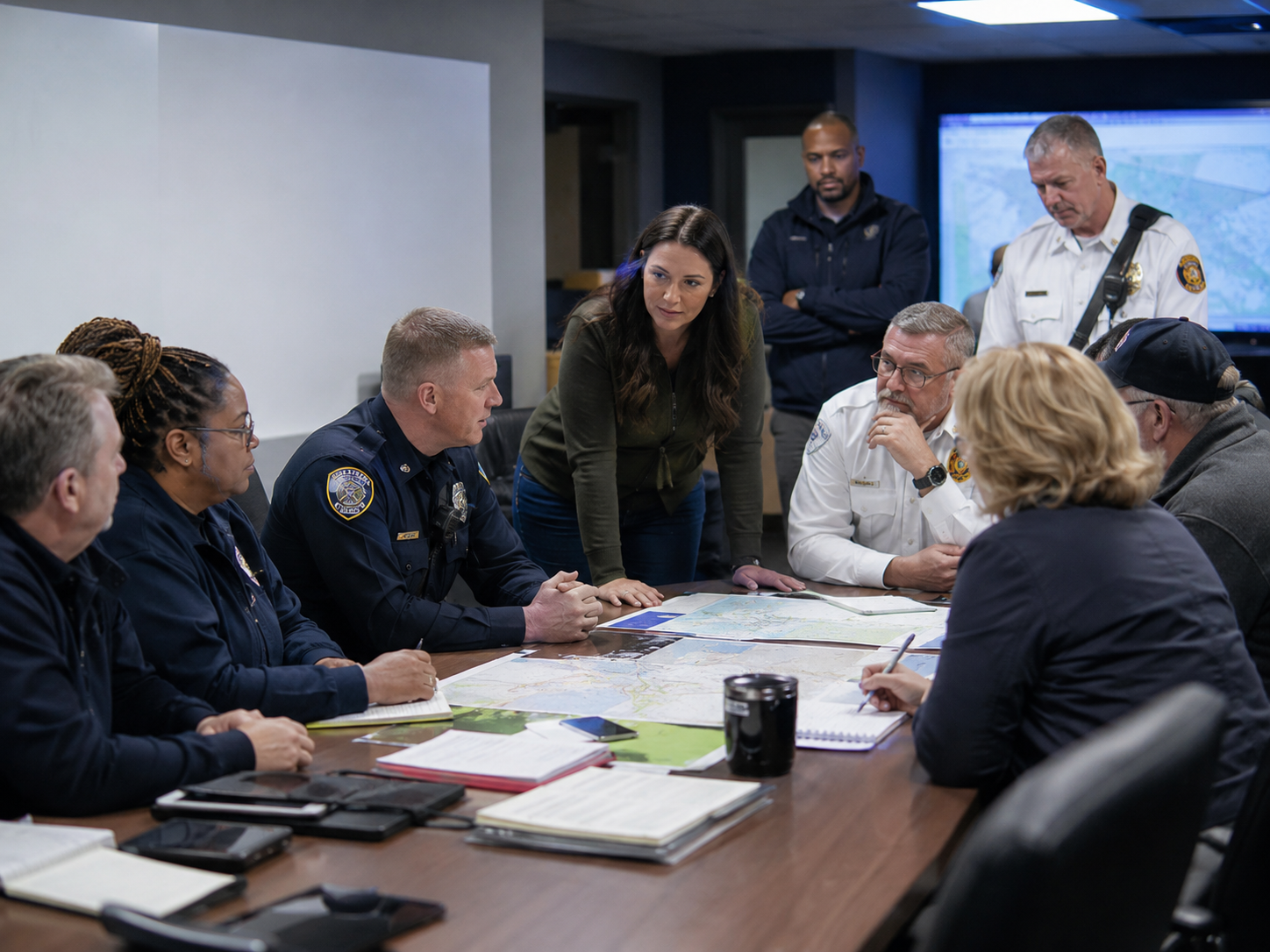
High-threat incidents do not test communities only at the moment of crisis; they expose the cumulative effects of years of preparedness decisions. Active shooter events, complex coordinated attacks, and other acts of targeted violence reveal whether response systems were designed for adaptability or constrained by rigid, one-size-fits-all models. Communities vary widely in geography, population density, infrastructure, staffing, and resources. Preparedness frameworks that assume uniform capability inevitably fail some communities when conditions diverge from the ideal. The Chaos–Stabilization–Recovery (CSR) approach directly addresses this reality by prioritizing adaptability, scalability, and context-specific implementation.
The central premise of this analysis is that CSR enhances community preparedness by providing a flexible framework that strengthens responder capability, optimizes limited resources, and supports long-term resilience. Rather than prescribing a fixed set of actions, CSR offers a condition-based model that can be tailored to local constraints and capacities. By aligning operational behavior with incident dynamics and human needs, CSR enables communities of varying size and capability to improve both immediate response effectiveness and sustained preparedness over time.
Preparedness as a Community-Wide System Capability
Preparedness is often framed narrowly as responder readiness or equipment availability. In practice, preparedness is a system property that emerges from how agencies, infrastructure, training, leadership, and community expectations align. A well-equipped agency operating within a poorly integrated system remains vulnerable. Conversely, a resource-limited community operating under a coherent framework can perform effectively despite constraints.
CSR strengthens preparedness by shifting focus from agency-specific capacity to community-wide operational alignment. The framework emphasizes how actions should unfold based on conditions rather than who owns a particular function. This approach allows communities to integrate law enforcement, EMS, fire services, emergency management, healthcare, and supporting organizations into a shared operational mindset. Preparedness becomes less about matching national benchmarks and more about ensuring that available capabilities are applied coherently when they matter most.
Adaptability Across Diverse Operational Environments
One of CSR’s most significant contributions to community preparedness is its adaptability. Communities differ dramatically in threat profiles and response environments. Urban centers contend with dense populations and complex infrastructure. Rural jurisdictions face long transport times, limited staffing, and sparse medical resources. Schools, hospitals, houses of worship, and industrial facilities present distinct challenges even within the same jurisdiction.
CSR accommodates this diversity by defining phases based on conditions rather than locations or agencies. Chaos exists wherever uncertainty, immediate threat, and time-critical injury converge. Stabilization begins when sufficient control and coordination emerge to organize operations. Recovery focuses on restoring safety, accountability, and community function. These phases manifest differently across environments, but their underlying principles remain consistent.
This adaptability allows communities to apply CSR meaningfully regardless of scale. A small rural agency may execute Chaos and Stabilization with minimal personnel, while a large metropolitan system may deploy extensive resources. In both cases, the framework remains valid because it adapts to context rather than imposing external expectations.
Overcoming Resource Limitations Through Context-Specific Solutions
Resource limitations are a defining feature of many communities. Staffing shortages, volunteer reliance, aging infrastructure, and constrained budgets shape what is realistically achievable during high-threat incidents. Traditional preparedness models often exacerbate these limitations by emphasizing capabilities that smaller jurisdictions cannot sustain.
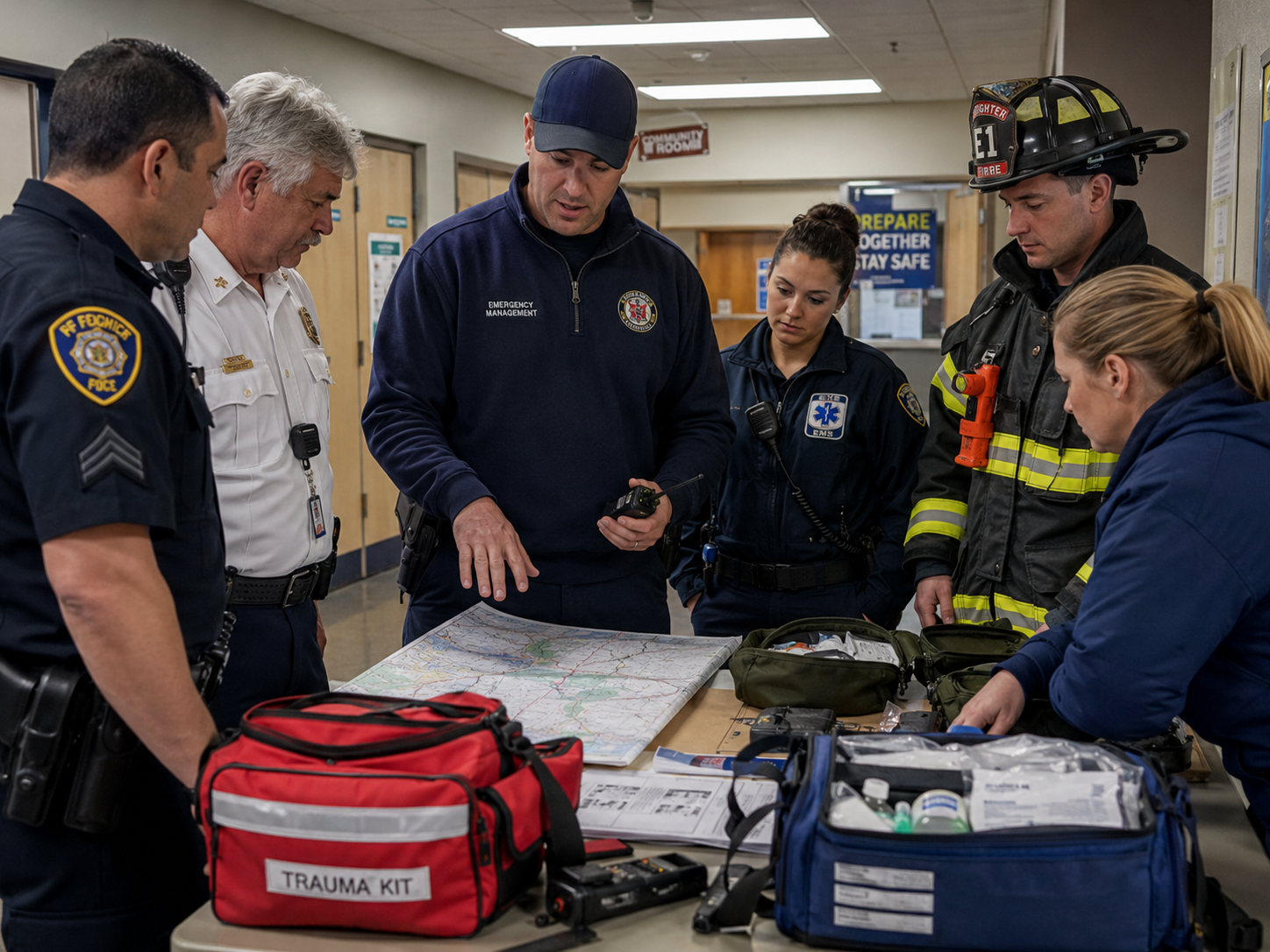
CSR mitigates this challenge by enabling context-specific solutions. Instead of requiring specialized teams or equipment as prerequisites for effective response, CSR emphasizes early action using available resources. Immediate life-saving interventions, threat-mitigated care, and coordinated decision-making can occur even when advanced assets are delayed or unavailable.
For example, early hemorrhage control does not require a fully staffed medical unit; it requires trained responders and accessible equipment. Coordinated command does not require a large command staff; it requires shared understanding and clear intent. By focusing on function rather than form, CSR allows communities to optimize what they have rather than fixate on what they lack.
Tailored Implementation for Community-Specific Needs
Preparedness frameworks fail when they are applied uniformly without regard for local realities. CSR explicitly encourages tailored implementation, recognizing that no two communities share identical risks or capacities. Tailoring involves aligning training, protocols, and resource deployment with local conditions while maintaining fidelity to core principles.
This process includes:
Assessing local threat environments and historical incidents
Evaluating staffing patterns and response times
Identifying critical infrastructure and population vulnerabilities
Integrating community partners such as schools, hospitals, and private security
Tailored implementation ensures that preparedness efforts remain relevant and credible. Responders are more likely to engage with training and doctrine that reflects their lived experience rather than abstract national models. This relevance improves retention, compliance, and operational confidence.
Strengthening Responder Capability Through Tools and Training
CSR enhances preparedness by prioritizing responder capability over responder specialization. Capability emerges from appropriate tools, accessible resources, and comprehensive training aligned with real operational demands. CSR encourages communities to invest in training that prepares responders to operate under uncertainty rather than wait for ideal conditions.
Training under CSR emphasizes:
Early decision-making in ambiguous environments
Managed risk rather than risk avoidance
Integrated medical and tactical considerations
Continuous reassessment as conditions evolve
Providing responders with practical tools—such as hemorrhage control equipment, clear communication protocols, and role-appropriate medical training—directly improves system capacity. When responders understand how their actions fit within the broader CSR framework, individual competence translates into collective effectiveness.
Improving Immediate Incident Response Across Disciplines
Enhanced preparedness under CSR produces tangible improvements during the earliest moments of an incident. Communities that adopt CSR principles consistently demonstrate faster initiation of life-saving care, clearer command transitions, and more efficient resource use. These improvements arise not from increased heroics, but from reduced friction.
Law enforcement actions are more deliberately aligned with medical access. EMS and fire personnel operate with greater confidence under threat-mitigated conditions. Command decisions are grounded in shared expectations rather than ad hoc negotiation. The result is a response that moves forward decisively without unnecessary delay.
Preparedness, in this sense, is measured not by how quickly an incident is declared under control, but by how quickly preventable harm is reduced.
Building Long-Term Safety and Community Resilience
Preparedness extends beyond immediate response. Communities must also recover, learn, and adapt. CSR supports long-term resilience by providing a framework that extends naturally into Recovery. Accountability, investigation, mental health support, and restoration of normal function are treated as integral components of preparedness rather than afterthoughts.
Communities that use CSR develop stronger feedback loops. Lessons learned during Recovery inform future training and planning. Agencies refine protocols based on lived experience rather than theoretical assumptions. Over time, this iterative process strengthens institutional memory and reduces vulnerability to repeat failures.
Resilience emerges not from preventing all harm, but from absorbing shock, responding effectively, and adapting afterward. CSR explicitly supports this cycle.
Scalability and Sustainability of Preparedness Efforts
One of the most overlooked aspects of preparedness is sustainability. Many initiatives surge after high-profile incidents and fade as attention shifts. CSR’s scalability supports sustained preparedness by allowing communities to grow capability incrementally.
Small changes—such as shared terminology, joint training sessions, or revised decision thresholds—can be implemented without massive investment. As capacity grows, additional layers can be added without abandoning the framework. This scalability prevents preparedness fatigue and ensures that improvements endure beyond grant cycles or leadership changes.
Sustainable preparedness is not built through episodic reform; it is built through frameworks that accommodate gradual progress.
Community Confidence and Public Trust
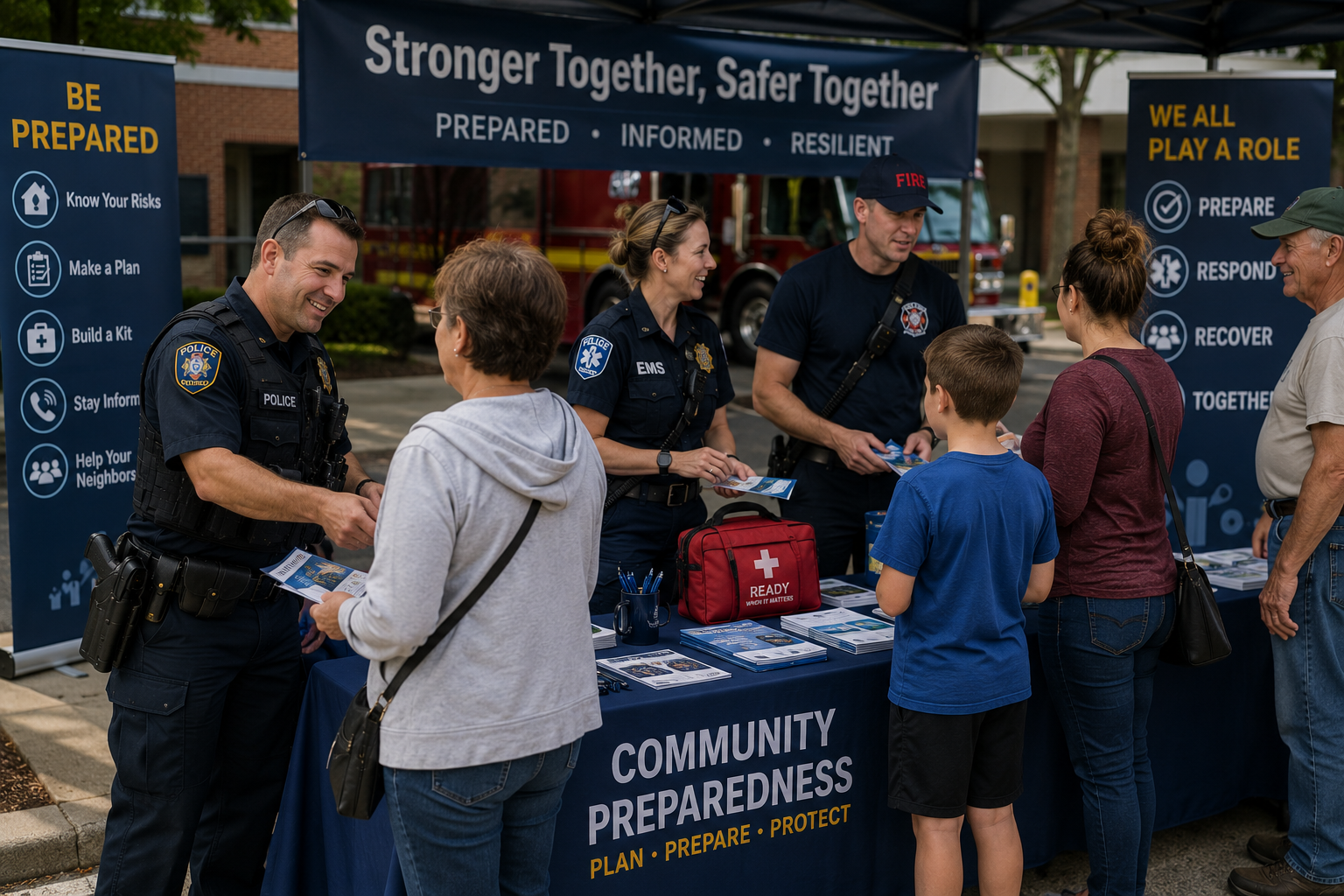
Preparedness also shapes public perception. Communities that respond effectively, communicate clearly, and recover visibly build trust. CSR contributes to this trust by improving coordination and reducing visible confusion during crises. When agencies act coherently, the public experiences response as purposeful rather than chaotic.
This confidence has downstream benefits. Communities are more likely to engage in preparedness initiatives, support responder funding, and participate in resilience-building activities. Preparedness thus becomes a shared responsibility rather than an abstract professional function.
Measuring Preparedness Through Outcomes
CSR encourages communities to evaluate preparedness through outcome-based metrics rather than checklist compliance. Metrics such as time to medical access, coordination efficiency, responder safety, and recovery timelines provide meaningful indicators of preparedness strength.
Outcome-based evaluation reinforces accountability and guides improvement. It also allows communities to benchmark progress against their own history rather than against unrealistic external standards.
Conclusion
Enhancing community preparedness through the CSR approach represents a fundamental shift from rigid, resource-dependent models to adaptive, condition-based systems. CSR’s versatility allows communities to tailor response strategies to local realities, overcome resource limitations, and strengthen responder capability across disciplines.
By integrating preparedness, response, and recovery into a continuous framework, CSR improves immediate incident outcomes while supporting long-term safety and resilience. Communities become better equipped not because they acquire more resources, but because they apply existing resources more coherently.
In an era of complex threats and uneven capability, preparedness must be adaptable, sustainable, and grounded in reality. The CSR approach offers communities a practical pathway to achieve those goals—enhancing readiness today while building resilience for tomorrow.