
Evaluating Military Tactics for Civilian High-Threat Environments
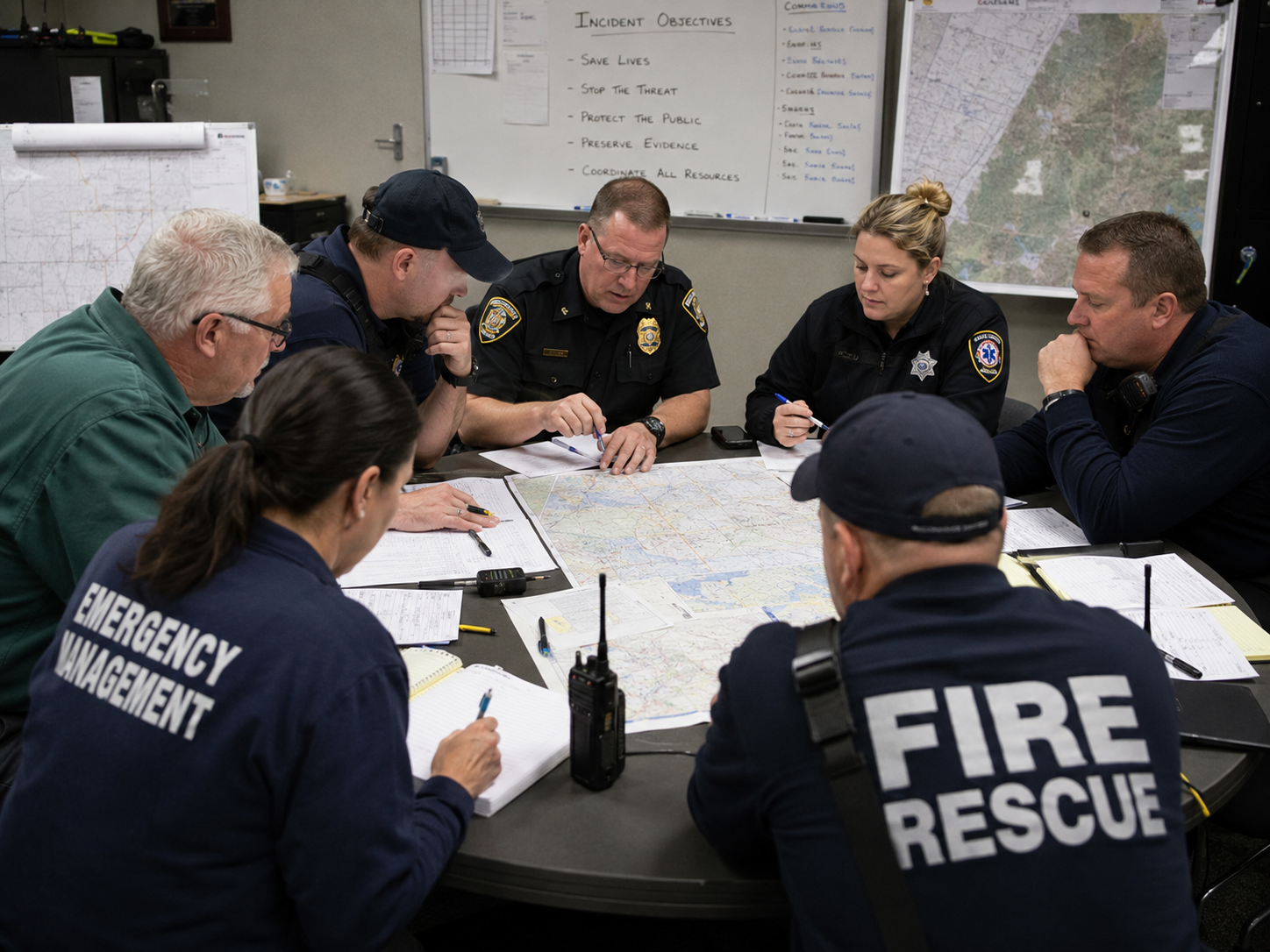
Evaluating Military Tactics for Civilian High-Threat Environments: Adapting Doctrine Without Importing Risk
Decisive action saves lives—but only when it fits the environment in which it is used. In civilian high-threat incidents, particularly active shooter events, agencies often draw from military tactics because they promise speed, clarity, and control under fire. Yet tactics forged for combat do not arrive neutral; they carry assumptions about authority, staffing, risk tolerance, and mission scope. When these assumptions are imported without adaptation, they can undermine the very outcomes civilian response seeks to achieve: life preservation, rapid medical access, lawful control, and community safety.
The central claim of this analysis is precise: military tactics must be evaluated—not replicated—before application in civilian high-threat environments. Using the science of listener attention—front-loaded relevance (primacy), structured cognitive chunking, progressive emphasis, repetition with variation, and continuous relevance anchoring—this essay explains how agencies can critically assess military-derived methods, adapt them to civilian realities, and implement only those tactics that demonstrably support life safety and coordinated response.
Primacy: Why Evaluation Comes Before Adoption
Front-loading relevance matters because adoption without evaluation is fast—and dangerous. Early civilian tactical concepts rightly borrowed from military doctrine to address emerging threats; however, the threat landscape and civilian missions have evolved. Active shooter response now requires simultaneous objectives: threat disruption, casualty protection, medical access, scene control, and lawful accountability. Tactics that accelerate one objective while obstructing others are misaligned by design.
Evaluation is therefore not hesitation; it is risk management. Agencies that evaluate tactics before adoption move faster when it matters because they have already resolved conflicts between speed and access, control and care.
Structured Evaluation Unit 1: Origins and Inheritance
Many civilian tactics originate from military doctrine because both domains confront armed violence under time pressure. Military methods encode lessons learned at high cost, and their influence has improved decisiveness in early response. Yet inheritance without translation embeds contextual debt—unexamined assumptions that surface under stress.
Inherited assumptions commonly include:
Centralized authority with immediate compliance
Homogeneous training and equipment
Broad rules of engagement
Acceptance of elevated risk to accomplish objectives
Civilian systems differ. Authority is distributed, teams are mixed, rules of engagement are constrained, and life preservation—across victims, responders, and bystanders—is paramount. Evaluation begins by surfacing these inherited assumptions and testing their compatibility with civilian missions.
Structured Evaluation Unit 2: Legal Authority and Rules of Engagement
Legal authority is not an implementation detail; it is a hard boundary. Military tactics often presume authorities that civilian responders do not possess. Before adoption, agencies must ask whether a tactic:
Requires detention, movement, or force authorities beyond policy
Presumes permissive engagement thresholds
Risks constitutional violations under stress
A tactic that cannot be executed lawfully under civilian rules is not adaptable—it is inadmissible. Evaluation here prevents operational success from becoming legal failure, preserving legitimacy alongside effectiveness.
Structured Evaluation Unit 3: Staffing Reality and Sustainability
Military tactics frequently presume depth: multiple elements, sustained overwatch, and rotation. Civilian agencies often operate with limited staffing, particularly in the first minutes. A tactic that monopolizes personnel may succeed tactically while starving casualty protection or command functions.
Evaluation questions include:
Does this tactic free personnel for parallel objectives?
Can it be sustained with realistic staffing levels?
Does it scale down without breaking?
Repetition with variation reinforces the lesson: a tactic that consumes all hands delays care. Adaptation favors methods that create space—operational and human—for medical access and coordination.
Structured Evaluation Unit 4: Mission Scope and Civilian Outcomes
Military missions prioritize enemy defeat; civilian missions prioritize life safety and community restoration. Evaluation must therefore center outcomes, not aesthetics. Agencies should assess whether a tactic:
Enables early casualty identification and protection
Supports interior CCP placement and safe corridors
Preserves command clarity and interagency coordination
If a tactic accelerates movement but delays hemorrhage control, it is misaligned. If it clears space without enabling care, it is incomplete. Evaluation reframes success around who survives, not only how quickly movement occurred.
Structured Evaluation Unit 5: Area Security, CCP Placement, and Medical Access
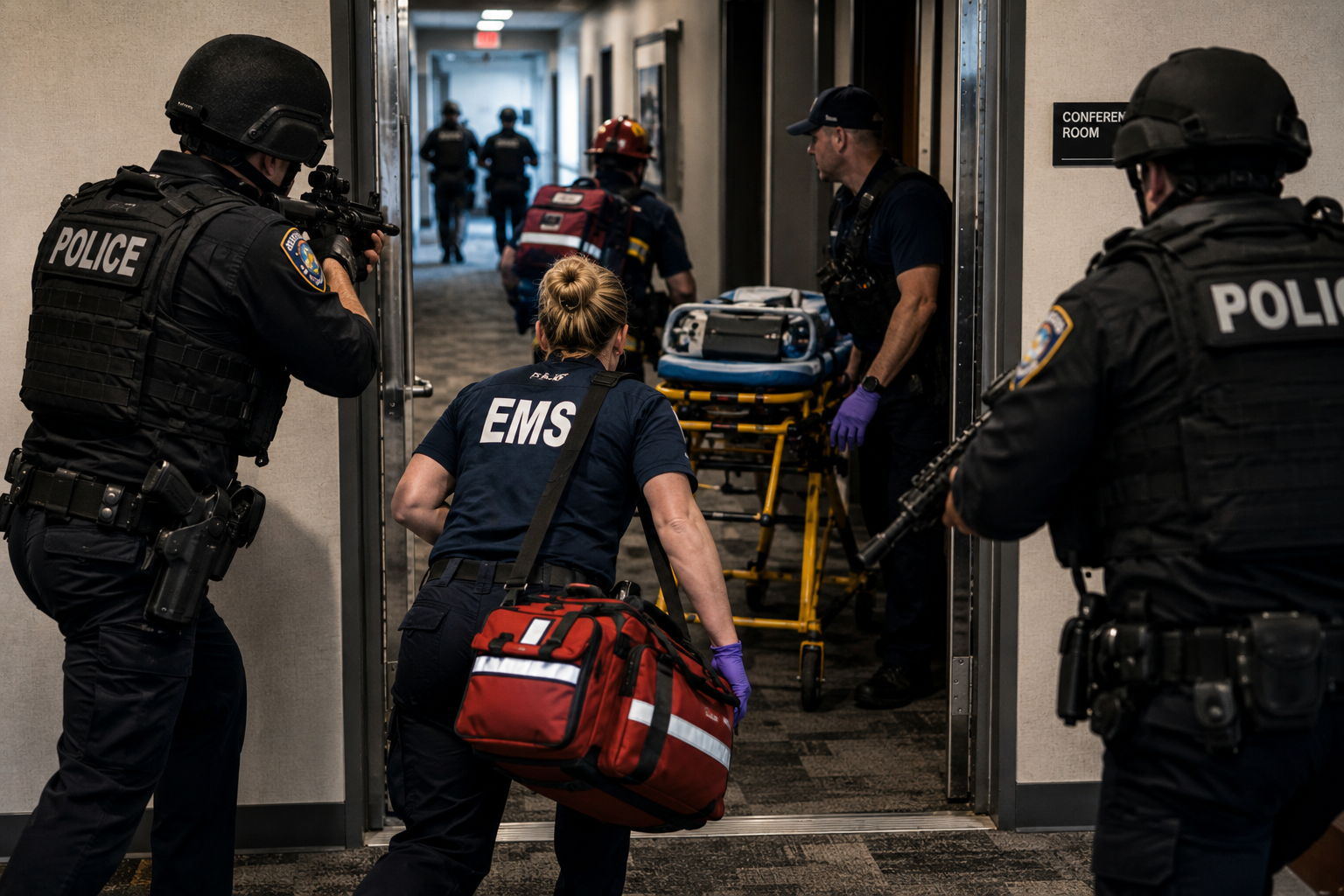
Civilian high-threat response hinges on where care occurs. Tactics that push all activity outward may inadvertently force CCPs beyond survivable distances. Evaluation must test whether a tactic supports:
Interior or proximate CCPs under protection
Predictable evacuation corridors
Continuous reassessment of access as conditions evolve
Continuous relevance anchoring keeps attention on physiology: minutes without hemorrhage control are decisive. Tactics that do not shorten time-to-care fail the life-safety test, regardless of their tactical pedigree.
Structured Evaluation Unit 6: Interagency Compatibility
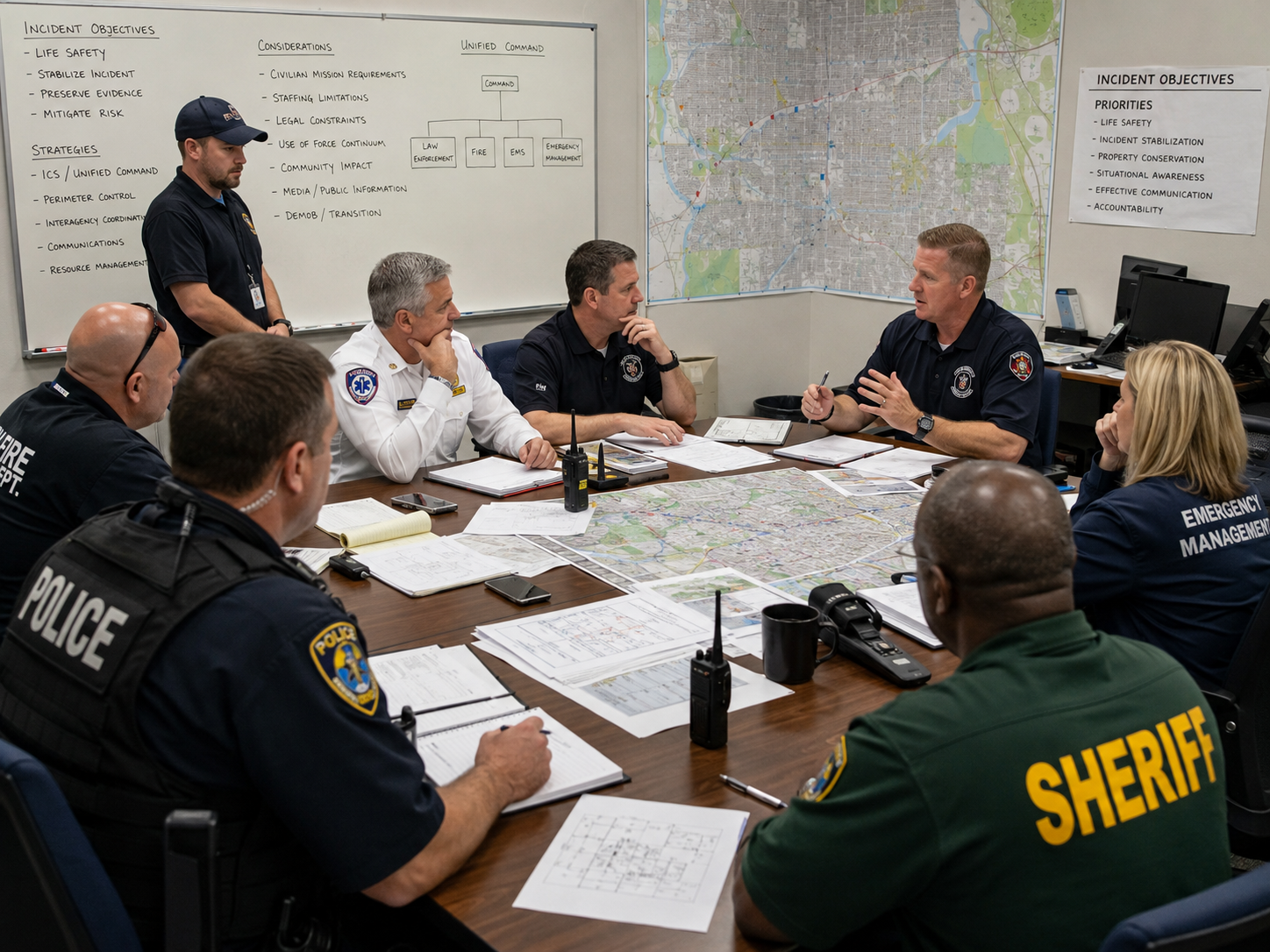
Military tactics often assume a single doctrine and command. Civilian response is interagency by necessity. Evaluation must examine how a tactic interfaces with fire, EMS, and emergency management:
Does it create shared situational awareness or fragment it?
Are terminology and cues unambiguous across disciplines?
Can medical teams integrate early without coercion or confusion?
A tactic that cannot be communicated clearly across agencies degrades Unified Command. Evaluation ensures methods are communicable, not just executable.
Progressive Emphasis: Evidence Over Emulation
As evaluation deepens, emphasis shifts from lineage to evidence. Agencies should ask: What does the data show about outcomes when this tactic is adapted? Evidence may include after-action reviews, controlled exercises, and comparative analyses of time-to-care and casualty outcomes.
Evidence-based adaptation avoids the trap of emulation—copying methods because they are respected rather than because they work here. Repetition with variation across scenarios builds confidence that a tactic improves outcomes under diverse civilian conditions.
Structured Evaluation Unit 7: Adaptation Techniques That Preserve Intent
Adaptation is not dilution; it is translation. Effective techniques include:
Function-based language replacing slogans
Role-specific permissions aligned to policy
Decision nodes that trigger medical access early
Scaled options for low-staffing realities
These techniques preserve intent—speed, control, decisiveness—while aligning execution with civilian constraints. The result is decisiveness without drift.
Structured Evaluation Unit 8: Training for Evaluation, Not Memorization
Evaluation must be trained. Scenario-based exercises should force teams to justify tactical choices against civilian outcomes: access, care, legality, coordination. After-action reviews should examine not only what happened, but why a tactic fit—or failed—the mission.
This training embeds evaluation as a habit. Under stress, responders fall to the lowest mastered level of training; when evaluation is mastered, adaptation follows naturally.
Structured Evaluation Unit 9: Command’s Role in Tactical Selection
Command is the steward of adaptation. Leaders set criteria, authorize use, and enforce limits. Clear command intent—articulated early—prevents tactical fixation and accelerates transitions to care.
Command should require that proposed tactics answer four questions:
Is it lawful here?
Can we staff it now?
Does it enable early medical access?
Does it integrate across agencies?
If any answer is no, the tactic must be modified or rejected.
Repetition With Variation: The Life-Safety Test
Across legal review, staffing analysis, mission fit, and interagency compatibility, the same test recurs—stated differently to anchor attention: Does this tactic preserve life sooner and more reliably than alternatives? If not, its pedigree is irrelevant.
This repetition stabilizes decision-making under stress and prevents drift toward performative tactics that look decisive but delay outcomes.
Continuous Relevance Anchoring: Community Safety as the End State
Civilian response ends not with dominance, but with safety restored and trust preserved. Evaluation must therefore consider downstream effects: investigative integrity, public perception, and recovery. Tactics that complicate these phases impose hidden costs.
Anchoring relevance here ensures selection favors methods that shorten chaos, enable care, and smooth transition to stabilization and recovery.
Conclusion
Military tactics have contributed valuable lessons to civilian high-threat response—but value is realized only through evaluation and adaptation. Agencies must examine suitability against civilian legal authority, staffing realities, mission scope, interagency needs, and—above all—life safety outcomes.
Flexible, evidence-based analysis replaces direct replication. Function replaces jargon. Adaptation replaces assumption. When tactics are selected because they demonstrably enable area security, CCP placement, and early medical access, civilian response becomes faster, safer, and more humane.
In modern high-threat operations, the measure of tactical excellence is not where a method came from—but how many lives it helps save, how quickly, and at what cost.