Identifying the Gaps Between Theory and Practice in Tactical Emergency Medicine
Identifying the Gaps Between Theory and Practice in Tactical Emergency Medicine
Tactical emergency medicine exists at the intersection of violence, uncertainty, and time-critical physiology. In these moments, theory is tested not in classrooms or policy documents, but under fire, noise, chaos, and incomplete information. While contemporary response frameworks articulate sophisticated principles for active shooter and high-threat medical response, repeated after-action reviews demonstrate a persistent and consequential gap between what doctrine prescribes and what responders are able to execute in the field. This gap is not abstract. It is measured in delayed hemorrhage control, missed opportunities for early intervention, and preventable deaths.
The purpose of this analysis is to identify and examine the disconnect between theoretical models of tactical emergency medicine and their practical application during real-world high-threat incidents. By analyzing how high-stress environments expose doctrinal weaknesses, role ambiguity, and insufficient tactical-medical integration, this discussion argues that current frameworks often fail not because responders lack competence, but because theory does not sufficiently reflect operational reality. Closing this gap requires a shift toward models grounded in field-tested, condition-driven practice rather than idealized assumptions.
The Overreliance on Theoretical Response Models
Modern tactical emergency medicine doctrine is heavily influenced by theoretical constructs designed to impose order on chaos. These models emphasize sequential phases, clear role delineation, and conditional safety thresholds intended to protect responders while enabling care. In controlled or predictable environments, such models offer clarity and consistency. In dynamic, high-threat incidents, however, their assumptions often fail.
Theoretical frameworks tend to presume that environments stabilize before medical operations begin, that command structures mature quickly, and that agencies can transition cleanly from one phase of response to the next. In reality, active shooter incidents rarely afford such structure. Threats may be mobile, ambiguous, or already concluded by the time responders arrive. Casualties accumulate before medical assets are positioned. Decisions must be made without confirmation, and waiting for ideal conditions often results in missed survivability windows.
When theory prioritizes procedural correctness over temporal relevance, it becomes misaligned with the realities of tactical medicine. The framework may remain internally consistent while failing externally—where outcomes matter most.
Stress as the Catalyst for Doctrinal Failure
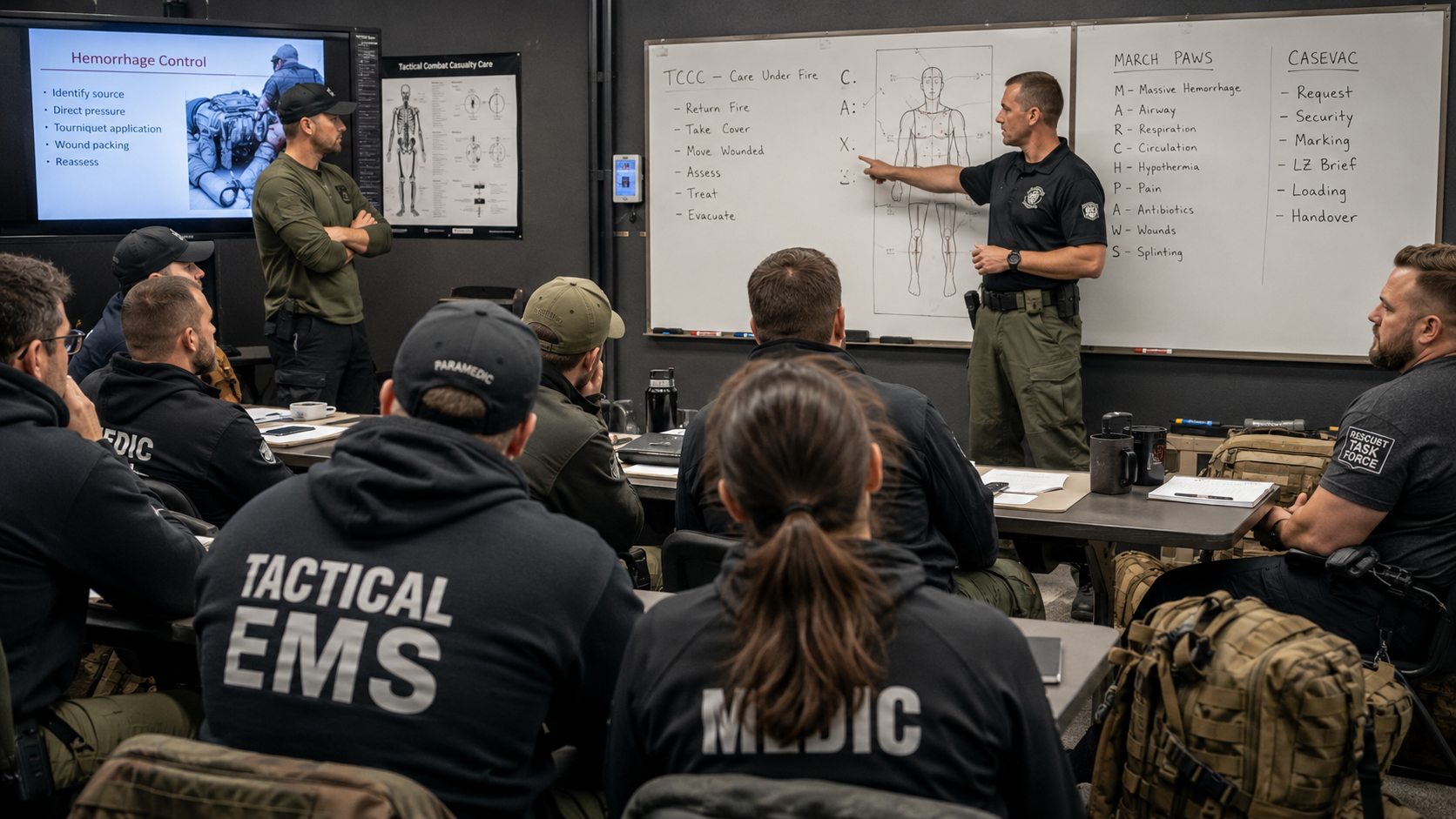
High-stress incidents expose the fragility of theory more effectively than any academic critique. Under extreme stress, responders experience cognitive narrowing, time distortion, and reduced working memory. In these conditions, they do not execute complex theoretical models; they default to ingrained habits and the simplest available decision pathways.
When doctrine requires nuanced interpretation, layered authorization, or ideal sequencing, it becomes functionally inaccessible under stress. Responders are left to improvise, often reverting to conservative defaults such as staging, waiting for clearance, or deferring action to another agency. These behaviors are not failures of discipline; they are predictable human responses to doctrinal overload.
The theory–practice gap widens most dramatically when frameworks assume responders will perform optimally under conditions that neuroscience and human factors research show reliably degrade performance.
Role Ambiguity and Its Impact on EMS and Fire Operations
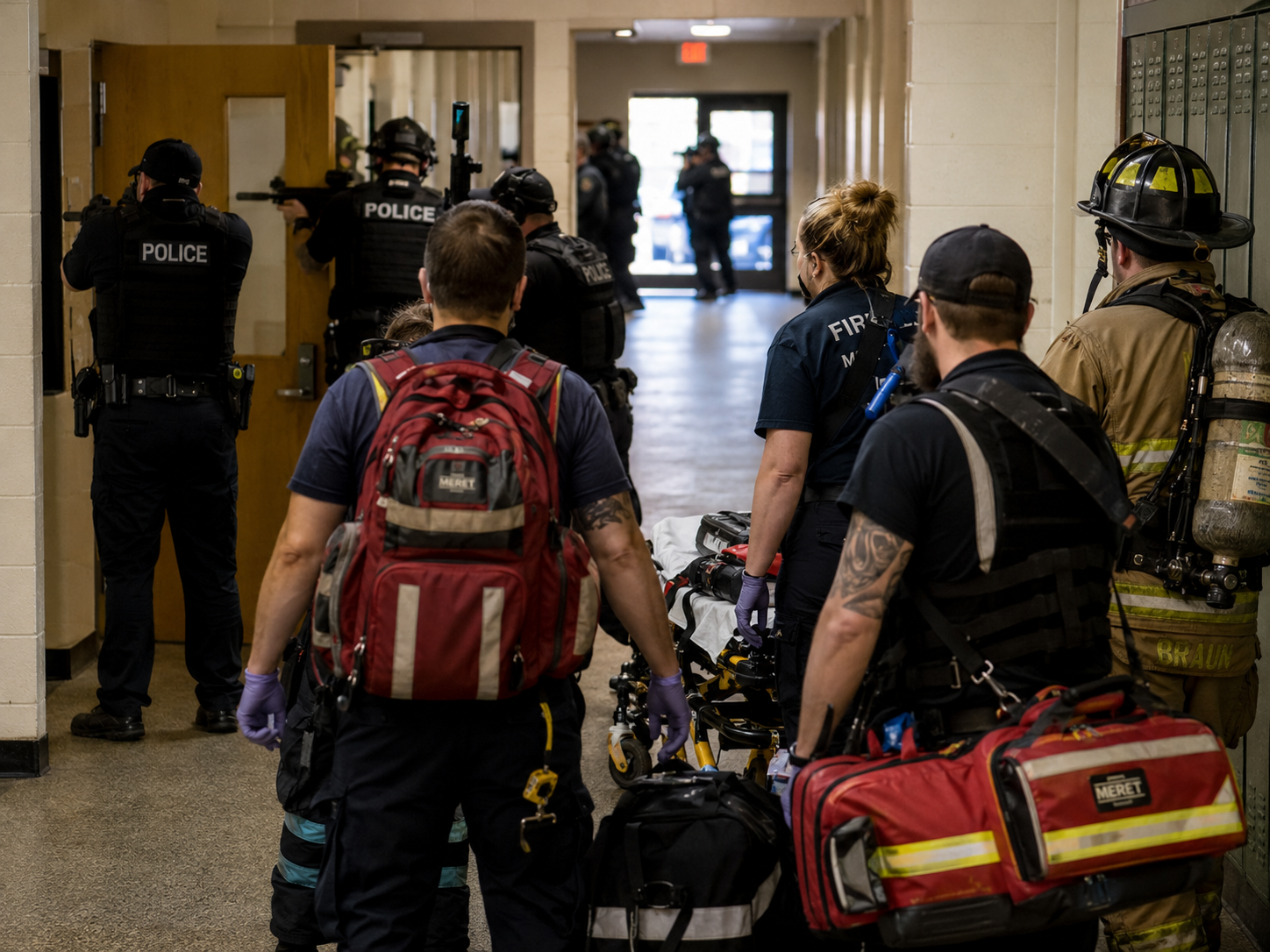
EMS and fire services are particularly affected by the disconnect between theory and practice. Many response frameworks acknowledge their role in active shooter incidents but fail to clearly define when and how these roles should be executed under threat-mitigated conditions. As a result, EMS and fire personnel often arrive prepared to act but uncertain about their authority, timing, and acceptable level of risk.
This ambiguity produces operational paralysis. EMS may possess the skills and equipment to save lives but lack doctrinal permission to move forward. Fire personnel may be capable of extraction or support operations but remain sidelined due to unclear integration with law enforcement tactics. In practice, these agencies are present but underutilized during the most critical minutes of an incident.
Theoretical models that treat EMS and fire as downstream assets fail to account for their potential contribution to early intervention. This omission is not accidental—it reflects a model built around linear safety progression rather than concurrent life-saving necessity.
Insufficient Tactical Integration as a Structural Barrier
A recurring theme in tactical emergency medicine failures is insufficient integration between medical and tactical operations. Many frameworks describe coordination as a goal but do not operationalize it. Tactical plans and medical plans are developed separately, trained separately, and executed sequentially. Integration is expected to occur organically during the incident.
This expectation is unrealistic. Integration under stress requires prior alignment, shared language, and rehearsed coordination. Without these elements, responders are forced to negotiate roles and boundaries during crisis, consuming time and cognitive bandwidth.
The absence of embedded medical considerations in tactical planning results in predictable delays. Clearing operations may prioritize spatial control without regard to casualty access. Command decisions may focus on threat metrics without integrating medical urgency. These outcomes are not the result of poor intent, but of frameworks that do not structurally require synchronization.
Medical Delays and Their Impact on Survivability
The most tangible consequence of the theory–practice gap is delayed medical care. Trauma literature consistently demonstrates that survivability in penetrating trauma is highly time-dependent. Uncontrolled hemorrhage, airway compromise, and tension pneumothorax progress rapidly from survivable to fatal without intervention.
Despite this knowledge, many response models still delay organized medical care until scenes are declared safe or fully controlled. In practice, this delay often extends beyond the incident itself. By the time doctrine permits medical access, the opportunity for meaningful intervention has passed.
These delays are not isolated incidents; they recur across jurisdictions and event types. The pattern reveals a systemic failure to reconcile medical urgency with tactical uncertainty. Theory prioritizes responder safety in absolute terms, while practice reveals that delayed care carries its own lethal risk.
Repeated Failure to Synchronize Medical Access and Threat Management
Analysis of recent active shooter incidents reveals a consistent inability to synchronize medical access with threat management. Law enforcement may successfully disrupt or neutralize the threat, yet medical access lags due to staging requirements, command confusion, or doctrinal hesitation. In other cases, medical teams are prepared to move but lack tactical escort or clear authorization.
This desynchronization reflects a deeper conceptual flaw: the assumption that threat management and medical care are sequential rather than parallel. In reality, they must advance together. Threat mitigation creates opportunities for care, and care considerations inform tactical priorities.
Frameworks that fail to mandate this synchronization leave it to chance. When integration depends on individual initiative rather than system design, outcomes become inconsistent and unreliable.
The Illusion of Safety in Theoretical Doctrine
A central tension in tactical emergency medicine theory is the pursuit of safety through delay. Many frameworks implicitly equate safety with absence of threat, encouraging responders to wait for certainty before acting. In dynamic threat environments, certainty rarely arrives in time.
This pursuit creates an illusion of safety that collapses under scrutiny. Delayed medical care increases mortality. Extended staging exposes responders to secondary threats. Crowded casualty scenes without intervention escalate chaos rather than reduce it.
Practical safety in tactical medicine is achieved through managed risk, informed movement, and coordinated action—not through waiting for ideal conditions. Theory that fails to acknowledge this reality misguides responders and undermines its own objectives.
Learning From Field Performance Rather Than Idealized Models
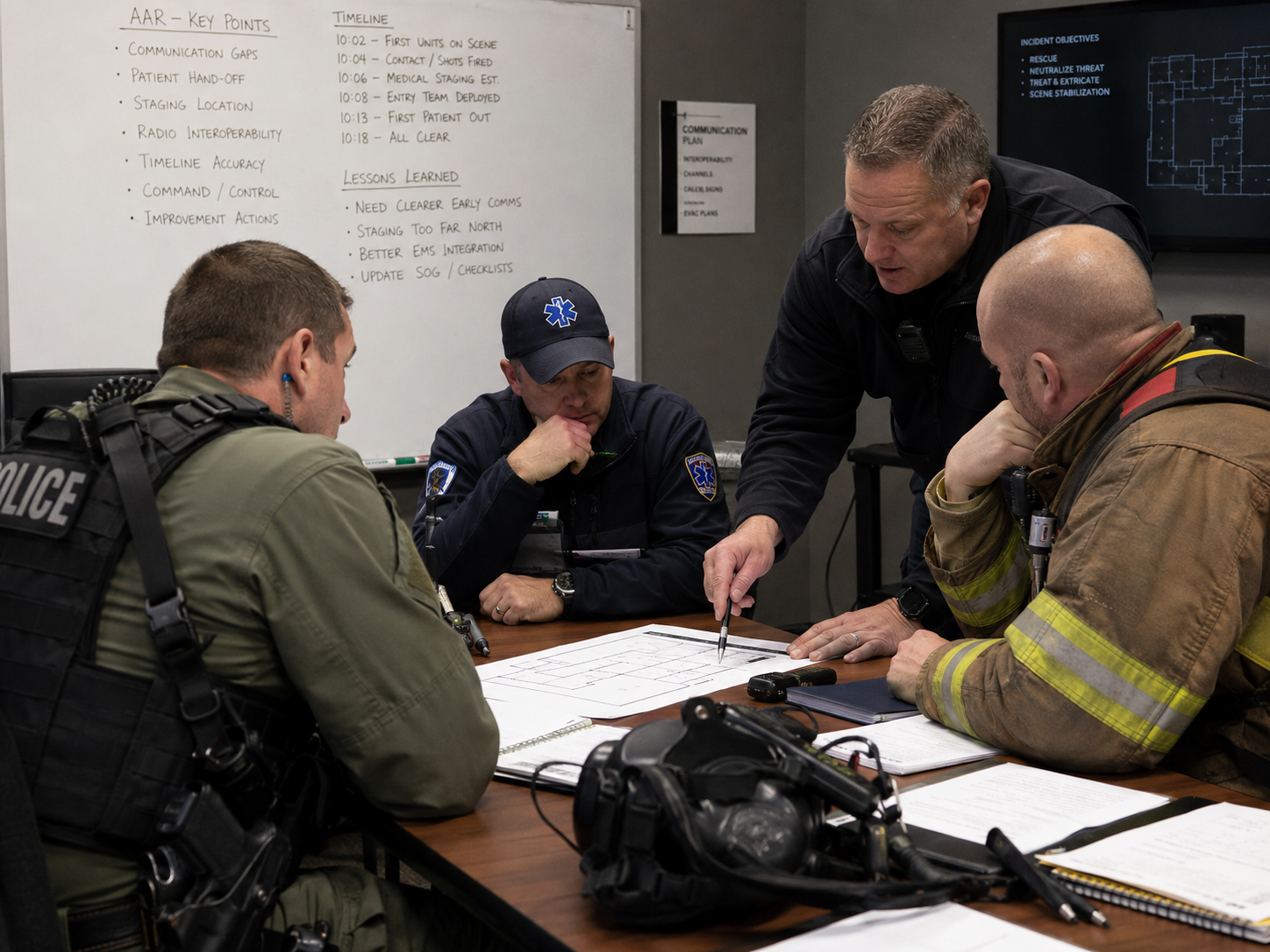
Bridging the gap between theory and practice requires a shift in how doctrine is developed. Rather than designing frameworks based on ideal conditions and then adapting them after failure, response models must be built from field performance outward. This approach prioritizes what responders can realistically execute under stress.
Field-tested methods emphasize simplicity, clarity, and adaptability. They accept uncertainty as a constant rather than an anomaly. They integrate medical and tactical considerations by default rather than exception. Most importantly, they align with how humans actually perform under pressure.
Doctrine grounded in practice does not abandon theory; it disciplines it. Theory becomes a tool for organizing experience rather than prescribing perfection.
Recognizing Gaps as a Prerequisite for Progress
Identifying the gap between theory and practice is not an indictment of responders or agencies. It is a necessary step toward meaningful improvement. As long as failures are attributed solely to individual decision-making or isolated leadership errors, systemic issues remain unaddressed.
Recognizing these gaps allows agencies to ask more productive questions:
Does our doctrine reflect how incidents actually unfold?
Are roles defined in ways that enable action under stress?
Does our model prioritize survivability timelines as much as procedural safety?
Answering these questions honestly creates space for reform grounded in reality.
Toward a Practical, Field-Driven Tactical Medical Model
The future of tactical emergency medicine depends on narrowing the distance between what is taught and what is possible. This requires frameworks that integrate medical access early, synchronize with tactical operations, and support human performance under stress.
Such models do not promise certainty or eliminate risk. They acknowledge complexity and provide responders with tools to navigate it effectively. By aligning doctrine with field-tested practice, agencies can move beyond aspirational models toward systems that consistently save lives.
Conclusion
The gap between theory and practice in tactical emergency medicine is not a minor discrepancy—it is a critical vulnerability. Overreliance on theoretical models that fail to reflect real-world complexity, combined with role ambiguity and insufficient tactical integration, produces predictable medical delays and preventable deaths during high-threat incidents.
High-stress environments expose these weaknesses with brutal clarity. Responders do not fail because they lack skill or resolve; they fail because doctrine does not support decisive, integrated action when it matters most. Recognizing and addressing these gaps is essential to developing response models grounded in practical, field-tested methods.
Only by questioning theory in light of practice can tactical emergency medicine evolve into a discipline that consistently aligns intent, action, and outcome—where doctrine supports reality rather than obscuring it.