
Impact on Interagency Coordination and Unified Command
Impact on Interagency Coordination and Unified Command: How Language Determines Whether Systems Converge or Fracture
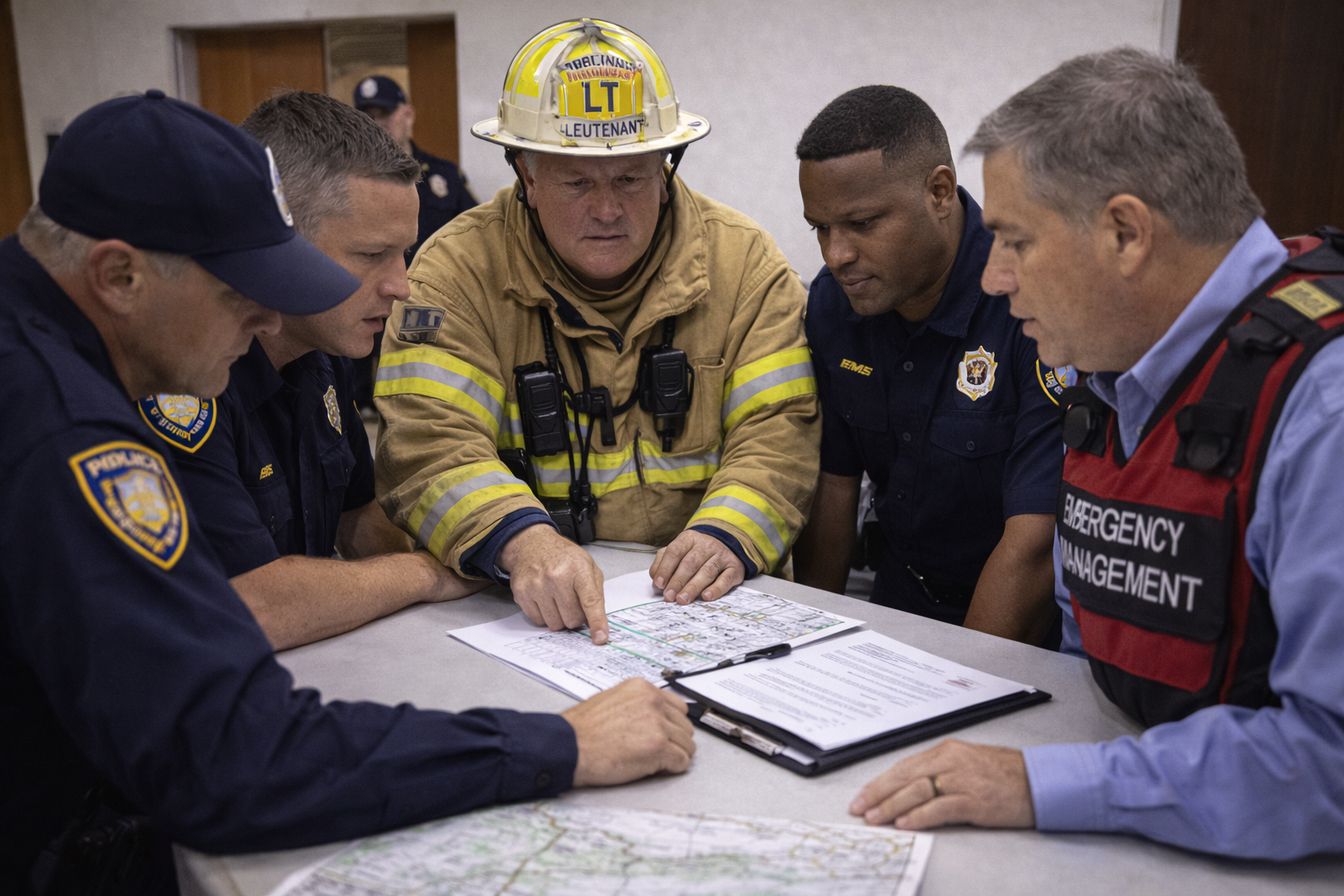
In high-threat incidents, Unified Command does not fail because agencies refuse to cooperate—it fails because they believe they already are. Meetings occur. Plans are briefed. The same words are spoken across radios and command posts. Yet actions diverge, timelines slip, and coordination erodes at the precise moment unity is required most. The hidden driver of this failure is often not personality, policy, or resources, but language. When agencies operate with inconsistent definitions, Unified Command becomes unified in name only.
The central argument of this analysis is direct: terminology alignment is a prerequisite for Unified Command effectiveness. When law enforcement, EMS, fire, and emergency management attach different meanings to the same operational terms, shared situational awareness collapses, communication degrades, and command shifts from proactive orchestration to reactive damage control. Applying the science of listener attention—front-loaded relevance (primacy), structured cognitive chunking, progressive emphasis, repetition with variation, and continuous relevance anchoring—this article explains how language misalignment undermines command cohesion and how disciplined terminology restores it.
Why Unified Command Depends on Shared Meaning
Front-loading relevance matters because Unified Command is fundamentally a communication system. Authority in Unified Command does not flow from rank alone; it flows from mutual understanding. Decisions are made collaboratively, but execution is decentralized. If the language used to convey intent is ambiguous, decentralization amplifies error rather than efficiency.
Unified Command assumes that when a directive is issued, all agencies interpret it through a common operational lens. When that assumption is false, coordination becomes illusory. The system appears synchronized until movement begins—then divergence becomes visible.
This is the core vulnerability: Unified Command cannot correct language errors in real time once operations are underway.
Inconsistent Definitions: The Silent Fracture
Inconsistent terminology fractures Unified Command quietly. Unlike overt conflict, language misalignment does not announce itself. Agencies believe they are aligned because they agree verbally, yet they act differently because their internal definitions differ.
Common examples include:
“Secure” interpreted as threat eliminated by law enforcement, environment safe by fire, and medical access authorized by EMS.
“Clear” interpreted as room searched, hazards mitigated, or visually inspected.
“Hold” interpreted as maintain position, pause movement, or delay entry pending clearance.
Each interpretation is reasonable within its own doctrine. The failure occurs when no shared definition exists across disciplines.
Repetition with variation reinforces the pattern: same words, different meanings, predictable fragmentation.
Communication Breakdown Under High Threat
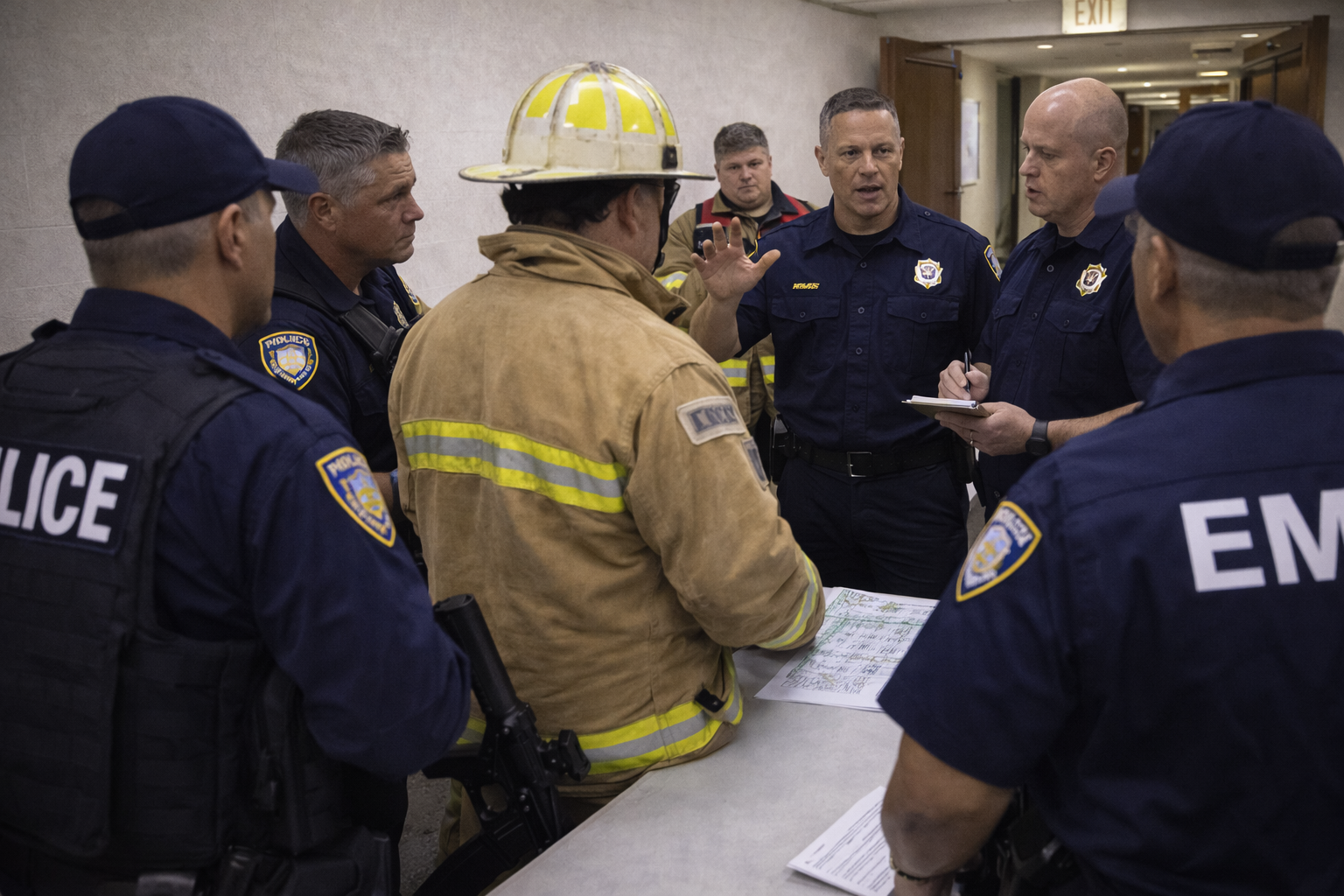
High-threat incidents compress time and cognition. There is little margin for clarification once operations begin. When terminology is misinterpreted, communication breakdowns occur not because radios fail, but because messages are decoded differently.
These breakdowns manifest as:
Law enforcement advancing while medical teams believe access is restricted.
EMS staging longer than necessary because “secure” was not operationally defined.
Fire services repositioning based on hazard assumptions not shared by command.
Each breakdown forces command to react—issuing corrections, pausing operations, or re-briefing under stress. Reactive command is slower, louder, and less precise than proactive coordination.
Continuous relevance anchoring underscores the risk: ambiguity consumes time, and time is the most finite resource in high-threat response.
Shared Situational Awareness: Language as the Foundation
Situational awareness is not simply knowing where people are; it is knowing what others believe about conditions. Shared situational awareness requires shared language. When terminology diverges, situational awareness fragments even when maps and updates are accurate.
Consider the cognitive load imposed on command when agencies report status using terms that mean different things. Command must mentally translate each update, infer intent, and reconcile discrepancies—all while managing the incident. This cognitive burden increases error likelihood and delays decision-making.
Listener attention science explains why this is dangerous: under stress, humans simplify. When language requires constant interpretation, simplification leads to assumption—and assumption leads to error.
From Coordination to Reaction: The Tempo Collapse
Unified Command is designed to set tempo, not chase it. When terminology is aligned, command can anticipate actions and allocate resources deliberately. When terminology is misaligned, command spends its energy correcting misunderstandings after they occur.
This shift from coordination to reaction has cascading effects:
Delayed tactical entry or medical access
Inefficient use of resources
Increased radio traffic and confusion
Erosion of confidence between agencies
The incident does not become unmanaged—it becomes under-managed, with command perpetually behind the operational curve.
Progressive emphasis clarifies the outcome: language misalignment converts planning advantages into execution liabilities.
Interagency Trust and the Cost of Conflicting Expectations
Unified Command relies on trust—not blind trust, but functional trust built on predictability. When agencies repeatedly encounter mismatched expectations, trust erodes. Teams begin to hedge, double-check, or delay action, anticipating that others may not interpret directives the same way.
This erosion is subtle but consequential. It manifests as:
Hesitation to act without explicit confirmation
Redundant verification steps
Reduced willingness to assume risk on shared understanding
Ironically, these behaviors slow operations even further, reinforcing the perception that Unified Command is inefficient—when the real issue is linguistic, not structural.
Why Experience Alone Does Not Fix the Problem
A common assumption is that experience resolves communication issues. In reality, experience can entrench divergent language habits. Agencies become proficient within their own silos, refining internal definitions that drift further apart over time.
Without deliberate interagency alignment, experience increases confidence without increasing compatibility. The same words are spoken more fluently—but still mean different things.
Repetition with variation emphasizes the lesson: time together does not guarantee shared meaning; shared doctrine does.
Terminology Alignment as a Command Function
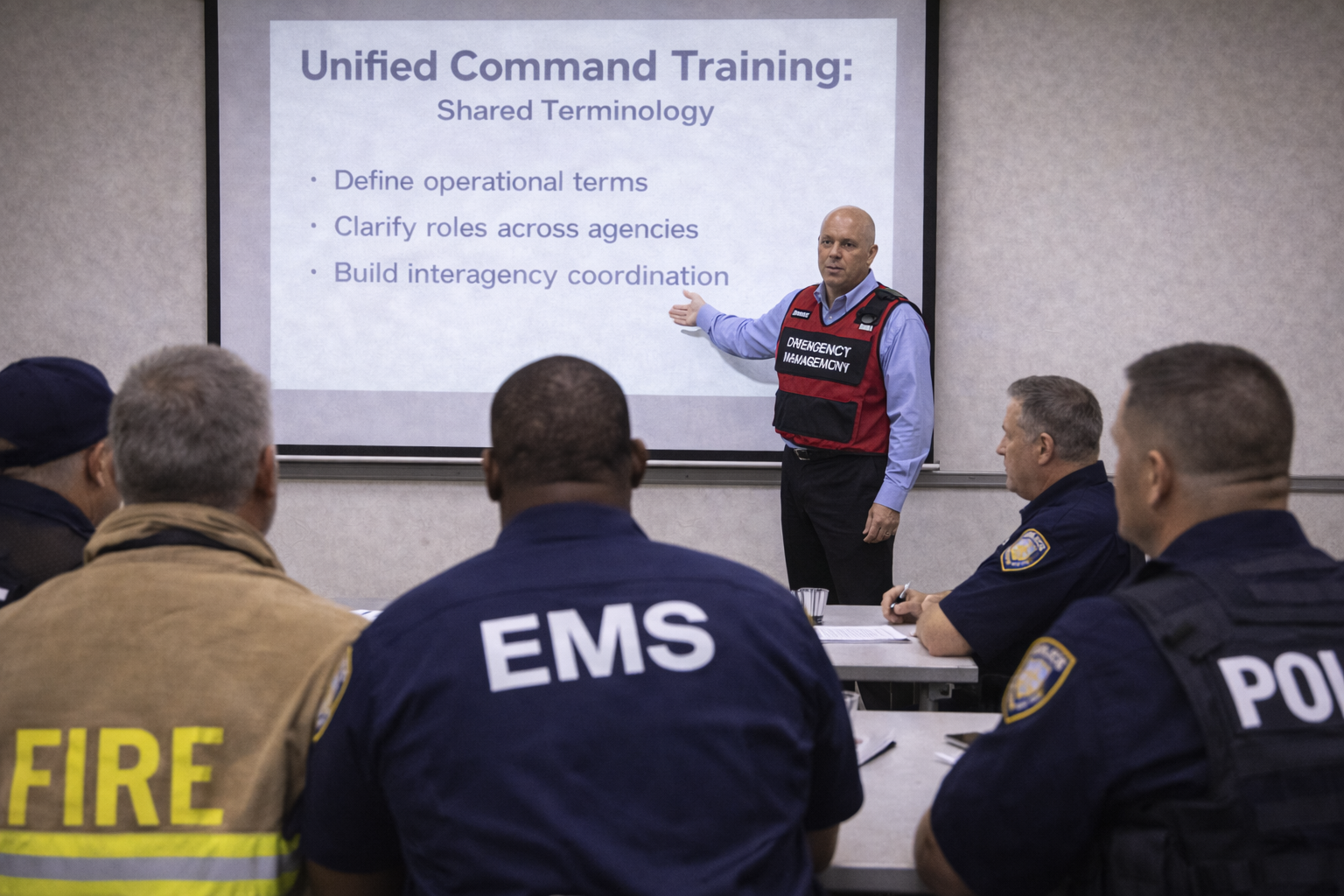
Correcting this problem requires treating terminology alignment as a command responsibility, not a training afterthought. Unified Command must establish and enforce shared operational language just as it establishes objectives and priorities.
This includes:
Defining key terms during incident planning and briefings
Documenting shared definitions in interagency SOPs
Correcting ambiguous language in real time
Reinforcing terminology discipline during exercises
When command clarifies language proactively, agencies can decentralize execution with confidence.
Training Unified Command to Speak Operationally
Unified Command training often emphasizes structure and roles but underemphasizes language discipline. Effective training must expose how terminology differences surface under stress and teach leaders to resolve them before incidents occur.
High-value training practices include:
Tabletop exercises focused on language interpretation
Scenario pauses to compare agency assumptions
After-action reviews that analyze communication failures at the word level
These practices normalize clarification and reduce stigma around asking for definition.
The Role of Emergency Management in Language Alignment
Emergency management agencies are uniquely positioned to facilitate terminology alignment. Their cross-disciplinary perspective allows them to convene agencies, identify language friction points, and codify shared definitions.
By anchoring terminology within ICS and Unified Command doctrine, emergency management helps ensure that coordination is built on shared meaning rather than assumed understanding.
Progressive Emphasis: Precision Enables Unity
Across all aspects of Unified Command, the same principle emerges repeatedly: precision enables unity.
Shared definitions enable shared intent
Shared intent enables coordinated action
Coordinated action preserves tempo and safety
Language is the connective tissue of Unified Command. When it is weak, the system tears under stress.
From Vocabulary to Cohesion: The Payoff of Alignment
When terminology is aligned, Unified Command functions as designed. Agencies anticipate one another’s actions. Medical access occurs when intended. Tactical movements complement rather than conflict. Communication becomes concise because meaning is already shared.
The payoff is measurable: faster decision cycles, reduced friction, and improved outcomes. Most importantly, responders spend less time reconciling language and more time executing mission-critical tasks.
Conclusion
Unified Command depends on shared language as much as shared authority. When agencies use inconsistent definitions, communication breaks down, situational awareness fragments, and coordination devolves into reaction. These failures are not caused by lack of professionalism, but by terminology misalignment embedded in training and culture.
By aligning terminology deliberately—through doctrine, training, and leadership discipline—public safety agencies can restore command cohesion and operational tempo. In high-threat incidents, unity is built word by word. Precision in language is not an academic exercise; it is the foundation of coordinated action.