
Medical Delays and Their Impact on Survival in High-Threat Events
Medical Delays and Their Impact on Survival in High-Threat Events
In high-threat incidents, survival is governed less by the eventual resolution of violence than by what happens in the minutes immediately following injury. Active shooter events, complex assaults, and targeted acts of violence compress time, amplify uncertainty, and create conditions in which physiology deteriorates far faster than response systems traditionally move. In this environment, medical delay is not a neutral pause—it is an active contributor to mortality. Yet many current response models continue to structure medical care as a downstream activity, activated only after threat neutralization and formal declarations of safety. This structural delay stands in direct contradiction to both trauma science and foundational EMS principles.
This analysis examines how medical delays affect survival during high-threat events and why those delays persist despite decades of evidence. By tracing the relationship between time-to-care, response doctrine, and operational decision-making, this discussion demonstrates that exclusion of medical personnel from early operations produces predictable, preventable deaths. The findings challenge the long-standing assumption that medical support must wait for complete scene security and argue instead for response models that integrate medical intervention alongside threat management.
Time as the Dominant Variable in Trauma Survival
Trauma research consistently identifies time as the most influential determinant of survival following severe injury. Uncontrolled hemorrhage, airway obstruction, and tension pneumothorax progress rapidly from survivable to fatal if not addressed promptly. Multiple studies demonstrate that each minute of delay in definitive intervention significantly reduces survival probability, particularly in penetrating trauma common to active shooter events.
These findings underpin core EMS doctrine: rapid hemorrhage control, early airway management, and expedited access to definitive care save lives. These principles are universally taught, widely accepted, and operationally reinforced in non-hostile environments. However, during high-threat incidents, the same principles are often suspended—not because they are invalid, but because doctrine prioritizes perceived safety over physiological urgency.
This contradiction places response systems at odds with their own foundational knowledge.
The Reality of Medical Access Timelines
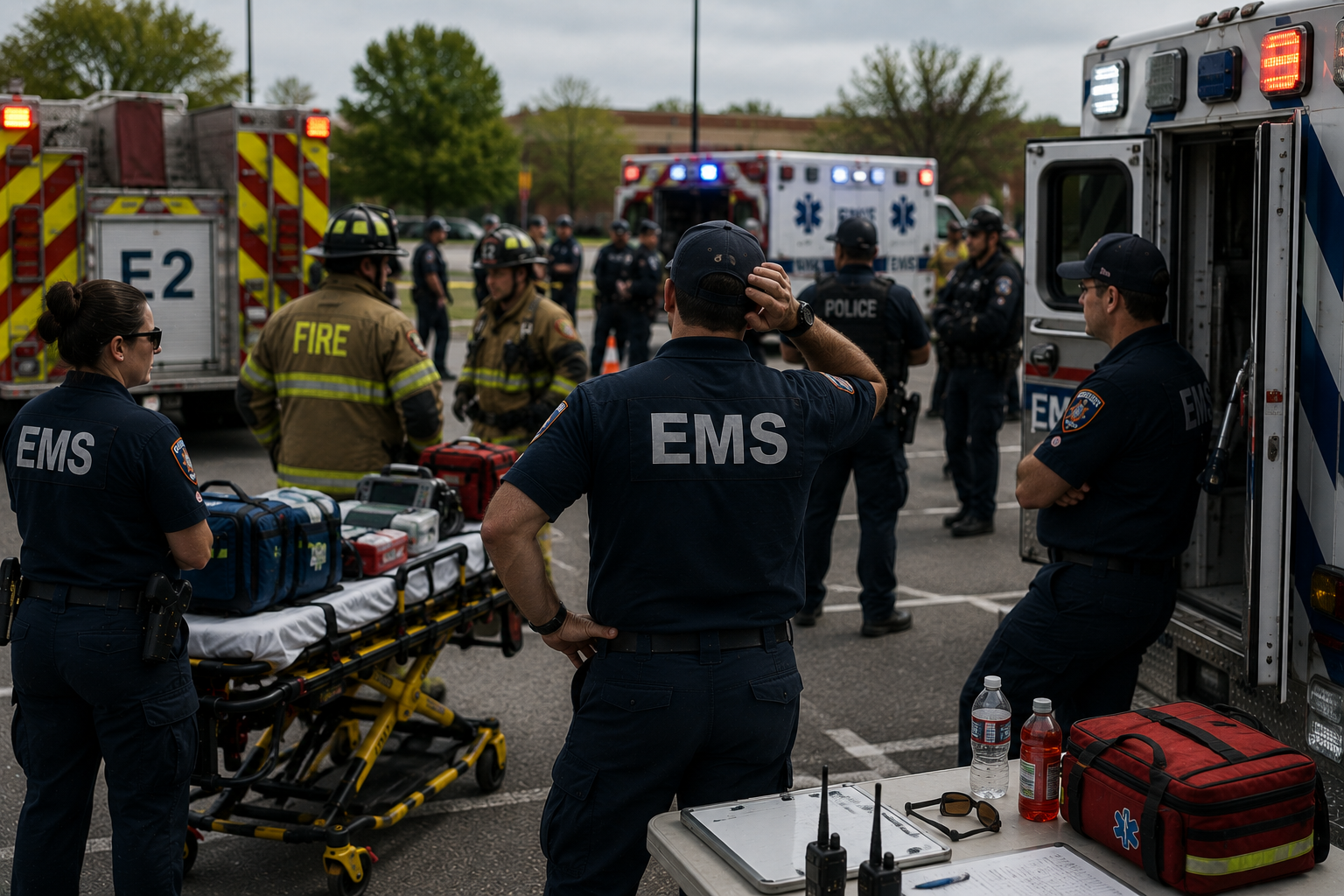
Despite recognition of time-sensitive injury, many high-threat response models average 20-30 minutes before medical professionals reach casualties. This interval is often longer in complex or multi-site incidents. During this time, injured individuals may receive no care, minimal first aid from bystanders, or delayed interventions from tactical personnel whose primary mission is threat control.
This timeline is incompatible with survivability curves for hemorrhage and airway compromise. Patients who could survive with early intervention deteriorate beyond salvageability long before medical access is authorized. By the time doctrine permits entry, the opportunity for meaningful care has often passed.
The persistence of these timelines suggests that delay is not incidental—it is structural.
Contradiction With Core EMS Principles
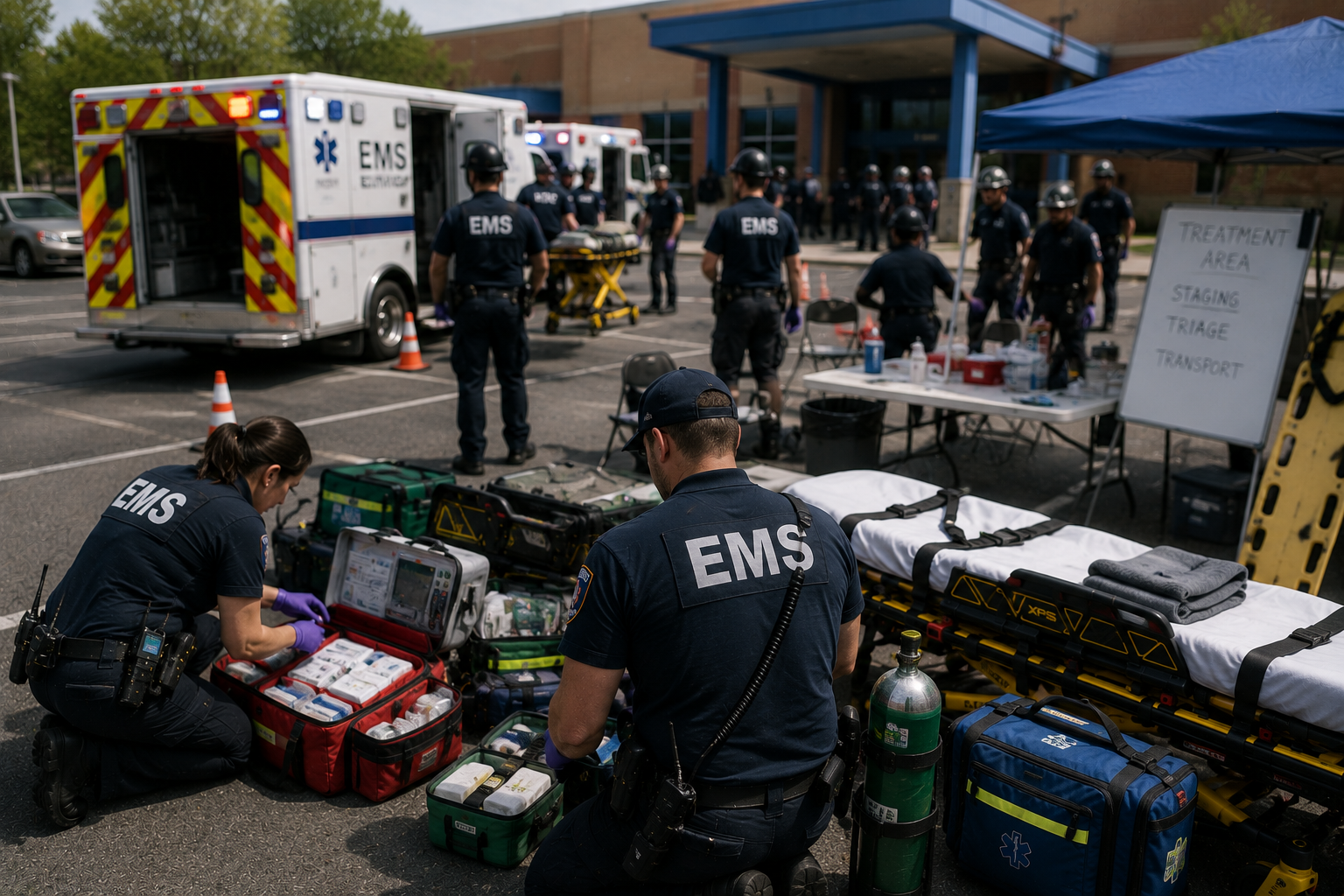
EMS doctrine emphasizes rapid access, early intervention, and continuous reassessment. These principles are reinforced through training, certification, and performance metrics. Yet during high-threat incidents, EMS personnel are frequently instructed to remain staged until scenes are declared secure—often without clear definition of what “secure” means operationally.
This instruction creates a fundamental contradiction. The same system that teaches “time is tissue” also enforces policies that knowingly extend time-to-care beyond survivable limits. The contradiction is not philosophical; it is operational. EMS principles are applied selectively, suspended when conditions are most hostile and need is greatest.
When doctrine requires EMS to violate its own principles, outcomes should not be surprising.
Exclusion of Medical Personnel From Active Operations
A defining feature of traditional high-threat response models is the exclusion of medical personnel from active operations. Medical care is treated as a consequence of safety rather than a co-equal operational priority. This exclusion is justified as risk mitigation but often results in greater overall harm.
Excluding medical personnel delays professional assessment, hemorrhage control, and airway management. It also deprives command of accurate casualty information, hindering prioritization and evacuation planning. Tactical teams may attempt basic interventions, but they are neither equipped nor positioned to manage multiple casualties effectively while maintaining threat focus.
The exclusion of medical personnel does not eliminate risk; it transfers it—from responders to casualties. This transfer is rarely acknowledged explicitly, yet it shapes outcomes decisively.
Tactical Focus and the Narrow Definition of Success
Traditional response models often define success primarily through threat neutralization. While stopping the attacker is essential, it is not sufficient. Casualties continue to die after the threat ends if medical care is delayed. When tactical success is not paired with medical integration, response systems achieve partial victories with catastrophic human cost.
Tactical teams trained to focus exclusively on threat engagement may lack the bandwidth, equipment, or authority to address evolving casualty demands. As a result, injured victims remain untreated while operations continue, even when threat activity has diminished or ceased.
This narrow definition of success reflects a conceptual gap in response doctrine—one that prioritizes ending violence without fully addressing its consequences.
The False Assumption of Sequential Safety
Underlying many medical delays is the assumption that safety must be achieved sequentially: first neutralize the threat, then provide care. In dynamic high-threat environments, this assumption rarely holds. Threats may relocate, self-terminate, or be misidentified. Absolute safety may never be confirmed during the critical early window.
Waiting for complete security in such environments often means waiting indefinitely. Meanwhile, casualties deteriorate. The assumption that medical support must wait for certainty ignores the reality that uncertainty is a permanent condition in active shooter events.
Effective response requires managing risk, not avoiding it. Models that equate safety with delay fail to account for the lethal risk of inaction.
Evidence From Incident Analysis
Analysis of recent active shooter incidents repeatedly reveals the same pattern: early tactical engagement followed by delayed medical access and preventable deaths. After-action reviews document casualties bleeding to death within reach of care, EMS resources staged nearby but inactive, and confusion over authority to initiate medical movement.
These findings are consistent across jurisdictions, threat types, and agency structures. The common denominator is not responder competence but response design. Systems that delay medical access produce delayed care.
The consistency of these outcomes suggests that improvement will not come from better individual performance alone, but from structural change.
The Physiological Cost of Waiting
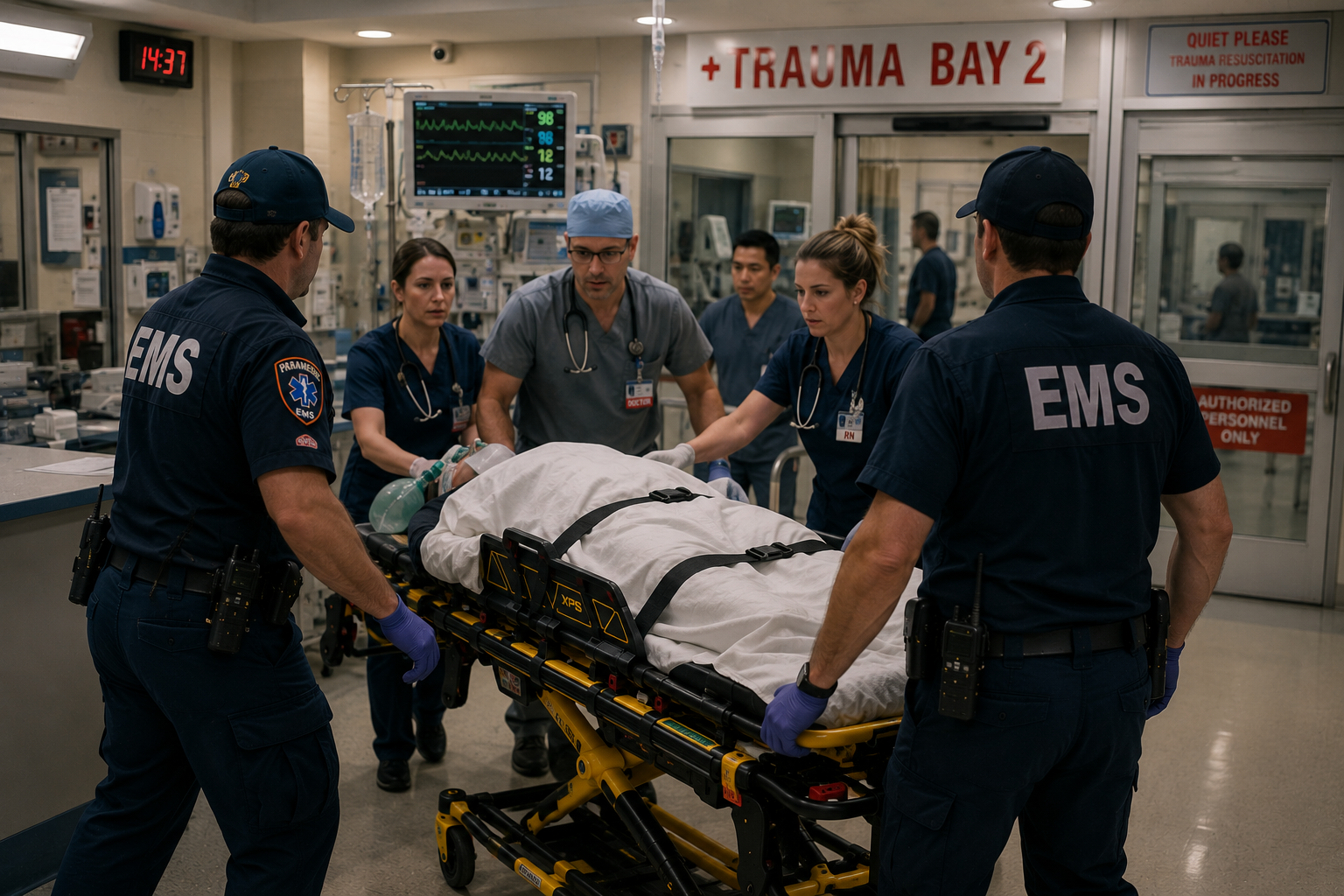
The physiological cost of delayed care is cumulative and irreversible. Hemorrhage leads to hypovolemia, coagulopathy, and shock. Airway compromise results in hypoxia and neurological injury. Even when victims survive, delayed intervention increases morbidity, length of hospitalization, and long-term disability.
These costs extend beyond individual patients. Families, communities, and healthcare systems absorb the consequences. Preventable deaths and severe injuries erode public trust and compound the psychological toll of violence.
Medical delay is therefore not merely a tactical issue; it is a public health failure.
Reframing Medical Access as an Operational Necessity
To reduce preventable deaths, medical access must be reframed as an operational necessity rather than a conditional privilege. This reframing requires integrating medical considerations into tactical planning from the outset. Casualty locations, access routes, and survivability timelines must inform movement and clearing priorities.
Such integration does not diminish tactical effectiveness. On the contrary, it enhances it by aligning operations with mission objectives that include life preservation. Early medical access supports faster stabilization, clearer command decisions, and more effective recovery operations.
When medical care is treated as co-equal with threat management, response systems function more coherently.
Addressing Risk Through Integration, Not Exclusion
Concerns about responder safety are legitimate and must be addressed. However, exclusion is not the only—or best—risk management strategy. Integrated models emphasize protection, coordination, and controlled movement rather than isolation. Medical personnel operate with tactical awareness and support rather than independent exposure.
This approach mirrors successful practices in other high-risk domains, where managed risk enables critical action without unacceptable loss. The alternative—delaying care until risk is eliminated—has proven untenable in high-threat medical response.
Aligning Doctrine With Trauma Reality
Ultimately, reducing medical delays requires aligning doctrine with trauma reality. The science of injury progression is not negotiable. Response models must accommodate it or accept predictable failure.
This alignment demands clear guidance on early medical integration, explicit authorization for movement under threat-mitigated conditions, and training that reflects real incident dynamics. It also requires redefining success to include survivability outcomes, not just threat resolution metrics.
Doctrine that ignores physiology in favor of procedural comfort undermines its own purpose.
Conclusion
Medical delays during high-threat events are among the most significant contributors to preventable death. Trauma research leaves no ambiguity: survival decreases dramatically with each minute of untreated injury. Yet many current response models institutionalize delays of 20-30–minutes before medical professionals reach casualties, directly contradicting core EMS principles.
Excluding medical personnel from active operations, prioritizing tactical success in isolation, and waiting for complete scene security all contribute to this failure. These practices persist not because evidence supports them, but because doctrine has not evolved to reflect modern threat realities.
The assumption that medical support must wait is no longer defensible. High-threat response models must integrate medical access early, manage risk deliberately, and align operational decision-making with survivability timelines. Until medical delay is recognized as a lethal variable rather than an acceptable byproduct of caution, preventable deaths will continue to define outcomes in active shooter events—not for lack of effort, but for lack of alignment between doctrine and reality.