
Operational Risks from Misuse of Military Language
Operational Risks from Misuse of Military Language: How Words Create Hazard in High-Threat Response
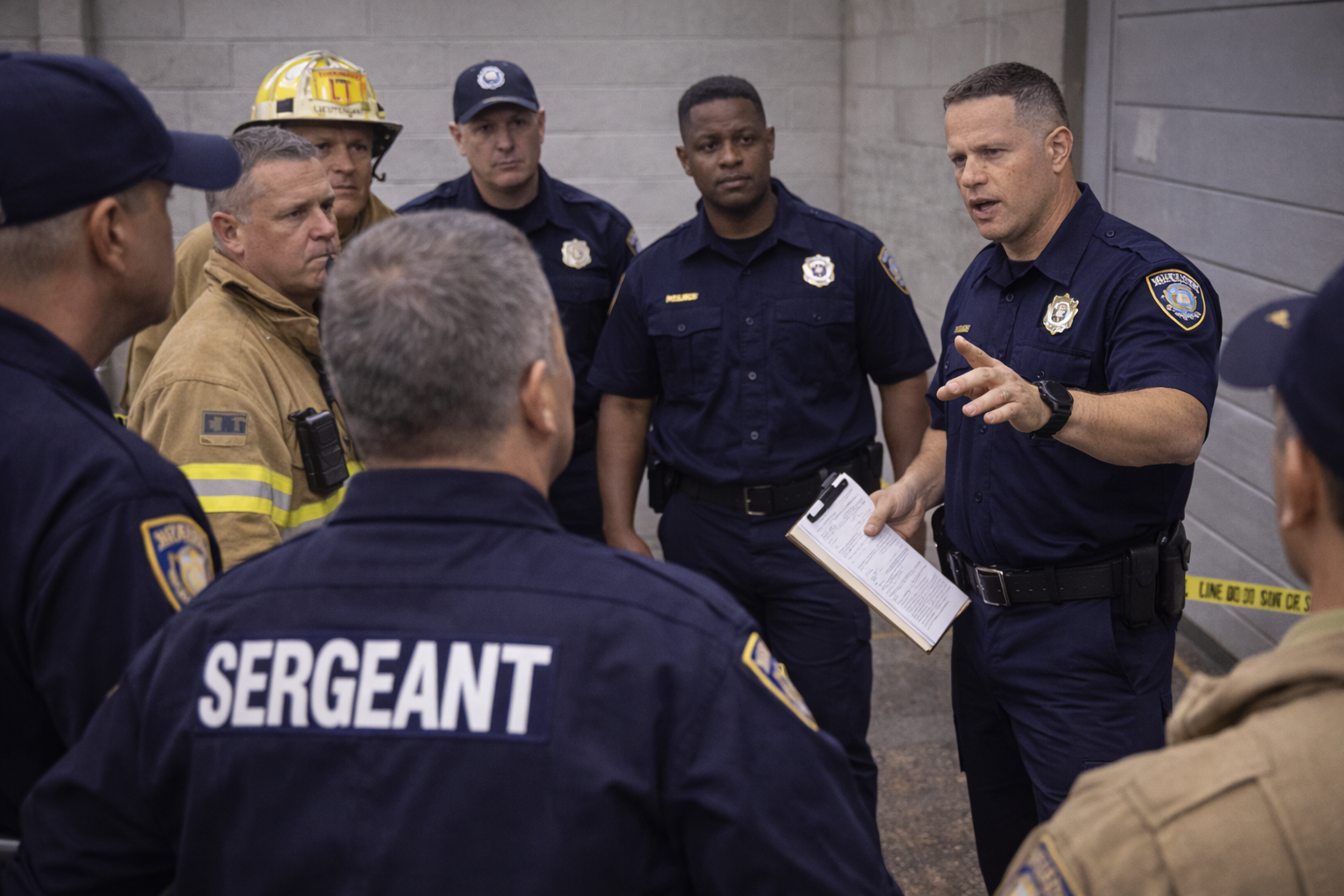
In high-threat incidents, language is an operational force multiplier—or a silent hazard. Words issued under stress do not remain abstract; they become instructions that shape movement, positioning, and risk acceptance in real time. When military terminology is misused in civilian public safety environments, it does not merely confuse communication—it reprograms behavior in ways that civilian systems are not designed to support. The result is predictable and dangerous: unsafe actions, degraded coordination, delayed care, and preventable injury.
The central argument of this analysis is clear: misapplied military language introduces operational risk by prompting actions that exceed civilian authority, training, and system design. Using the science of listener attention—front-loaded relevance (primacy), structured cognitive chunking, progressive emphasis, repetition with variation, and continuous relevance anchoring—this article demonstrates how misunderstood terminology drives tactical error, slows tempo, and undermines incident management during high-risk events.
Why Language Becomes a Safety Issue Under Stress
Front-loading relevance is essential: responders act on language faster than they analyze it. Under cognitive overload, words function as triggers, not topics for debate. When a term implies urgency, authority, or permission, responders move—even if the underlying conditions do not support that movement.
Military language is optimized for environments where:
Authority is centralized
Risk acceptance is explicit
Teams are uniformly trained
Roles and force options are standardized
Civilian EMS, fire, and law enforcement do not operate under these assumptions simultaneously. When military terms are used without translation, they import expectations that civilian systems cannot safely meet.
This is not a cultural critique; it is a systems mismatch.
Unsafe Actions Triggered by Misunderstood Terminology
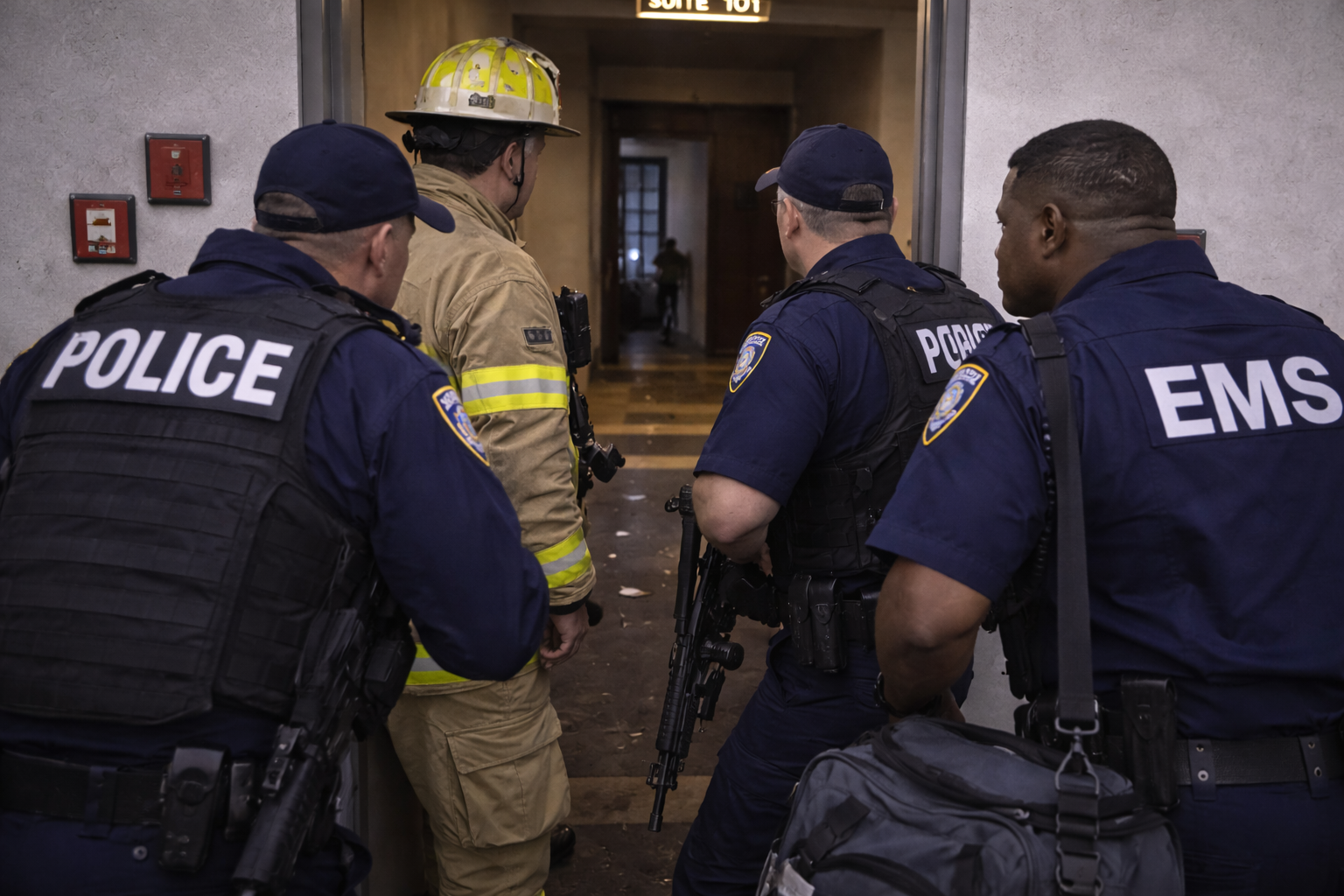
One of the most direct risks of misused military language is premature or unsafe movement. Terms that imply speed, dominance, or immediate action can prompt responders to advance into environments that are not controlled, assessed, or legally permissive.
Common unsafe outcomes include:
Movement into partially cleared or unsecured spaces
Improper positioning that exposes responders to fire or secondary hazards
Loss of cover or concealment due to misunderstood urgency
EMS or fire personnel entering zones without adequate protection
These actions are rarely reckless. They are often the result of good faith compliance with language that implied authorization.
Repetition with variation reinforces the pattern: unsafe movement is not caused by courage—it is caused by misdirected cues.
Overly Aggressive Interpretation Beyond Civilian Roles
Military terms often carry implicit aggressiveness that does not align with civilian responder roles. When these terms are adopted uncritically, civilian responders may feel pressure to act outside their scope, training, or mandate.
Examples include:
EMS attempting tactical positioning implied by military phrasing
Fire personnel interpreting “clear” or “secure” as permission to advance
Law enforcement assuming unified force authority that does not exist across agencies
This pressure is subtle but powerful. Language creates a performance expectation—and responders may conform even when they sense misalignment.
Progressive emphasis clarifies the risk: language can coerce behavior without issuing an order.
Confusion That Slows, Rather Than Speeds, Operations
Ironically, the misuse of military language often slows operational tempo, the opposite of its intended effect. When agencies interpret the same term differently, coordination fractures.
Operational delays emerge when:
One agency believes movement is authorized while another does not
Medical teams wait for conditions implied—but not defined—by terminology
Command must pause operations to reconcile conflicting interpretations
These pauses cost time during moments when minutes determine survivability. The delay is not logistical; it is semantic.
Continuous relevance anchoring is critical here: speed without shared meaning produces friction, not momentum.
Miscommunication at the Worst Possible Moments
High-threat incidents compress decision cycles. There is little opportunity to clarify intent once operations are underway. Misused terminology therefore has its greatest impact during the most time-sensitive phases.
Miscommunication manifests as:
Parallel actions that were never coordinated
Gaps in medical access due to assumed security
Overlapping or conflicting movements
Breakdown of trust between agencies mid-incident
Once miscommunication occurs under stress, correction is difficult. Responders default to their own interpretation rather than negotiate meaning in real time.
This is why language discipline must be established before incidents occur.
Reduced Operational Tempo Through Cognitive Load
Listener attention science explains another critical effect: ambiguous language increases cognitive load. When responders must interpret what a term really means in context, attention is diverted from threat recognition, patient care, or navigation.
Under stress, this cognitive burden produces:
Slower decision-making
Increased error rates
Tunnel vision
Hesitation or overcorrection
Clear, task-specific language reduces cognitive load by eliminating guesswork. Military language without translation does the opposite—it forces responders to decode under fire.
Direct Links to Preventable Injury and Delayed Care
The operational risks described are not abstract. They map directly to outcomes that matter:
Responders injured due to premature movement
Patients bleeding longer due to delayed access
Casualties deteriorating while agencies reconcile language
Command losing situational clarity
Each of these outcomes has appeared repeatedly in after-action reviews where language ambiguity was present but unaddressed. The injuries are labeled “unfortunate” or “unavoidable,” when in fact they were linguistically enabled.
Repetition with variation reinforces the conclusion: misused language converts preventable harm into accepted risk.
Why These Risks Persist Despite Experience
The persistence of this problem is not due to ignorance. It persists because military language carries perceived credibility. It sounds professional, decisive, and experienced. Challenging it can feel like challenging competence.
This creates a cultural barrier to correction. Responders may hesitate to ask for clarification for fear of appearing inexperienced. Leaders may hesitate to replace language that signals toughness.
Listener attention science highlights the danger: confidence triggered by language is not the same as capability enabled by doctrine.
Reframing Language as an Operational Control Measure
To reduce operational risk, language must be treated as a control measure, not a stylistic choice. Just as agencies control equipment, access, and movement, they must control terminology.
Effective controls include:
Prohibiting ambiguous or undefined terms in SOPs
Replacing slogans with task-oriented directives
Defining operational language in interagency training
Correcting misuse in exercises, not just incidents
This reframing elevates language from culture to safety system.
Training to Expose and Correct Risk
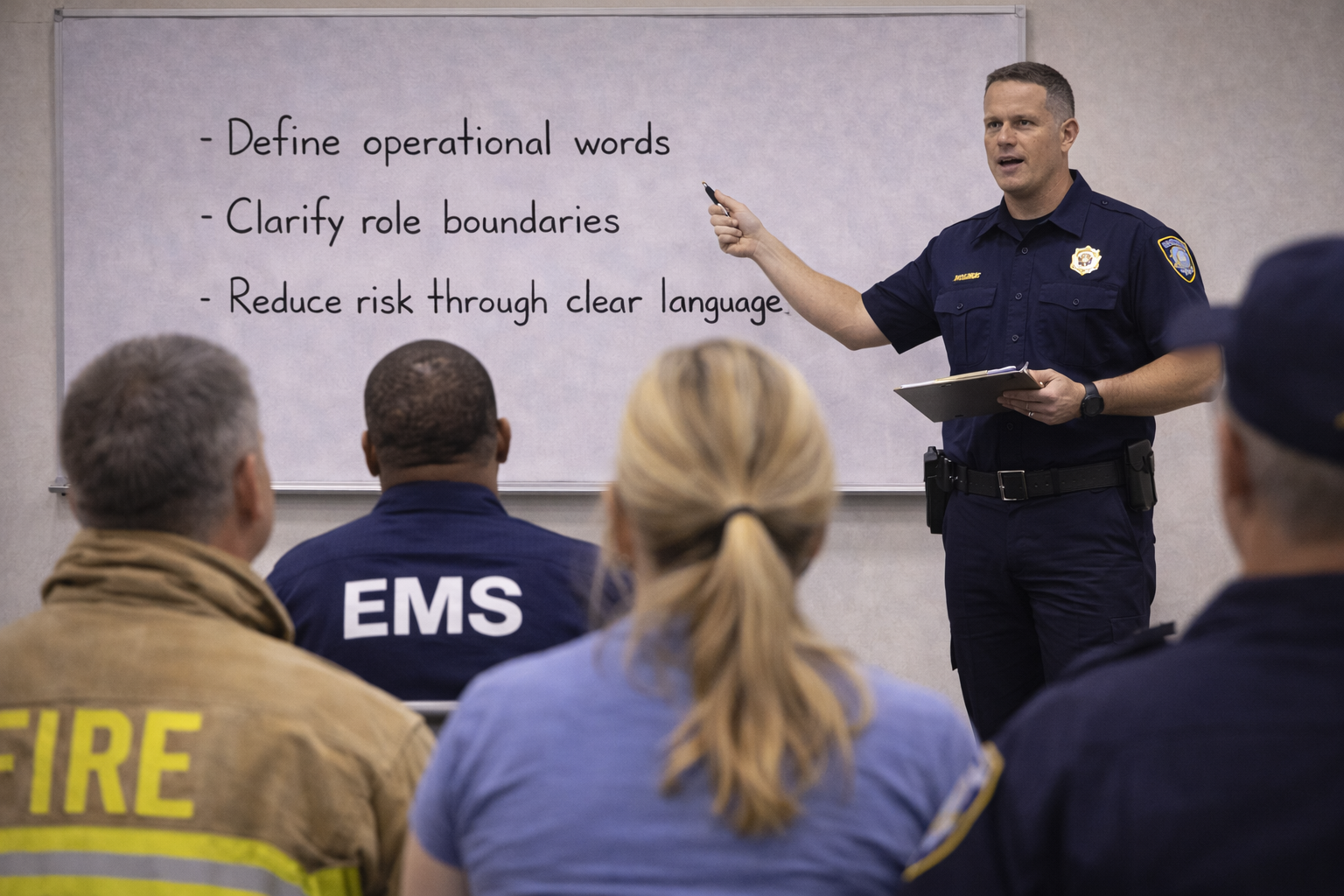
Training environments are the safest place to reveal how terminology creates risk. When scenarios deliberately test interpretation, agencies can observe divergence and correct it.
High-value training practices include:
Asking agencies to explain what a term authorizes for them
Freezing scenarios when language causes divergent actions
Conducting after-action reviews focused specifically on language
Repetition with variation ensures responders learn not just the words, but the boundaries those words imply.
Leadership Responsibility for Language Discipline
Leadership sets the linguistic climate. When leaders tolerate ambiguous military language, risk proliferates. When leaders insist on clarity, behavior aligns.
Effective leaders:
Model precise, role-appropriate language
Interrupt ambiguous phrasing in briefings
Reinforce that clarity equals professionalism
This leadership stance removes stigma from asking, “What exactly does that mean for us?”
Progressive Emphasis: Language Shapes Risk Before Action Begins
Across all phases of high-threat response, the same truth emerges repeatedly: language shapes risk before the first movement occurs.
Words trigger motion
Motion creates exposure
Exposure determines injury or survival
By the time a responder is in danger, the risk was already encoded in language.
Conclusion
The misuse of military language in civilian public safety is not a cosmetic problem—it is a direct operational hazard. Misunderstood terminology prompts unsafe movement, encourages overly aggressive interpretation, slows coordination, and degrades operational tempo at the most critical moments.
These risks contribute to preventable injuries, delayed care, and fractured incident management—not because responders lack skill or commitment, but because language misdirected their actions.
Precision in language is therefore a form of protection. When words are translated, defined, and aligned with civilian doctrine, they accelerate coordination rather than undermine it. In high-threat response, how we speak determines how safely we act.