Questioning the Concepts: Exposing Failures in Current Active Shooter Response Models
Questioning the Concepts: Exposing Failures in Current Active Shooter Response Models
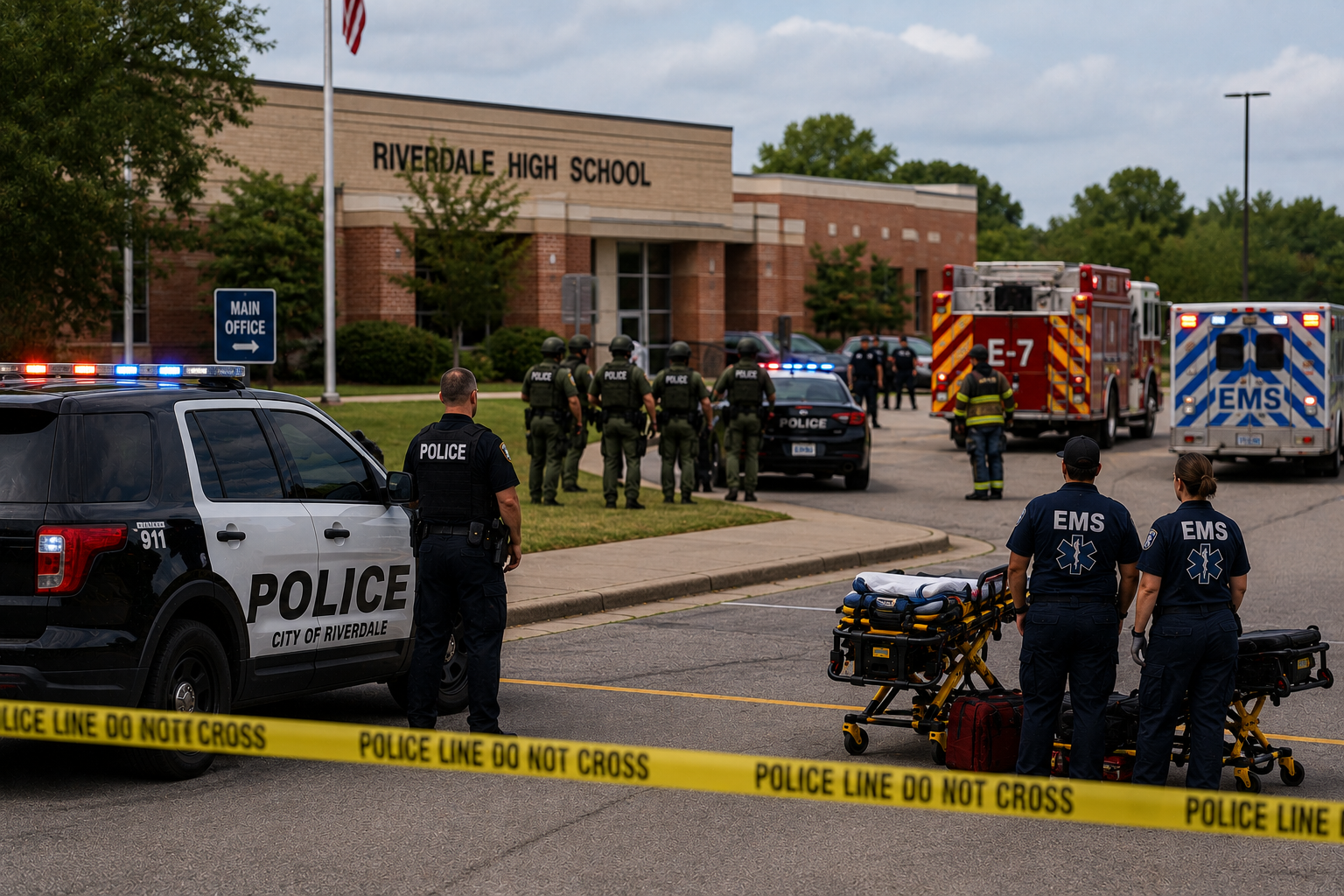
Active shooter response doctrine in the United States is often described as “post-Columbine,” implying that the lessons of past failures have been learned and operationalized. Yet repeated after-action reviews, national investigations, and casualty outcomes tell a different story. While terminology has evolved and training volume has increased, the foundational response concepts guiding many agencies remain fragmented, inconsistent, and poorly aligned with the realities of modern high-threat incidents. The consequence is a persistent gap between intent and outcome—one measured not in procedural nuance, but in lives lost during preventable windows of survival.
The purpose of this analysis is to critically examine current active shooter response models and expose the structural and conceptual failures that continue to undermine effective action. By interrogating historical turning points, contemporary case studies, and cross-disciplinary performance, this discussion demonstrates that existing frameworks fail to deliver timely medical intervention, coherent coordination, or unified decision-making under chaos. These failures are not isolated mistakes; they are predictable outcomes of flawed models. Addressing them requires more than incremental reform—it requires questioning the concepts themselves.
Columbine and the Illusion of Doctrinal Resolution
The 1999 Columbine High School shooting is widely cited as the catalyst for modern active shooter response. In its aftermath, law enforcement agencies across the United States abandoned perimeter-based containment in favor of rapid entry and immediate threat engagement. This shift represented a meaningful improvement over prior doctrine and reflected an important acknowledgment: waiting costs lives.
However, the reforms that followed Columbine were unevenly adopted and narrowly scoped. While law enforcement tactics evolved, broader system integration did not. EMS and fire doctrine largely retained legacy assumptions about scene safety, staging, and sequential response. Medical care remained structurally downstream from law enforcement action, implicitly dependent on threat resolution rather than survivability timelines.
The result was a partial evolution that created the appearance of progress without addressing systemic fragmentation. Tactical entry improved, but coordinated medical access did not. Command structures adapted, but shared operational frameworks did not. Columbine changed what some agencies did, but not how the system functioned as a whole.
Persistent SOP Variability and Dangerous Inconsistencies
More than two decades after Columbine, active shooter standard operating procedures (SOPs) still vary widely between jurisdictions—and sometimes within the same region. Definitions of “secure,” “warm zone,” and “medical access” differ not only across states, but across neighboring departments. Training frequency, scenario realism, and interagency participation are similarly inconsistent.
These disparities create predictable failure points during multi-agency incidents. Responders arrive with incompatible expectations. Law enforcement may assume medical teams will move forward, while EMS may be waiting for explicit clearance that never comes. Fire services may be prepared to assist but lack doctrinal authority to do so. Command is forced to reconcile these differences in real time, under stress, with incomplete information.
In high-threat environments, inconsistency is not benign. It delays action, fractures communication, and undermines trust between disciplines. SOP variability does not merely reflect local autonomy; it represents a national vulnerability.
Uvalde as a Case Study in Conceptual Failure
The 2022 Robb Elementary School shooting in Uvalde, Texas, exposed these vulnerabilities with devastating clarity. National attention focused on delayed law enforcement entry, command indecision, and breakdowns in accountability. Yet the deeper lesson extends beyond tactical hesitation. Uvalde revealed the consequences of a response system lacking a coherent, shared operational model.
Law enforcement personnel were present in large numbers, yet action stalled. Medical access was delayed despite critically injured victims inside the structure. EMS staged without clear direction. Fire resources remained underutilized. Command struggled to establish authority and intent. Each of these failures has been analyzed individually, but collectively they point to a more fundamental problem: the absence of an integrated framework that defines how tactical and medical priorities advance together during chaos.
Uvalde was not a failure of courage or training hours alone. It was a failure of concept—of how response was structured, sequenced, and understood.
Parallel Failures Across EMS and Fire Services
While law enforcement failures often dominate public discourse, parallel issues exist within EMS and fire response models. Traditional medical doctrine emphasizes scene safety as a prerequisite for care, a principle appropriate for many hazards but misapplied in dynamic threat environments. When rigidly interpreted, this principle becomes a barrier to timely intervention rather than a safeguard.
Fire services, similarly, are trained to manage risk through structured assessment and control. Yet in active shooter incidents, this training often lacks integration with law enforcement operations, leaving fire personnel uncertain about when and how to engage. The result is cautious delay during moments when early action would have the greatest impact.
These delays are not the product of indifference or incompetence. They are the predictable outcome of doctrine that does not account for the realities of contested, time-compressed environments. When EMS and fire are excluded from early operational planning, their ability to contribute meaningfully is constrained by design.
The Absence of Timely Medical Intervention
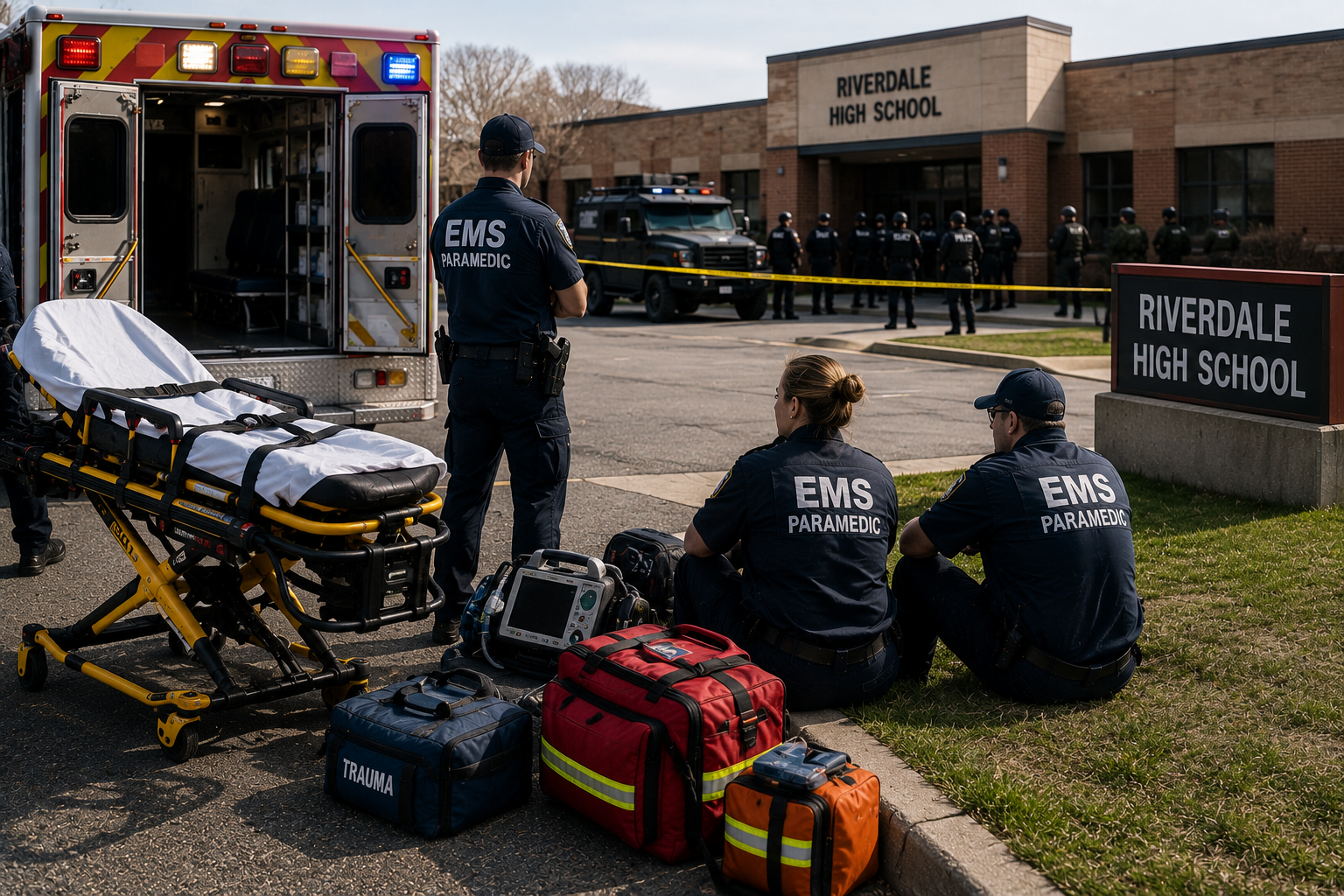
Across disciplines, one failure recurs with alarming consistency: delayed medical care. Trauma science is unequivocal—uncontrolled hemorrhage, airway compromise, and tension pneumothorax kill within minutes. Yet many response models still place organized medical intervention after threat neutralization and scene clearance.
This sequencing assumes that incidents will remain active long enough for staged resources to deploy. In reality, most active shooter events conclude within minutes. By the time doctrine allows medical movement, the most survivable window has already closed.
The failure to provide timely care is not due to lack of equipment or skill. It is the consequence of response models that treat medicine as an outcome of safety rather than a co-equal operational priority. This conceptual flaw persists across agencies and incidents, despite overwhelming evidence of its cost.
Fragmentation as a Design Feature, Not a Bug
It is tempting to view coordination failures as anomalies—products of poor leadership or unusual circumstances. In truth, fragmentation is a design feature of many current response models. Agencies train separately, plan separately, and deploy under separate assumptions. Integration, when it occurs, is improvised rather than institutionalized.
This fragmentation increases cognitive load during incidents. Responders must interpret not only the threat, but the intentions and limitations of partner agencies. Communication becomes reactive. Decisions slow. Opportunities are missed.
Effective systems do not rely on improvisation under stress. They rely on shared structure and pre-established understanding. Current models too often fail to provide either.
The Need to Question Foundational Assumptions
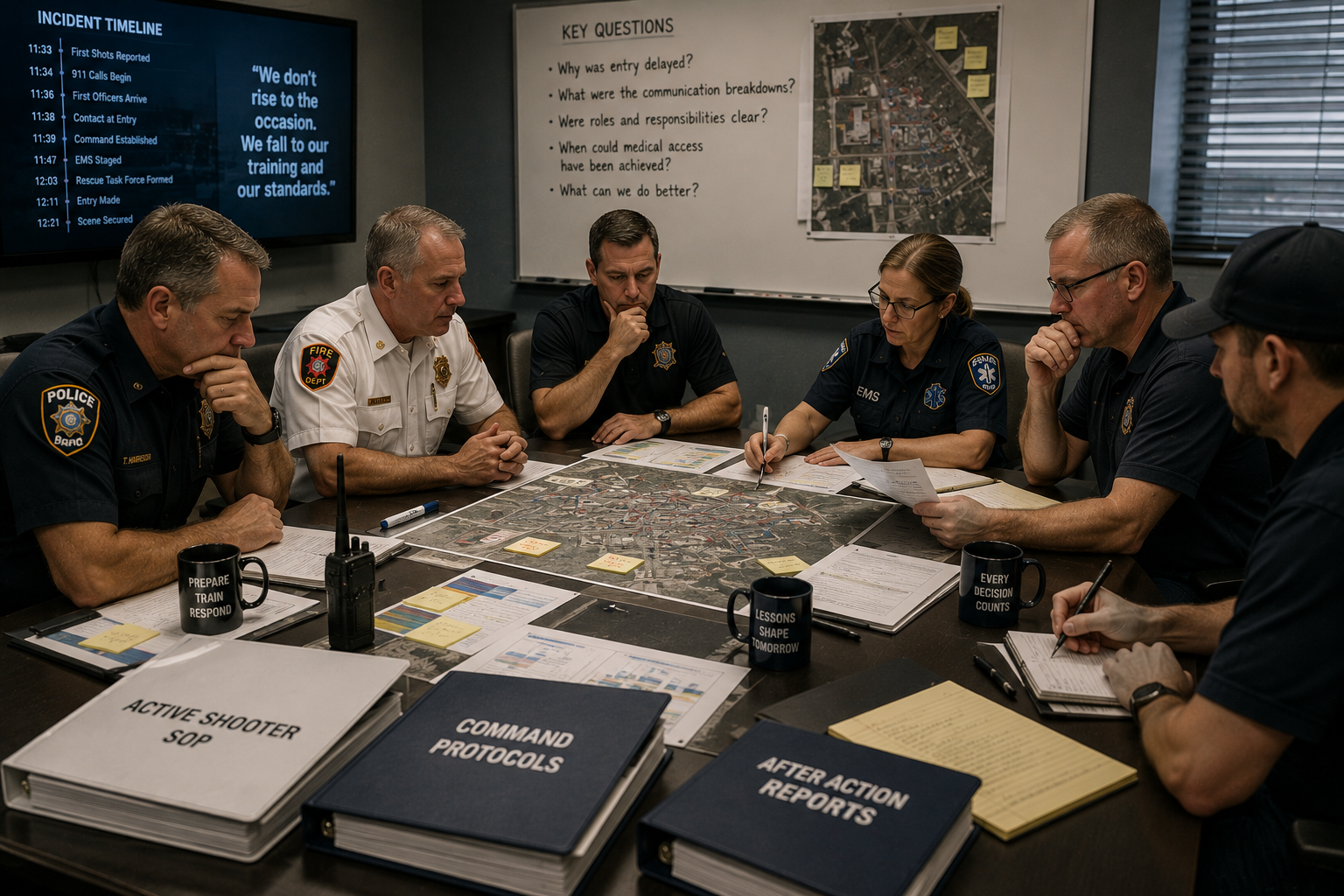
The persistence of these failures demands more than tactical adjustment. It requires questioning foundational assumptions that underpin current doctrine. Chief among these is the belief that safety and care are sequential rather than concurrent. Another is the assumption that agencies can operate independently and integrate later without consequence.
These assumptions are incompatible with modern active shooter dynamics. Threats are fluid, injuries are immediate, and coordination cannot wait. Models built on linear progression will continue to fail in non-linear environments.
Questioning these concepts is uncomfortable because it challenges deeply ingrained training, culture, and liability frameworks. Yet avoiding this discomfort perpetuates harm.
Toward a Unified Tactical–Medical Model
The shortcomings exposed by Columbine, Uvalde, and countless lesser-known incidents point toward the need for a fundamentally different approach—one that unifies tactical and medical priorities from the outset. Such a model must define roles based on conditions rather than agency silos, legitimize early medical access under managed risk, and provide command structures capable of synchronizing parallel action.
A unified model does not eliminate danger; it manages it intelligently. It does not blur professional boundaries; it aligns them. Most importantly, it replaces ambiguity with shared understanding.
Relevance to Preparedness and Public Trust
Beyond operational outcomes, these failures erode public trust. Communities expect responders to act decisively, cohesively, and in service of life. When response appears disorganized or delayed, confidence diminishes—regardless of individual heroism.
Preparedness, therefore, is not solely an internal concern. It is a public expectation. Models that consistently produce confusion and delay undermine that expectation and weaken the social contract between agencies and the communities they serve.
Conclusion
Questioning the concepts that govern active shooter response is not an academic exercise; it is an operational imperative. Historical reforms following Columbine improved certain tactics but left systemic fragmentation intact. SOP variability, delayed intervention, and coordination failures persist, culminating in tragedies such as Uvalde that expose the cost of conceptual inertia.
These failures reveal that current response models are not merely imperfect—they are misaligned with reality. They delay care, confuse roles, and rely on assumptions that no longer hold. Addressing these shortcomings requires a willingness to challenge foundational beliefs and adopt frameworks capable of unifying tactical and medical priorities under chaos.
Until response models evolve to reflect how incidents actually unfold, preventable deaths will continue to occur—not for lack of effort, but for lack of alignment.